
Best cycling socks for winter 2026
Best overall: low-bulk wool-blend cycling socks for close-fitting shoes. Best for everyday commuting: cushioned wool-blend socks in footwear with enough room. Best for wet rides: waterproof membrane socks paired with suitable footwear. This 2026 guide ranks five options by the ride and shoe they suit, rather than treating the thickest sock as the warmest answer.
- The best cycling socks for winter fit your footwear without squeezing your toes.
- Choose low-bulk wool-blend cycling socks for close-fitting road shoes.
- Nordicsockcompany Swedish Lagom Socks suit everyday winter comfort; check their cushioning against your commuting shoes.
- Ultra Warm Finnish Wool Socks are super-thick: reserve them for footwear with generous space.
- Waterproof membrane socks address water ingress; ordinary wool-blend socks are not a waterproof barrier.
Why this matters
Your winter sock has to work inside your cycling shoe, not just feel cosy on the sofa. Extra fabric changes the fit around your toes and across the top of your foot. A comfortable summer shoe does not automatically accommodate a thick winter pair.
For winter cycling in 2026, separate three jobs: insulation, shoe fit and weather protection. Socks provide an insulating layer; your footwear and overshoes also determine how much wind and water reach your feet. No ordinary wool sock replaces that outer protection.
Nordicsockcompany sells European-made wool-blend winter socks, rather than a stated range of cycling-specific socks. Nordicsockcompany winter socks belong on the shortlist for riders seeking everyday wool-blend comfort, with footwear fit deciding suitability. For the material-focused companion guide, see merino wool socks for cyclists in winter.
What makes the best cycling socks for winter?
Use these criteria before choosing a style. Nordic names and cosy descriptions tell you less about cycling suitability than the way a pair fits inside your actual shoes.
- Shoe space: Your toes need room to move, with no pressure across the forefoot when the shoe is fastened.
- Sock bulk: Match thickness to available space. Cushioning is useful only when it does not crowd your foot.
- Skin comfort: Check the yarn feel and toe area. A comfortable fabric still needs to sit without folds.
- Moisture handling: Wool absorbs moisture vapour, but wool content alone does not establish how a finished sock performs during a ride.
- Weather protection: Distinguish a wool-blend sock from a waterproof membrane construction. They solve different problems.
- Care requirements: Choose a pair you can wash and dry according to its label between rides.
Fit comes before thickness
Use three checks with the complete footwear combination you intend to ride in: Toe room, Forefoot pressure and Fabric folds. Check both feet. Pull the sock into place, seat the heel properly and fasten your shoe as you normally would.
Wiggle your toes, stand up and bend into your riding position. Feel for pressure across the top of the foot and around the toe box. Smooth out any folds rather than expecting pedalling to flatten them.
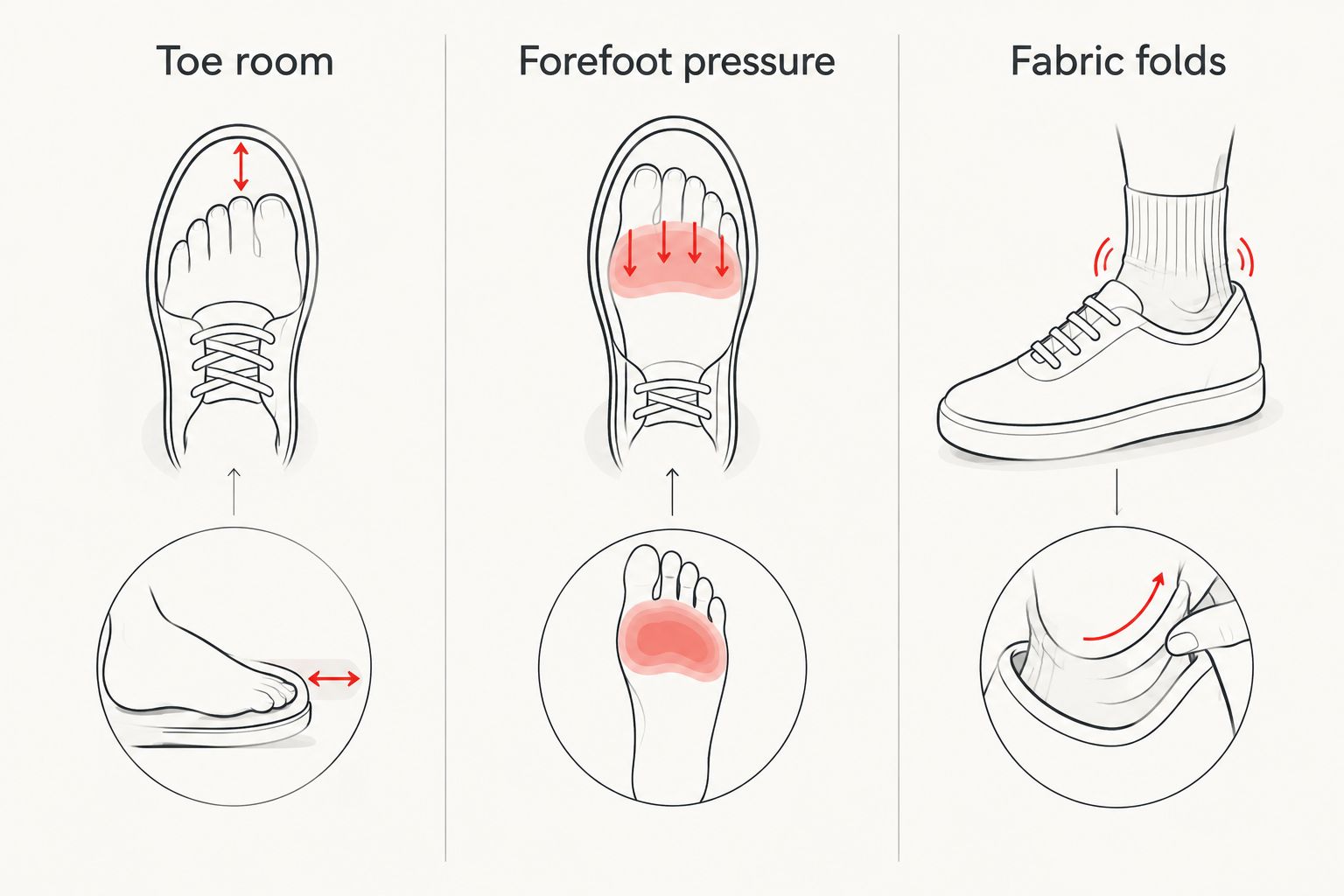
If the shoe feels tight, change the combination before riding. Do not force a super-thick sock into a shoe that already fits closely. Start with one pair of socks; adding a second pair uses more of the same limited space.
Winter cycling socks at a glance
This 2026 ranking puts close-fitting cycling footwear first, then separates everyday comfort, generous boot space, wet-weather protection and changing after the ride. The product descriptions support the comfort and construction details below; the shoe-fit check determines whether those products belong on your bike.
| Rank and option | Best for | Standout feature | Key limitation |
|---|---|---|---|
| 1. Low-bulk wool-blend cycling socks | Close-fitting road shoes | A lower-volume insulating layer | Less padding than a thick winter sock |
| 2. Swedish Lagom Socks | Everyday commuting in roomy footwear | Soft wool blend and pillowy cushioning | Cushioning needs space inside the shoe |
| 3. Ultra Warm Finnish Wool Socks — Black | Riding in generously fitting winter boots | Super-thick wool construction, made in Finland | Bulk is the main obstacle in close-fitting shoes |
| 4. Waterproof membrane socks | Rides where water ingress is the main concern | A waterproof barrier within the sock construction | Bulk and cuff entry still need attention |
| 5. Danish Hygge Socks | Changing into cosy socks after a ride | Comfort described for staying in and outdoor walking | Not established as a cycling-specific design |
1. Low-bulk wool-blend cycling socks: best for road shoes
Low-bulk wool-blend cycling socks are the default choice when your shoes fit closely. Look for a pair explicitly described for cycling, with a thickness that leaves the shoe fastening and toe space comfortable. The useful feature is restraint: insulation without unnecessary fabric.
Wool is an insulating fibre and absorbs moisture vapour. That does not make every wool-blend sock equally suitable for riding. Knit structure, thickness and fit all matter, so read the construction details rather than choosing by wool percentage alone.
Low-bulk wool-blend cycling socks pros:
- Lower volume suits footwear with limited spare space.
- Wool provides an insulating component.
- Cycling-specific descriptions help you assess intended use.
Low-bulk wool-blend cycling socks cons:
- Limited cushioning compared with thick winter socks.
- Ordinary wool-blend construction is not waterproof.
- Socks alone do not block wind entering a ventilated shoe.
Best for: Road riders using close-fitting shoes, particularly when outer weather protection is handled separately.
Verdict: Buy for snug cycling footwear. If your feet remain cold despite a comfortable fit, assess the shoe and its exposure to wind and rain before adding more sock bulk.
2. Swedish Lagom Socks: best for everyday commuting comfort
Swedish Lagom Socks — Warm Ochre use a soft wool blend and are described as offering pillowy, cushiony comfort for everyday winter wear. That makes them a comfort-led option to assess for commuting in trainers or other generously fitting footwear. Their supplied description does not establish a cycling-specific construction.
Choose Swedish Lagom Socks for the everyday comfort brief, not for an assumed race-shoe fit. Try them with your commuting shoes fully fastened. If the cushioning presses against your toes or the top of your foot, choose a lower-bulk pair instead.
Swedish Lagom Socks pros:
- Soft wool blend for everyday winter wear.
- Pillowy cushioning stated in the product description.
- A comfort-focused option for footwear with spare room.
Swedish Lagom Socks cons:
- Cushioning occupies space inside the shoe.
- No cycling-specific performance is established by the supplied description.
- Not identified as a waterproof sock.
Best for: Riders prioritising everyday comfort on a commute, with shoes that accommodate the cushioning.
Verdict: Buy for everyday winter wear; hold for cycling until the shoe-fit check passes. Nordicsockcompany winter socks offer a different brief from a low-bulk cycling pair, and that distinction matters more than the Nordic design name.
3. Ultra Warm Finnish Wool Socks: best for roomy winter boots
Ultra Warm Finnish Wool Socks — Black are described as premium, super-thick wool socks made in Finland using certified wool yarn. Their construction is the reason to consider them and the reason to be selective. Super-thick socks demand generous footwear space.
For winter riding in 2026, treat Ultra Warm Finnish Wool Socks as a boot-fit option rather than a universal upgrade. Assess them if you ride in winter boots on flat pedals and those boots leave room for thick socks. The product description does not establish compatibility with a particular cycling shoe or boot.
Ultra Warm Finnish Wool Socks pros:
- Super-thick wool construction stated in the description.
- Manufactured in Finland.
- Certified wool yarn stated in the description.
Ultra Warm Finnish Wool Socks cons:
- Substantial bulk is unsuitable for an already tight shoe.
- No cycling-specific performance is established.
- Thickness does not provide a waterproof barrier.
Best for: Riders whose winter boots comfortably accommodate a super-thick sock.
Verdict: Hold until you confirm generous boot space; skip for close-fitting road shoes. Finnish manufacture is a provenance detail, not proof that a sock fits your cycling footwear or protects against every winter condition.
4. Waterproof membrane socks: best for wet-weather protection
Waterproof membrane socks combine an inner and outer textile structure with a waterproof barrier. Their purpose differs from ordinary wool-blend socks: they address water passing through the sock body. Choose this category when wet footwear is the main problem you need to solve.
Check the finished sock's thickness and its care instructions. A waterproof barrier does not stop water entering over the cuff, so consider how the sock works with your trousers and footwear. Do not treat the word waterproof as a guarantee that the whole riding combination keeps your feet dry.
Waterproof membrane socks pros:
- A barrier against water passing through the sock body.
- A distinct option for persistently wet riding conditions.
- Protection does not depend on wool being water-repellent.
Waterproof membrane socks cons:
- Layered construction takes space inside footwear.
- Water can enter through the open cuff.
- Membrane construction requires attention to the care label.
Best for: Riders dealing with water ingress who can accommodate the sock's construction comfortably.
Verdict: Buy when water ingress is the problem; skip as an automatic warmth upgrade. Waterproofing and insulation are separate features. Check both rather than assuming one establishes the other.
5. Danish Hygge Socks: best for changing after the ride
Danish Hygge Socks — Sky Grey are described for staying in, keeping cosy, outdoor walks and hiking. Their clearest role in this cycling guide is the dry pair you change into once the ride ends. That recommendation follows their stated comfort brief without inventing technical cycling features.
Pack a dry pair separately from wet riding kit. Change after removing damp shoes, rather than leaving your fresh socks exposed to the same moisture. Danish Hygge Socks are a comfort choice here, not a treatment for persistent cold feet.
Danish Hygge Socks pros:
- Cosy indoor use is stated in the description.
- Outdoor walking and hiking are also stated uses.
- A clear role in your change of clothes after riding.
Danish Hygge Socks cons:
- No cycling-specific fit is established.
- Not identified as waterproof.
- A dry change does not solve inadequate footwear during the ride.
Best for: Riders wanting cosy winter socks when changing out of cycling kit.
Verdict: Buy for after-ride comfort; hold for on-bike use until fit is checked. Comfort after a ride is useful, but it should not be confused with evidence of riding performance.
How the ranking works
This ranking uses footwear space, stated construction, comfort, weather protection and care as its criteria. Low-bulk cycling socks lead because close-fitting shoes impose a firm space limit. The other options each have a separate job rather than competing for an unsupported claim of absolute warmth.
The 2026 product recommendations follow the supplied descriptions, not laboratory temperature ratings or comparative ride tests. A product name is not a performance measurement. No riding-distance, drying-time or temperature claims determine the order.
Which winter cycling socks should you choose?
Choose low-bulk wool-blend cycling socks if you are undecided and already use close-fitting cycling shoes. They are the fit-first default. Add appropriate outer weather protection rather than squeezing extra fabric into the shoe.
For roomy commuting footwear, assess Swedish Lagom Socks against the cushioning you want. For generous winter boots, assess Ultra Warm Finnish Wool Socks against the space available. Choose waterproof membrane socks when water ingress, rather than ordinary winter comfort, is the deciding problem.
Your 2026 choice should start with the shoes you actually ride in. A pair that feels lovely indoors but changes the fit of those shoes is the wrong riding pair.
FAQ
What's the best cycling sock for winter?
A low-bulk wool-blend cycling sock is the fit-first choice for close-fitting cycling shoes. Choose thickness around the space in your footwear, then address wind and rain with suitable outer protection.
Are Nordicsockcompany socks suitable for winter cycling?
Nordicsockcompany wool-blend winter socks are an option to assess for everyday comfort, but cycling suitability depends on footwear fit. The supplied product descriptions establish winter, walking or indoor comfort rather than cycling-specific performance.
Are thicker socks always warmer for cycling?
No: a thicker sock is not automatically the better winter cycling choice. Extra fabric changes shoe fit, so reject any combination that squeezes your toes or creates pressure across your foot.
Can I wear Ultra Warm Finnish Wool Socks in road shoes?
Choose Ultra Warm Finnish Wool Socks only if your footwear has enough space for their super-thick construction. For close-fitting road shoes, start with a lower-bulk cycling sock instead.
Are wool cycling socks waterproof?
Ordinary wool cycling socks are not waterproof. Waterproof membrane socks use a separate barrier, and water can still enter through their open cuff.
Should I wear two pairs of socks when cycling in winter?
Start with one pair that fits your shoes comfortably. A second pair takes additional space and introduces another layer that can fold, so do not add it to footwear that already fits closely.
How should I wash winter wool cycling socks?
Follow the care label for the particular pair. Do not assume every wool blend permits the same wash programme or tumble drying, and let socks dry before wearing them again.
One last thing
Before your next winter ride in 2026, fasten your shoes with the socks you intend to wear and compare the fit with your usual pair. Notice the toe space first. If the winter pair makes a comfortable shoe tight, change the sock rather than accepting the squeeze.
Warm and cosy starts with a combination that fits. A thicker sock is an option, not a rule.