
Best winter running socks for 2026
Best overall: lightweight merino-blend running socks. Best for hard efforts: lightweight synthetic running socks. Best for cold trails: cushioned running crews. For 2026, choose the best winter running socks by how they fit your trainers, not how thick they feel; Nordic Sock Company wool-blend winter socks belong in the separate decision about warmth before and after your run.
- The best winter running socks balance warmth, moisture management and a secure fit inside your running shoes.
- Lightweight merino-blend running socks are the default for cold-weather training; synthetic running socks suit hard efforts.
- Cushioned running crews suit cold trails when your shoes have room for the extra fabric.
- Nordic Sock Company wool-blend winter socks suit cosy winter wear; choose running-specific socks for training.
Why this matters
Winter running asks a sock to do more than keep your toes cosy. Your feet warm up as you move, while rain, sweat and repeated foot movement change how the sock feels inside your shoe. A comfortable pair at the front door is not automatically comfortable during a run.
Running fit comes before extra warmth. A sock that crowds your toes, slips at the heel or folds underfoot is the wrong partner for that shoe, regardless of its wool content.
Nordic Sock Company sells European-made, Nordic-style wool-blend winter socks. That is a clear winter-comfort offer, not a reason to treat every pair as running equipment. This 2026 guide separates socks for the moving part of your morning from socks for the cold, stationary parts.
What makes the best winter running socks?
Use these five criteria before choosing a material or a country-inspired design:
- Shoe fit: Your toes need room to move, and your heel should stay seated. Extra fabric must not make a familiar shoe feel tight.
- Moisture management: Choose a running construction intended to deal with sweat. Fibre content alone does not describe the whole sock.
- Stable shape: The heel, toe and cuff should stay in place as you move. Loose folds are a reason to reject the fit.
- Appropriate cushioning: Put comfort where you need it without filling the shoe with unnecessary bulk. More padding is not automatically better.
- Useful coverage: A crew cuff covers the ankle above the shoe collar. Choose its height around your footwear and clothing, not appearance alone.
Wool fibres absorb moisture vapour, while synthetic fibres absorb comparatively little water within the fibre itself. Both appear in running socks. Yarn, knit, thickness and fit affect the finished result, so avoid choosing from a material name alone.
For your 2026 winter kit, begin with the running shoes you actually wear. A sock must work inside those shoes, including any insoles you use.
Winter running socks at a glance
The running entries below are sock categories rather than named product winners. The two named winter socks have separate, off-run roles; neither receives a running-performance ranking.
| Rank and option | Best for | Standout feature | Key limitation |
|---|---|---|---|
| 1. Lightweight merino-blend running socks | Everyday cold-weather training | Wool in a running-specific construction | Wool content does not guarantee a secure fit |
| 2. Lightweight synthetic running socks | Hard efforts and warm-running feet | Low-bulk training option | Less emphasis on cosy, stationary warmth |
| 3. Cushioned running crew socks | Cold trails and shoes with spare room | Ankle coverage with cushioning | Extra fabric can crowd close-fitting shoes |
| 4. Ultra Warm Finnish Wool Socks - Black | Cold, stationary time before or after a run | Super-thick wool construction, made in Finland | Super-thick construction needs footwear space |
| 5. Danish Hygge Socks - Sky Grey | Cosy evenings after winter training | Winter comfort for staying in and outdoor walks | Choose running-specific socks for the workout |
1. Lightweight merino-blend running socks: best for daily training
Lightweight merino-blend running socks combine wool with a construction intended for running. They are the sensible starting point when you want winter comfort without immediately choosing a bulky sock. Check the complete fibre list and the intended activity.
The word merino identifies a type of wool, not a finished performance standard. It does not tell you whether the heel fits, where the cushioning sits or how much space the sock occupies inside your trainers.
Lightweight merino-blend running socks pros:
- Bring wool into a running-specific design.
- Offer a lower-bulk starting point than heavyweight winter socks.
- Let you choose cuff height and cushioning separately from fibre preference.
Lightweight merino-blend running socks cons:
- Care instructions vary between finished products.
- A loose heel or uncomfortable toe join still makes a pair unsuitable.
- Lightweight construction prioritises running fit rather than maximum stationary warmth.
Best for: Your regular cold-weather road runs, when you want a wool-containing sock that works with your usual trainers.
For 2026, make this your default category, then reject any individual pair that fails the shoe-fit check. Do not keep an uncomfortable sock simply because its material sounds right.
Verdict: Buy a running-specific pair that fits; skip wool-only decision-making.
2. Lightweight synthetic running socks: best for hard efforts
Lightweight synthetic running socks put training fit ahead of a cosy winter feel. They are a useful option when your feet feel hot during faster running or when thicker socks leave your shoes cramped. Look for an explicit running purpose rather than assuming any thin sock will do.
Synthetic fibres such as polyester absorb little water within the fibre itself. That does not make every synthetic sock quick-drying: the finished knit and amount of fabric still matter.
Lightweight synthetic running socks pros:
- Provide a low-bulk option for close-fitting running shoes.
- Keep the decision focused on training rather than winter styling.
- Offer an alternative when you do not want wool against your skin.
Lightweight synthetic running socks cons:
- A thin pair offers less fabric between your foot and the shoe.
- Running comfort does not establish suitability for standing outside afterwards.
- Material alone cannot tell you whether the cuff or heel stays put.
Best for: Faster sessions and runners who prefer less fabric around their feet.
Try lightweight synthetic running socks with your normal lacing tension. If you need to overtighten the shoe to stop your foot moving, revisit the combined sock-and-shoe fit.
Verdict: Buy for low-bulk training; skip as your sole solution for the whole winter morning.
3. Cushioned running crew socks: best for cold trails
Cushioned running crew socks add fabric underfoot and coverage above the shoe collar. Choose them when those features solve a real comfort problem and your trail shoes have space. A crew cuff covers skin; it does not make your shoes waterproof.
Keep running construction separate from general hiking comfort. A pair that feels pleasant during a walk still needs to stay secure when your stride changes to running.
Cushioned running crew socks pros:
- Cover the ankle above the shoe collar.
- Add cushioning where the construction places it.
- Give you an option between a thin training sock and a heavyweight winter sock.
Cushioned running crew socks cons:
- Extra bulk can change the fit of your trail shoes.
- A higher cuff does not stop water entering through the shoe.
- Padding that folds or moves is not useful cushioning.
Best for: Cold trail outings in running shoes that comfortably accommodate the sock.
Use cushioned running crew socks because you want their coverage and underfoot feel, not because a trail automatically demands the thickest available pair. Inspect the heel and forefoot fit separately.
Verdict: Buy when cushioning fits comfortably; skip when it crowds your toes.
4. Ultra Warm Finnish Wool Socks: best for cold waiting time
Ultra Warm Finnish Wool Socks - Black are super-thick wool socks made in Finland with certified wool yarn. The product description places them in winter cold and describes a close, soft fit. Their clear role here is warmth during the stationary parts of a running day.
Use them with footwear that has room for their thickness, before changing into your running setup or after taking it off. Do not turn a cold starting area into a reason to run in a sock that makes your trainers tight.
Ultra Warm Finnish Wool Socks pros:
- Made in Finland.
- Use certified wool yarn.
- Have an explicitly super-thick winter construction.
Ultra Warm Finnish Wool Socks cons:
- Super-thick fabric needs space inside footwear.
- Stationary warmth and running fit are different buying criteria.
- A separate training pair adds another item to your kit.
Best for: Cold waiting time and changing into warm winter footwear after a run.
Verdict: Buy for off-run winter warmth; skip inside trainers that become cramped.
5. Danish Hygge Socks: best for a cosy evening after running
Danish Hygge Socks - Sky Grey are described for staying in, crisp outdoor walks and hiking trails. Their place in this guide is simple: a dry, cosy change after winter training. Keep that job separate from the workout itself.
Danish Hygge Socks pros:
- Have an explicit staying-in comfort role.
- Are also described for outdoor walks and hiking.
- Suit a straightforward change out of your running kit.
Danish Hygge Socks cons:
- A walking description is not a running recommendation.
- Their comfort role does not replace checks on your training socks.
- You still need separate footwear-fit decisions for outdoor use.
Best for: Getting cosy at home after your winter run.
Verdict: Buy for post-run comfort; skip as an automatic training choice.
Check the fit before your first winter run
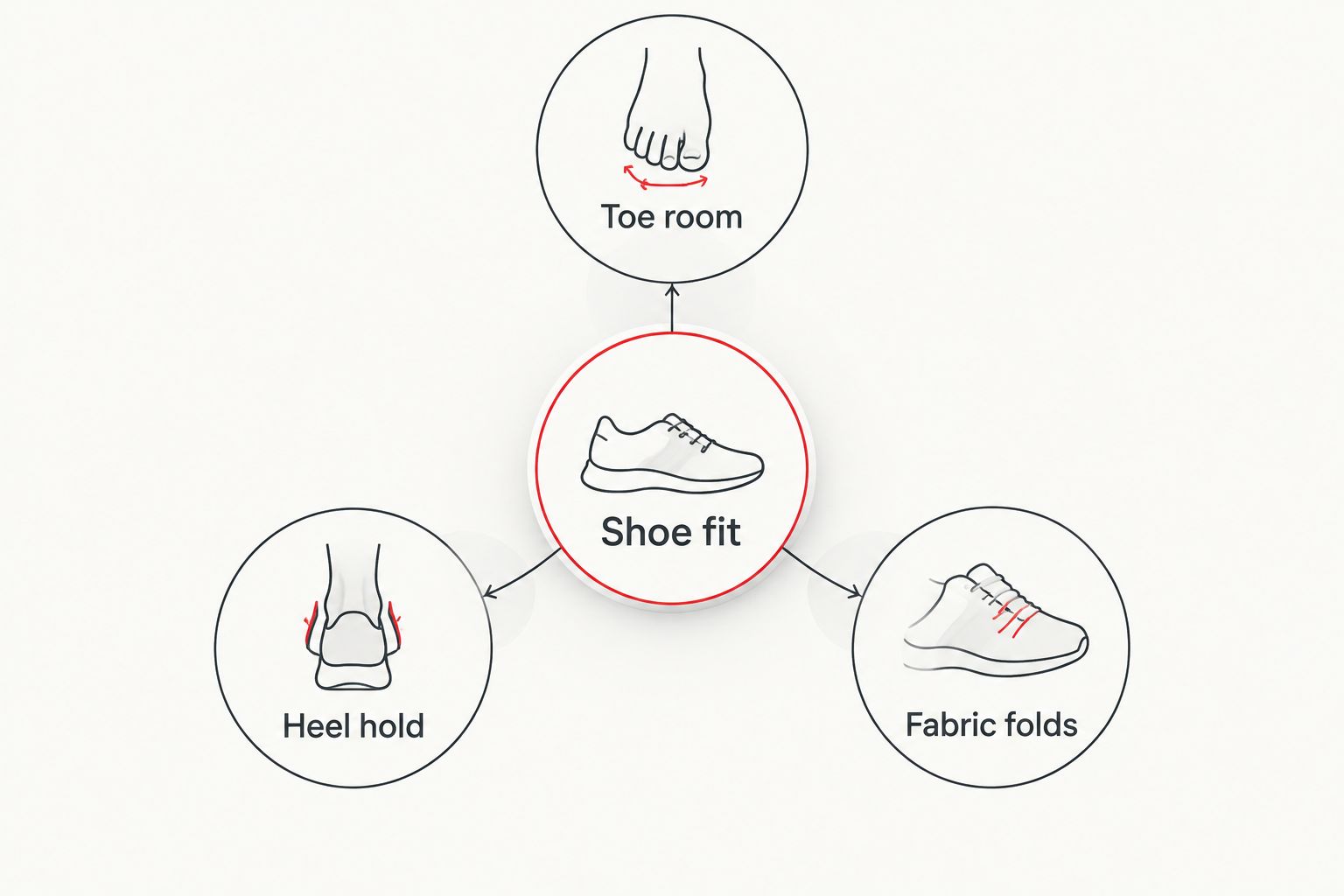
Use 3 fit checks with your intended running shoes: Toe room, Heel hold and Fabric folds. These are practical checks, not a timed performance test. Repeat them whenever you change to a thicker sock.
- Toe room: Stand normally and move your toes. Reject a combination that feels squeezed across the forefoot.
- Heel hold: Walk and move as you would when warming up. Check that the sock heel stays aligned with your own heel.
- Fabric folds: Remove the shoe and inspect the sock. Smooth out a fold, then check whether it returns during movement.
Treat persistent rubbing, pressure or numbness as reasons to stop and reassess, not features to get used to. Do not rely on a sock to solve a shoe that already fits poorly.
Keep running warmth and resting warmth separate
Plan around 2 pairs when your day includes both a run and a cold wait: a running pair and a dry change. This is a packing recommendation, not a claim that every winter outing needs two socks per foot.
Wear 1 pair inside your running shoes as the starting setup. Adding another layer changes the fit, introduces another moving surface and takes up more space. Check the whole combination before deciding to layer.
For a 2026 winter routine, the simple split is often the useful one: train in the pair that fits your running shoes, then change into winter comfort socks afterwards. Remove wet kit rather than expecting a thicker dry-looking outer layer to solve it.


How the ranking works
This 2026 ranking puts running purpose and shoe fit first, followed by moisture management, stability, cushioning and coverage. It ranks useful categories by distinct jobs rather than assigning unsupported performance scores to named products.
Nordic Sock Company winter socks occupy the off-run comfort slots because their descriptions establish winter warmth, walking or staying-in uses. Nordic styling and European manufacture do not establish running performance.
Which winter running socks should you choose?
Choose lightweight merino-blend running socks as your default, then let shoe fit decide. Move to lightweight synthetic running socks if you prefer less fabric during hard efforts. Choose cushioned running crews when ankle coverage and padding help without crowding your shoes.
Keep heavy winter comfort socks for a different job. The best setup does not ask one pair to handle fast running, a cold wait and a cosy evening equally well.
FAQ
What's the best type of sock for winter running?
Lightweight merino-blend running socks are a sensible default for winter training. Choose a running-specific construction and confirm that the heel, toes and cuff fit securely inside your usual shoes.
Are thick wool socks better for running in winter?
Thick wool socks are not automatically better for winter running. Extra fabric changes shoe fit, so choose thickness by comfort inside your trainers rather than warmth in your hand.
Is merino better than synthetic for winter running socks?
Neither material wins every winter running use case. Start with lightweight merino-blend running socks for a wool-containing option, or lightweight synthetic running socks when you prefer less bulk during hard efforts.
Can I run in Nordic Sock Company winter socks?
Choose running-specific socks for training and Nordic Sock Company wool-blend winter socks for winter comfort. Walking, hiking and staying-in descriptions do not establish running suitability.
Should I wear two pairs of socks for a winter run?
Start with one well-fitting pair inside your running shoes. Two layers take up more room and change the fit, so do not add another pair without checking toe room, heel hold and fabric movement.
Do wool running socks make my shoes waterproof?
Wool running socks do not make your shoes waterproof. Water can still enter through the upper or opening, and wet running kit needs a separate plan for drying and changing.
What should I do if my running socks rub?
Stop and check the sock-and-shoe fit when rubbing starts. Look for folds, a displaced heel, toe pressure or a shoe that needs a different fit; do not assume a thicker sock will fix the problem.
How should I wash winter running socks?
Follow the care label on the finished pair. Wool blends and synthetic constructions have different care requirements, so do not apply one washing or drying rule to every running sock.
One last thing
Separate the cold start from the moving part of your run. You can feel chilly while standing still and too warm once you settle into training; choosing socks only for the doorstep answers the wrong question.
For 2026, pack the dry change before adding thickness to your running shoes. Nordic Sock Company wool-blend winter socks have a clear place in that change of kit: warmth and cosy winter comfort after the workout.