
Best wool socks for frostbite prevention in 2026
Best overall for added warmth: Ultra Warm Finnish Wool Socks - Black. Best for everyday comfort: Swedish Lagom Socks - Warm Ochre. Best for cosy indoor wear: Danish Hygge Socks - Sky Grey. If you are choosing wool socks for frostbite prevention in 2026, treat socks as one part of your cold-weather clothing: no pair guarantees protection from frostbite.
- Ultra Warm Finnish Wool Socks - Black lead for added warmth, provided your boots leave enough room.
- Swedish Lagom Socks - Warm Ochre suit everyday winter comfort; Danish Hygge Socks - Sky Grey suit cosy indoor wear.
- Wool socks for frostbite prevention need roomy winter boots, dry spare socks and a plan to leave the cold.
- Numbness, hard skin or unusual skin colour need prompt attention, not another sock layer.
Why this matters
Frostbite is an injury caused by freezing, not simply uncomfortable cold feet. Warm socks help you dress for winter, but boot fit, moisture and exposure remain essential.
Nordic Sock Company wool socks are best for people seeking cosy winter comfort, not guaranteed frostbite protection.
What makes the best wool socks for cold weather?
- Warmth: enough insulation for your activity.
- Boot fit: space for toes without squeezing.
- Dryness: a practical way to replace wet socks.
- Comfort: tolerable fabric and no bunching.
- Use case: match the pair to your day.
The winter sock shortlist at a glance
| Item | Best for | Standout feature | Key limitation |
|---|---|---|---|
| Ultra Warm Finnish Wool Socks - Black | Added warmth in roomy winter footwear | Super-thick wool construction, made in Finland | Extra thickness needs boot space |
| Swedish Lagom Socks - Warm Ochre | Everyday winter comfort | Soft wool blend with pillowy cushioning | Everyday comfort is not extreme-cold protection |
| Danish Hygge Socks - Sky Grey | Cosy indoor wear | Designed for staying cosy, with outdoor walks also described | Indoor comfort does not establish frostbite protection |
The shortlist separates three uses rather than pretending every sock does the same job. Start with your footwear and plans, then choose the pair. For winter 2026, that is a more useful decision than choosing by a Nordic name alone.
1. Ultra Warm Finnish Wool Socks: best for added warmth
Ultra Warm Finnish Wool Socks - Black are super-thick wool socks made in Finland. Their product description specifies certified wool yarn and a close, soft fit without scratchiness.
They lead this shortlist for readers who want added sock thickness in winter footwear. Choose them only when your boots accommodate that thickness comfortably. A thicker pair is not a useful upgrade if it crowds your toes.
Ultra Warm Finnish Wool Socks pros
- Super-thick construction makes warmth the clear priority.
- Made in Finland, with provenance stated in the product description.
- Certified wool yarn is specified.
- The description emphasises a soft, non-scratchy feel.
Ultra Warm Finnish Wool Socks cons
- Thick fabric takes up space inside footwear.
- A close fit still needs checking against your own foot shape.
- The product description does not establish a safe exposure temperature or duration.
Best for: people seeking a thick winter pair for boots with enough internal room.
Try Ultra Warm Finnish Wool Socks - Black with the actual footwear you will wear outside. Lace the boots normally, stand up and walk indoors. Your toes should move without feeling pressed together, and the sock should not gather beneath your foot.
The Finnish origin is a useful provenance detail. It is not a medical safety standard, and the words describing warmth are not permission to stay outside through numbness.
Verdict: Buy for added warmth in roomy boots; skip if the combination squeezes your feet.
2. Swedish Lagom Socks: best for everyday winter comfort
Swedish Lagom Socks - Warm Ochre use a soft wool blend. Their description highlights pillowy, cushiony comfort for everyday winter wear without a scratchy feel.
That makes them the everyday choice in this list. You get a comfort-led option rather than a product whose main stated feature is super-thick construction.
Swedish Lagom Socks pros
- Soft wool-blend fabric is explicitly described.
- Pillowy cushioning supports the comfort-led recommendation.
- Everyday winter wear is the stated use.
- The description addresses scratchiness directly.
Swedish Lagom Socks cons
- Everyday winter positioning does not establish suitability for severe exposure.
- Cushioning still needs room inside your shoes or boots.
- A soft-feel description is not a guarantee for sensitive skin.
Best for: everyday winter dressing when comfort is your main sock requirement.
For ordinary winter plans in 2026, Swedish Lagom Socks - Warm Ochre are a sensible starting point. Check the fit with your footwear rather than assuming a comfort-focused pair will work in every shoe.
If your plans involve prolonged freezing conditions, decide on the whole clothing system first. Socks alone cannot make everyday footwear suitable for those conditions.
Verdict: Buy for everyday comfort; skip as your sole protection for severe cold.
3. Danish Hygge Socks: best for cosy indoor wear
Danish Hygge Socks - Sky Grey are described as a pair for staying in and keeping cosy. The same description also includes crisp outdoor walks and hiking trails.
Their distinct place here is indoor comfort. Choose Danish Hygge Socks - Sky Grey for a cosy evening, not because an indoor sock recommendation proves outdoor safety.
Danish Hygge Socks pros
- Staying cosy indoors is an explicit product use.
- Outdoor walks are also included in the description.
- The pair suits readers looking for one comfort-focused winter option.
Danish Hygge Socks cons
- A hiking reference does not establish suitability for extreme conditions.
- Socks do not provide the weather protection of winter footwear.
- Their indoor use should not be confused with protection for injured feet.
Best for: cosy indoor wear, with ordinary outdoor use considered alongside appropriate footwear.
After an uneventful cold-weather outing, changing damp socks for a dry pair makes sense. If your feet are numb, unusually coloured or painful, however, stop treating the problem as a shopping decision.
Verdict: Buy for cosy indoor comfort; skip as a stand-alone frostbite-prevention measure.
Choose the pair that fits your winter day
Nordic Sock Company wool socks offer different comfort-led starting points. The thick Finnish pair leads for added warmth; Swedish Lagom centres everyday cushioning; Danish Hygge centres staying cosy.
These cards let you compare the named pairs without treating their descriptions as medical claims. Boot fit remains the deciding check before outdoor use.


How to use wool socks without making boots too tight
A warm sock belongs inside footwear that leaves room for your foot. More fabric is not automatically better. Tight footwear can restrict circulation, which matters when you are trying to keep your extremities warm.
Use 2 fit checks before leaving: toe movement and pressure. Move your toes, then check for squeezing across the forefoot, heel and cuff. These are practical checks, not a medical assessment.
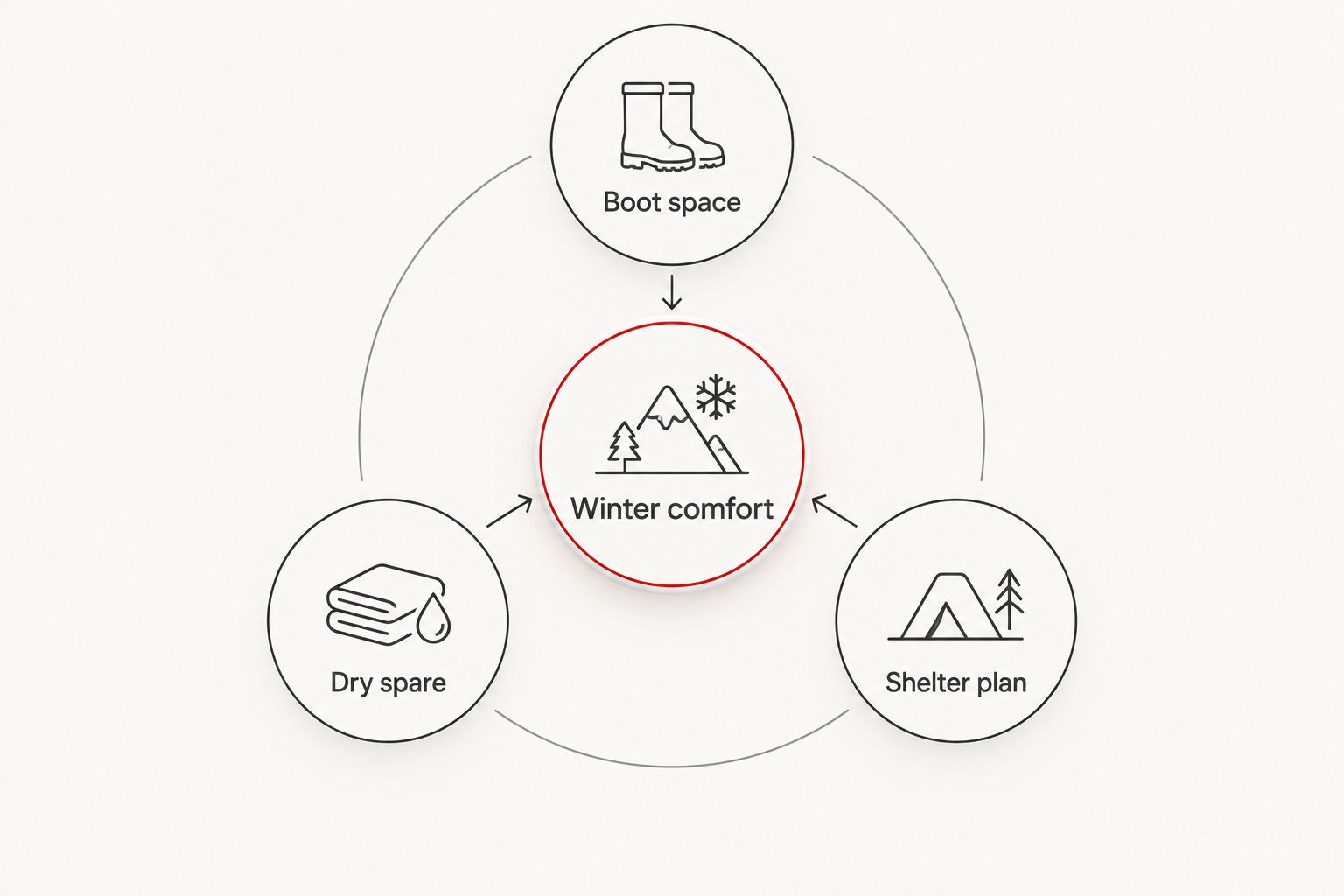
Boot space
Try the complete combination: socks, insoles and boots. An insole occupies space too, so testing socks with an empty boot gives you the wrong comparison.
Do not assume that loosening laces solves a narrow toe box. If your toes remain crowded, change the sock-and-footwear combination.
Dry spare
Pack 1 spare pair as a practical starting point for a winter day out, protected from rain or snow. Longer trips need a drying and replacement plan suited to the itinerary.
A dry spare is useful only if you can change before continuing in wet socks. Find shelter, check your feet and address wet footwear as well.
Shelter plan
Know where you will leave the cold before you set off. A warm building, vehicle or planned retreat is more useful than trying to solve deteriorating conditions with another layer.
For a 2026 winter trip, keep 3 priorities in order: roomy footwear, dry socks and access to shelter. None replaces the others.
Should you wear two pairs of wool socks?
Wear two pairs only if the complete combination fits without pressure. Layering that crowds your feet defeats the purpose of choosing warmer clothing.
A liner and outer sock are options to assess, not a requirement. Try them with your boots before the trip, and check for bunching as you walk.
For many everyday outings, a correctly fitted single pair is the simpler choice. If that combination is inadequate for your conditions, reassess the footwear and outing rather than automatically doubling the socks.
Frostbite warning signs: stop shopping and get help
Frostbite can begin with cold skin, tingling and numbness. More serious signs include hard or frozen-feeling skin, unusual colour and blistering. Numb feet are a warning, not evidence that you have adjusted to the cold.
The safety guidance in this 2026 buying guide follows NHS public information on frostbite prevention, symptoms and first aid. It concerns cold injury generally; it does not endorse or assess any sock in this list.
- Move into shelter and out of the cold.
- Remove wet clothing and avoid pressure on the affected area.
- Do not rub or massage suspected frostbite.
- Do not use a radiator, fire or hot-water bottle to heat affected skin.
- Seek urgent medical assessment for suspected frostbite.
Avoid walking on affected feet where possible. Do not deliberately thaw frozen tissue if it could freeze again before you reach safety; follow emergency medical advice.
In the UK, call 999 for an emergency, including suspected hypothermia or severe symptoms. Confusion, slurred speech and marked drowsiness after cold exposure need emergency attention. Elsewhere, use the local emergency number.
If you have diabetes, reduced sensation or circulation problems, ask your clinician about cold-weather foot care before a trip. Sock softness is not a substitute for individual advice.
How the shortlist is ranked
The ranking prioritises the stated product features against warmth, fit and intended use. Ultra Warm Finnish Wool Socks - Black lead on explicitly described thickness; Swedish Lagom Socks - Warm Ochre take the everyday comfort slot; Danish Hygge Socks - Sky Grey take the cosy indoor slot.
This is a winter-comfort shortlist, not a frostbite-protection ranking. Country of manufacture and Nordic styling do not establish an exposure limit. No safe temperature or time outdoors is assigned to these products.
Which wool socks should you choose?
Choose Ultra Warm Finnish Wool Socks - Black if added thickness is your priority and your boots have room. Choose Swedish Lagom Socks - Warm Ochre for everyday winter comfort, or Danish Hygge Socks - Sky Grey for cosy indoor wear.
For Nordic Sock Company shoppers planning winter 2026 outings, the next move is simple: test the socks in your actual footwear. Reject any combination that squeezes, and plan how you will keep dry and leave the cold.
FAQ
What's the best choice of wool socks for frostbite prevention?
No wool sock guarantees frostbite prevention. Ultra Warm Finnish Wool Socks - Black lead this shortlist for added warmth in roomy footwear, but dry socks, suitable boots and limiting cold exposure remain essential.
Can wool socks stop frostbite completely?
No, wool socks cannot stop frostbite completely. They contribute insulation, but freezing conditions, exposure and circulation still matter.
Are thicker wool socks always warmer in boots?
Thicker wool socks are not automatically the better choice inside boots. If extra fabric squeezes your feet, use a different sock-and-footwear combination rather than accepting the pressure.
Should I wear two pairs of socks in freezing weather?
Wear two pairs only when your footwear accommodates both without squeezing or bunching. Test the complete combination before going outside; layering is not a guarantee of protection.
Are Danish Hygge Socks only for indoors?
Danish Hygge Socks - Sky Grey are described for staying cosy indoors and for outdoor walks or hiking trails. That description does not establish suitability for severe cold or frostbite protection.
What should I do if my toes become numb outside?
Leave the cold and assess your feet rather than continuing through numbness. Seek urgent medical advice if frostbite is suspected, especially with hard skin, unusual colour or blistering.
Can people with poor circulation rely on warm wool socks?
Warm wool socks do not treat poor circulation. Ask your clinician for individual cold-weather advice, particularly if you also have reduced sensation or diabetes.
One last thing
The warmest-looking sock can be the wrong choice for a cramped boot. Before buying thicker socks, try your existing pair with the footwear you intend to use and check the available space.
Nordic Sock Company offers winter comfort; your cold-weather plan must provide the rest. Keep toes free to move, carry dry replacements and turn back before cold feet become an injury.