
Best wool socks for sailing and watersports in 2026
Best overall for sailing-boot use: Norwegian Fjord Socks - Warm Durable Winter Socks. Best for extra thickness in roomy boots: Ultra Warm Finnish Wool Socks - Black. Best for changing ashore: Swedish Lagom Socks - Warm Ochre. This 2026 shortlist separates warm wool socks for sailing from the protective equipment you need for immersion and watersports.
- Norwegian Fjord Socks lead this best wool socks for sailing shortlist for their soft, strong wool-blend yarn.
- Ultra Warm Finnish Wool Socks - Black suit roomy footwear when you want extra thickness.
- Swedish Lagom Socks - Warm Ochre are the comfort-first choice for changing ashore.
- Use wool socks for warmth, not as a replacement for waterproof footwear or immersion protection.
Why this matters
A cold day aboard and a winter paddle do not ask the same thing of your socks. Inside sailing boots, you need comfortable insulation without crowding your feet; during watersports, your clothing system must also account for entering the water.
Nordicsockcompany wool socks belong in your warmth system, not in place of immersion protection. Start with the activity and footwear, then choose the sock. Nordic styling alone does not establish suitability for sailing, kayaking or swimming.
The recommendations below concern winter warmth and comfort. They do not rank capsize protection, waterproofing or survival performance.
What makes the best wool socks for sailing?
Use these five criteria before choosing a pair for your 2026 sailing kit:
- Boot fit: Your toes need room to move with the socks and any insoles you actually wear.
- Useful warmth: Match thickness to the footwear and conditions rather than choosing the bulkiest pair automatically.
- Skin comfort: A soft feel matters when you cannot conveniently change socks aboard.
- Suitable construction: A strong wool-blend yarn is relevant to regular wear, but does not establish marine performance.
- A clear role: Separate socks worn aboard from the clean, dry pair reserved for changing afterwards.
Water resistance is a separate question. Ordinary wool socks are not waterproof simply because they are warm, and a Nordic country name is not a technical specification.
Best wool socks for sailing at a glance
These are three use-case picks from the Nordicsockcompany wool socks range, not a marine laboratory ranking. The order follows their intended role: general boot wear, extra-thick warmth, then comfort ashore.
| Item | Best for | Standout feature | Key limitation |
|---|---|---|---|
| Norwegian Fjord Socks - Warm Durable Winter Socks | General sailing-boot shortlist | Soft but strong wool-blend yarn | Wool-blend construction is not a waterproof barrier |
| Ultra Warm Finnish Wool Socks - Black | Extra thickness in roomy footwear | Super-thick wool socks made in Finland | Extra bulk needs space inside the boot |
| Swedish Lagom Socks - Warm Ochre | Changing ashore after watersports | Soft wool blend with pillowy cushioning | Everyday comfort is not immersion protection |
1. Norwegian Fjord Socks: best for general sailing-boot wear
Norwegian Fjord Socks - Warm Durable Winter Socks use a soft but strong wool-blend yarn. That combination makes the pair the first shortlist choice when you want winter socks to wear inside sailing boots, rather than a pair selected mainly for lounging afterwards.
The distinction is modest but useful. Choose Norwegian Fjord Socks for their stated material and construction, then confirm the fit in your own boots before committing them to a day afloat.
Norwegian Fjord Socks pros:
- Soft wool-blend yarn provides a comfort-focused starting point.
- Strong yarn construction supports their general winter-wear role.
- One pair can serve as your winter boot option without choosing specifically for maximum thickness.
Norwegian Fjord Socks cons:
- A wool blend does not replace the boot's waterproof protection.
- The right sock size still needs checking against your boot and insole combination.
Best for: Sailors choosing a general winter sock to try inside their existing boots.
Verdict: Buy for general boot wear after checking fit; skip as a substitute for watersports protection.
2. Ultra Warm Finnish Wool Socks: best for roomy winter boots
Ultra Warm Finnish Wool Socks - Black are made in Finland and described as super-thick wool socks. Their stated soft, close fit makes them the warmth-first option here, provided your footwear has space for the additional bulk.
Thickness is the reason to consider this pair and the reason to be selective. Do not squeeze an extra-thick sock into boots that already fit closely with your usual socks.
Ultra Warm Finnish Wool Socks pros:
- Super-thick construction suits a deliberate preference for substantial socks.
- Made-in-Finland provenance is explicit.
- The product description specifies a soft feel without scratchiness.
Ultra Warm Finnish Wool Socks cons:
- Extra thickness demands more room inside footwear.
- Choosing bulk alone overlooks whether your feet remain comfortable when standing and moving.
Best for: Cold-weather sailors with roomy boots who specifically want an extra-thick pair.
For a 2026 winter kit, treat this as the specialist thickness choice rather than the automatic upgrade. A comfortable boot-and-sock combination wins over a thicker pair that presses your toes together.
Verdict: Buy for roomy footwear; skip if the fit becomes tight.
3. Swedish Lagom Socks: best for changing ashore
Swedish Lagom Socks - Warm Ochre combine a soft wool blend with pillowy cushioning for everyday winter wear. That makes them the comfort-first choice for your dry change after sailing or watersports.
Reserve Swedish Lagom Socks for clean, dry feet and suitable footwear once the wet part of the day is finished. Their role here is straightforward: a cosy change, not an argument for wearing ordinary socks in the water.
Swedish Lagom Socks pros:
- Soft wool blend focuses on everyday comfort.
- Pillowy cushioning suits a comfort-led change of clothes.
- The description specifically addresses warmth without a scratchy feel.
Swedish Lagom Socks cons:
- Everyday winter comfort does not establish suitability for immersion.
- A dry-change pair loses its purpose if you expose it to spray before changing.
Best for: Sailors and watersports participants packing comfortable socks for afterwards.
Keep Swedish Lagom Socks with your dry clothing rather than loose beside wet equipment. Your changing routine matters as much as which colour you choose.
Verdict: Buy as your dry change; skip for in-water protection.
Choose the general boot pair or the extra-thick pair according to fit. Keep the comfort-first option for afterwards if you want a separate changing pair.


How the socks are ranked
This 2026 ranking uses the stated product descriptions against the criteria above: boot fit, useful warmth, skin comfort, construction and a clear role. Norwegian Fjord Socks take the default slot for their soft, strong wool-blend yarn; Ultra Warm Finnish Wool Socks take the extra-thickness slot; Swedish Lagom Socks take the dry-change slot.
This is a product-description comparison, not an on-water test. There is no claim that one pair dries fastest, lasts longest in salt water or provides a measured temperature advantage.
Check the boot-and-sock fit before leaving shore
Put on the exact socks, insoles and boots you intend to use. A fit check in different footwear tells you little about how the combination feels aboard.
Work through this sequence before packing:
- Seat the heel: Pull the sock into position without leaving folds beneath your foot.
- Check toe room: Stand up and move your toes without forcing them against the boot.
- Move naturally: Walk, bend your ankles and check whether the sock bunches or the heel shifts.
- Recheck pressure: Remove the boots if you notice pinching, numbness or an uncomfortable cuff.
Do not use a thicker sock to disguise a poorly fitting boot. Likewise, do not assume a close-fitting boot becomes suitable for winter simply by adding another layer.
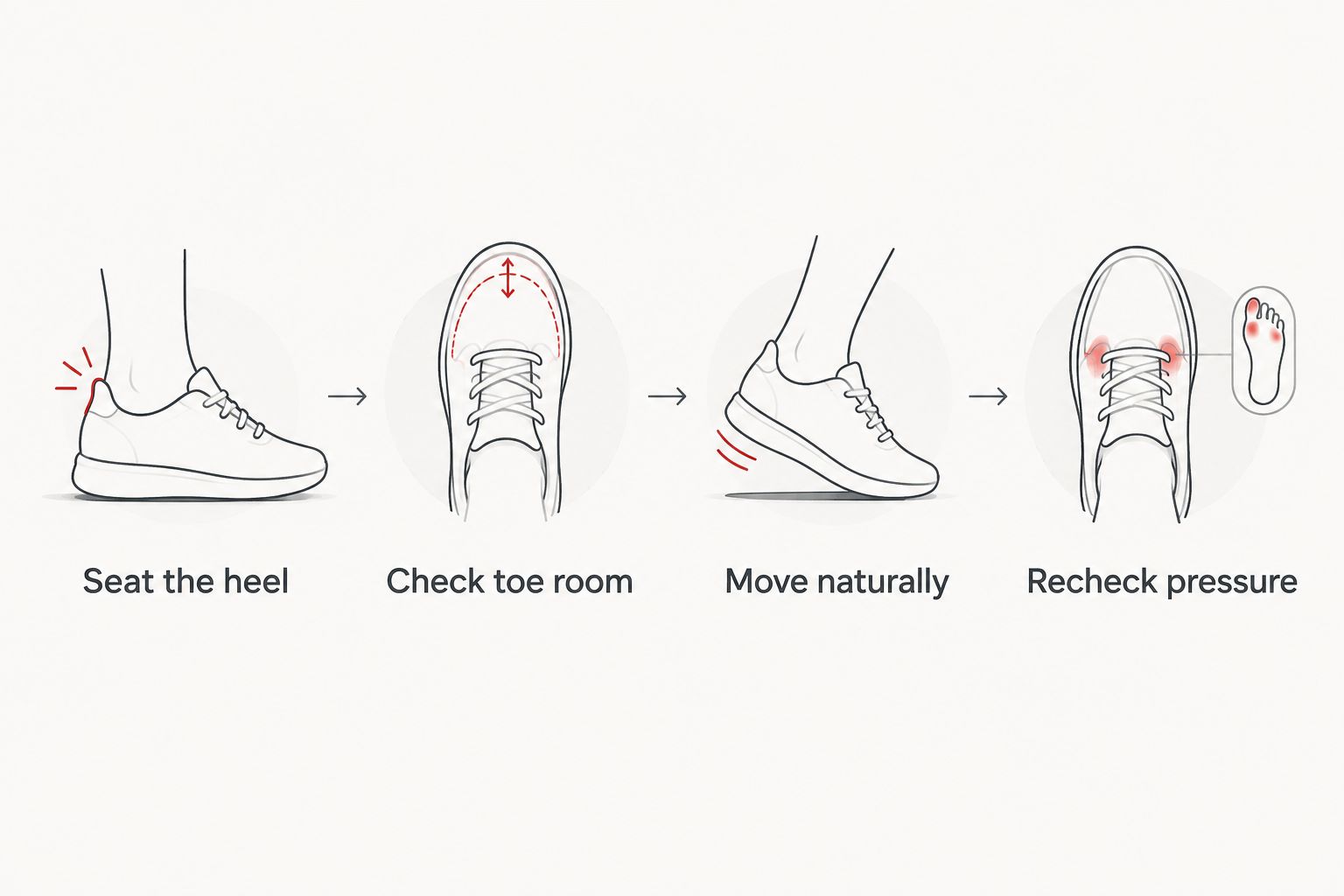
For your 2026 kit check, make the decision while you can still change the combination. Discovering a pressure point at home is easier to solve than discovering it after departure.
Sailing and watersports need different decisions
Sailing in boots
For sailing where you intend to remain aboard, treat wool socks as insulation inside suitable footwear. Your boot fit, outer clothing and plan for wet conditions remain separate decisions.
Best for: Norwegian Fjord Socks as the general shortlist choice. The advantage is their soft, strong wool-blend construction; the limitation is that the socks do not replace a waterproof outer layer.
Winter kayaking and paddleboarding
For activities with a realistic chance of immersion, choose protective clothing around the water conditions and the activity. Do not build the safety decision around how warm your feet feel before launching.
The question behind drysuits for winter kayaking is immersion protection, not simply whether thicker socks feel cosy on shore. Wool socks can be an insulating layer within a suitable system, but they do not turn ordinary clothing into protective watersports equipment.
Best for: An activity-appropriate clothing system first. Its benefit is addressing the actual exposure; its limitation is that every added layer still needs a compatible footwear fit.
Changing after a swim or wet session
Keep your dry socks out of the wet kit. Once you are out of the water and have dried your feet, change into the clothing and footwear you packed for afterwards.
Best for: Swedish Lagom Socks as the comfort-first changing pair. Soft cushioning is their appeal; keeping that pair dry until needed is the practical requirement.
Pack by role, not by the number of Nordic designs
As a simple day-trip packing recommendation, plan for 2 pairs total: 1 pair to wear and 1 spare pair kept dry. This is a starting checklist, not a claim that every trip needs the same quantity.
Longer trips, limited drying opportunities and your activity change the packing decision. The useful distinction is between the pair in use and the pair you can still change into.
- Wear pair: Choose for the footwear and conditions expected aboard.
- Dry spare: Protect it from spray, wet towels and damp clothing.
- Wet-kit space: Keep used socks away from the clothing reserved for changing.
Before your next 2026 outing, rehearse where the spare pair goes. A pair buried beneath wet equipment is not a convenient change when you need it.
Afterwards, follow each pair's care label rather than applying a single washing or drying rule to every wool blend. Avoid guessing a drying time; check that the socks are dry before putting them away.
Which wool socks for sailing should you choose?
Norwegian Fjord Socks are the default Nordicsockcompany wool socks pick for sailors seeking a soft, strong wool blend for boot wear. Choose Ultra Warm Finnish Wool Socks - Black instead when extra thickness is the priority and your boots accommodate it comfortably.
For watersports, settle the immersion-protection question before choosing ordinary wool socks. Add Swedish Lagom Socks - Warm Ochre to your dry changing clothes when comfort afterwards is the job you need them to do.
FAQ
What's the best wool sock for sailing in 2026?
Norwegian Fjord Socks - Warm Durable Winter Socks are the default pick in this shortlist for general sailing-boot wear. Their stated soft, strong wool-blend yarn is the reason to consider them; confirm comfort in your own boots before departure.
Are wool socks waterproof enough for sailing?
Ordinary wool socks are not a waterproof barrier. Wear suitable footwear and treat the socks as an insulating layer rather than protection against water entering your boots.
Are thicker wool socks always better in sailing boots?
No. Extra-thick socks are useful only when your boots have room for them without uncomfortable pressure. Ultra Warm Finnish Wool Socks - Black are the thickness-first choice here, not a universal replacement for a comfortably fitting pair.
Can I wear wool socks while winter kayaking?
Wool socks can serve as an insulating layer within an appropriate watersports clothing system. They do not replace immersion protection, and the complete sock-and-footwear combination needs to fit comfortably.
Which wool socks should I put on after watersports?
Swedish Lagom Socks - Warm Ochre are the comfort-first changing choice in this shortlist because of their soft wool blend and pillowy cushioning. Keep them dry until you have finished the wet part of the day and dried your feet.
How many pairs of socks should I pack for a sailing day?
Start with a recommendation of one pair to wear and one dry spare. Adjust that checklist to your trip, expected wet conditions and opportunities to change or dry clothing.
Has this sailing sock shortlist been tested on the water?
This shortlist compares stated product descriptions rather than reporting an on-water test. It makes no measured claims about drying speed, salt-water durability or warmth differences between the pairs.
One last thing
Your spare socks have a different job from the pair you are wearing: they must still be dry when you reach for them. Before buying a thicker pair, decide where your dry pair will live aboard. That small packing decision keeps your changing plan intact.