
Best wool socks for varicose veins in 2026
Best overall for everyday warmth: Swedish Lagom Socks - Warm Ochre. Best for staying in: Danish Hygge Socks - Sky Grey. Best for a durability-focused choice: Norwegian Fjord Socks - Warm Durable Winter Socks. These are comfort picks for 2026, not treatments: the best wool socks for varicose veins must suit your feet without being mistaken for medical compression.
- The best wool socks for varicose veins provide comfortable warmth, not treatment or a substitute for prescribed compression.
- Swedish Lagom Socks - Warm Ochre is the everyday comfort pick for its soft wool blend and cushioning.
- Danish Hygge Socks - Sky Grey suits cosy indoor wear; Norwegian Fjord Socks emphasise soft, strong wool-blend yarn.
- Check cuff comfort, shoe space and skin condition before choosing winter socks.
Why this matters
Varicose veins change the buying question. You are not simply choosing the warmest pair; you also need to distinguish an ordinary winter sock from a garment designed to apply graduated compression.
Wool describes a fibre. Compression describes controlled pressure. A wool-blend sock can feel cosy without providing the pressure profile used in medical compression hosiery, and a tight cuff is not evidence of useful support.
Nordic Sock Company wool socks are best for shoppers seeking winter warmth, not a substitute for medical compression. This 2026 guide ranks ordinary socks by their stated comfort features, then explains the fit checks that matter before you wear them.
Start with the practical details in this guide to measuring your foot for sock fit. Foot size matters, but it does not tell you whether a cuff will suit your calf.
What makes the best wool socks for varicose veins?
Use these criteria before looking at colours or Nordic patterns. None establishes that an ordinary sock treats a vein condition.
- Cuff comfort: Reject a pair that digs in, rolls into a tight band or causes discomfort. Do not assume a soft foot section means a gentle cuff.
- Comfortable fabric: Choose a texture your skin tolerates. A soft wool blend is a useful starting point, not a guarantee against irritation.
- Footwear space: Your toes need room with the socks and shoes worn together. Extra thickness is not helpful if it makes your footwear tight.
- Relevant warmth: Match your socks to indoor comfort or outdoor use rather than automatically choosing the thickest option.
- Clear purpose: Keep everyday warmth separate from prescribed compression. A winter sock should not replace a garment selected by your healthcare professional.
For winter 2026, the sensible default is the pair that feels comfortable in your usual footwear. Choose more warmth only when you need it and have room for it.
Wool sock comfort picks at a glance
These three options have different strengths. The order reflects everyday comfort first, cosy indoor use second and a durability-focused yarn description third—not medical effectiveness.
| Item | Best for | Standout feature | Key limitation |
|---|---|---|---|
| Swedish Lagom Socks - Warm Ochre | Everyday winter comfort | Soft wool blend with pillowy cushioning | No stated graduated compression or non-binding cuff specification |
| Danish Hygge Socks - Sky Grey | Cosy time indoors | Designed around staying in and keeping cosy | Indoor comfort positioning does not establish suitability for swollen calves |
| Norwegian Fjord Socks - Warm Durable Winter Socks | A durability-focused winter choice | Soft but strong wool-blend yarn | Yarn strength does not establish cuff pressure or medical support |
None of these product descriptions specifies a medical compression level. Choose between them for comfort and intended use, not for an expected effect on varicose veins.
1. Swedish Lagom Socks: best for everyday winter comfort
Swedish Lagom Socks - Warm Ochre is the default comfort pick in this 2026 shortlist. The product description identifies a soft wool blend, a non-scratchy feel and pillowy cushioning for everyday winter wear.
That combination makes Swedish Lagom Socks a sensible starting point when your main concern is keeping your feet warm during ordinary daily activities. It does not establish how the cuff will fit your leg, so the recommendation remains conditional on a comfortable fit.
Swedish Lagom Socks pros:
- The description explicitly focuses on softness rather than warmth alone.
- Pillowy cushioning gives you a clear comfort feature to consider.
- Everyday winter wear is the stated purpose, matching the broadest use case here.
Swedish Lagom Socks cons:
- A non-binding cuff is not specified; do not assume the top will accommodate swelling.
- Cushioning still needs room inside your shoes. Check the complete fit before committing to a day's wear.
Best for: Everyday warmth when you want a soft, cushioned wool blend and do not need the sock itself to provide prescribed compression.
If pressure around the calf is your main concern, the missing cuff information matters more than the cushioning. Ask about the current fit details rather than treating softness as proof of suitability.
Verdict: Buy for everyday comfort only if the cuff and footwear fit comfortably; skip as a treatment for varicose veins.
2. Danish Hygge Socks: best for cosy time indoors
Danish Hygge Socks - Sky Grey centres on staying in and keeping cosy. The description also includes outdoor walks and hiking, but the strongest reason to choose this pair in this guide is its indoor comfort positioning.
Choose Danish Hygge Socks when your brief is simple: warm feet while reading, relaxing or spending a quiet evening at home. Keep that modest purpose intact; a cosy description does not tell you how the sock behaves around a tender or swollen leg.
Danish Hygge Socks pros:
- Staying in and keeping cosy is the product's explicit focus.
- The stated use also covers outdoor walks, rather than indoor wear alone.
- The Sky Grey colourway gives you a clearly identified option without needing to compare several similar variants.
Danish Hygge Socks cons:
- The description does not specify cuff stretch or calf measurements.
- Cosy indoor positioning provides no evidence of graduated compression or a therapeutic effect.
Best for: Comfortable warmth during time at home, subject to checking the cuff and your skin's response.
Being indoors does not make fit irrelevant. If the top feels tight, do not fold it down into a thicker band to make it seem shorter, and do not keep wearing it simply because your feet feel warm.
Verdict: Buy for cosy indoor wear if the fit is comfortable; skip if you need documented non-binding construction or medical compression.
3. Norwegian Fjord Socks: best for a durability-focused choice
Norwegian Fjord Socks - Warm Durable Winter Socks uses a soft but strong wool-blend yarn. The description pairs that construction with a pale blue shade inspired by Norway's fjords.
The reason to consider Norwegian Fjord Socks is the stated emphasis on both softness and strength. There is no wear-test result here, so this is a durability-focused choice, not a claim that the pair lasts longer than every alternative.
Norwegian Fjord Socks pros:
- The yarn description explicitly combines softness with strength.
- Winter warmth is part of the product's stated purpose.
- The product gives you a distinct alternative when yarn durability matters alongside comfort.
Norwegian Fjord Socks cons:
- No measured durability comparison establishes a lifespan advantage.
- Strong yarn does not tell you whether the cuff suits a sensitive or swollen calf.
Best for: Shoppers who prioritise a soft, strong wool-blend yarn when choosing ordinary winter socks.
Do not interpret the word strong as supportive in the medical sense. Fabric durability and graduated compression answer different questions, and neither can be inferred from the other.
Verdict: Buy for the stated soft, strong yarn if the fit suits you; skip if you are looking for verified therapeutic support.
Compare the three comfort options
These Nordic Sock Company wool socks address warmth and everyday comfort. The cards below let you compare the exact pairs discussed; the same cuff and footwear checks apply to all three.


How the ranking works
The 2026 ranking prioritises stated softness, everyday usefulness and a distinct reason to choose each pair. Swedish Lagom Socks comes first for its explicit cushioning and everyday-wear description; Danish Hygge Socks owns the staying-in slot; Norwegian Fjord Socks supplies the strength-focused alternative.
This is a product-description comparison, not a clinical trial or a hands-on pressure test. No pair receives credit for reducing swelling, improving venous circulation or treating varicose veins, because those benefits are not established by the product information.
Check the fit before settling on a pair
Use 3 fit checks with 1 pair of your usual shoes: cuff comfort, toe room and skin response. These checks help you reject an uncomfortable ordinary sock; they do not certify medical suitability.
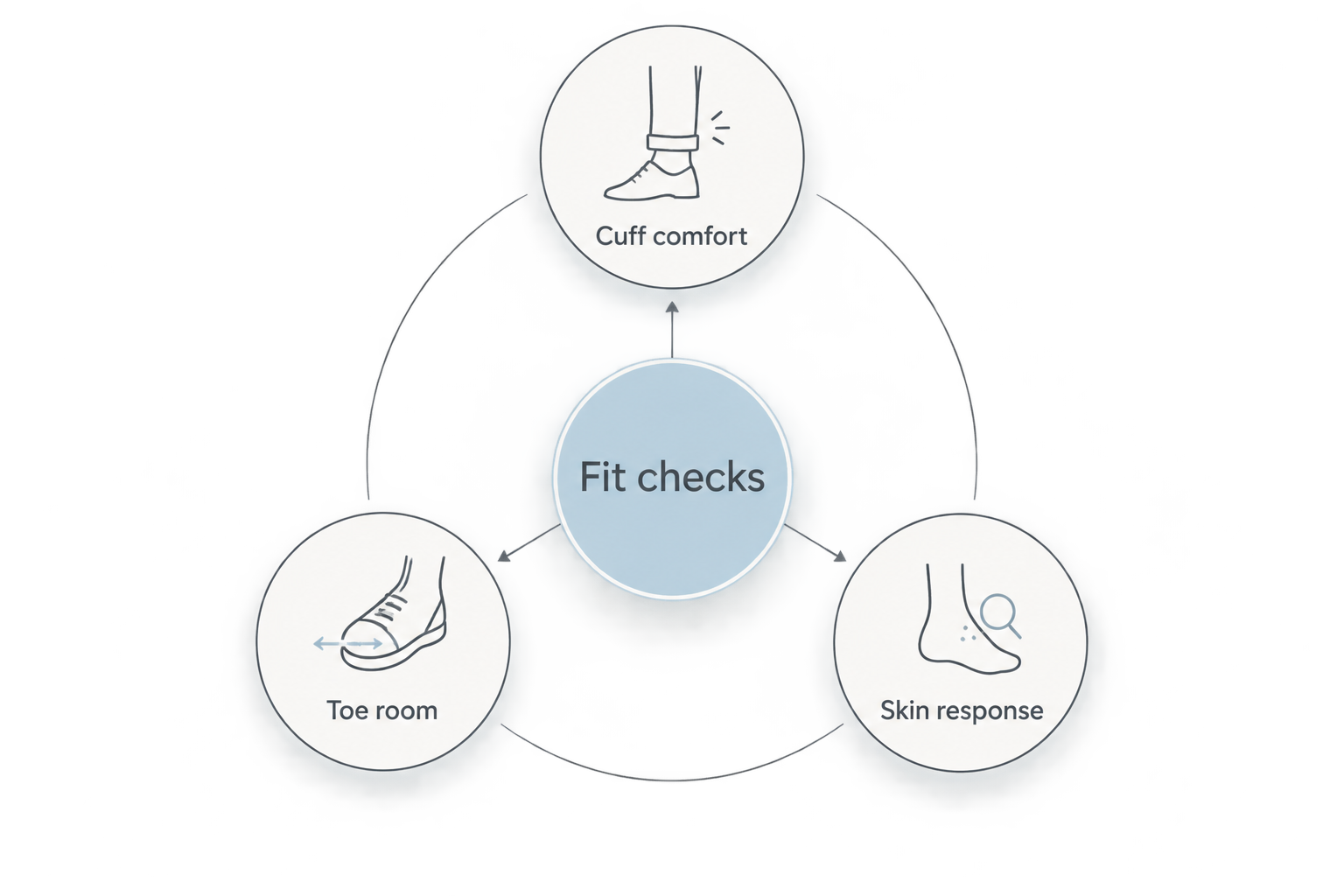
Cuff comfort
The top should sit comfortably without digging in or rolling into a narrow band. If your leg size changes during the day, assess comfort when that change usually occurs, rather than relying only on the first moment you put the socks on.
Do not buy a larger foot size simply to guess at extra calf room. That changes the foot fit without establishing the cuff dimensions you need. Ask for calf-fit information if this is the deciding factor.
Toe room
Try your socks with the footwear you actually intend to use. You should not have to squeeze your feet into shoes that fitted comfortably with a thinner pair.
Check 2 settings if you plan to wear the socks both indoors and outside: your usual indoor footwear and your outdoor shoes. A comfortable combination in one setting does not establish a comfortable combination in the other.
Skin response
Notice rubbing, itching, soreness or a cuff that becomes uncomfortable. Remove an ordinary sock that causes new discomfort rather than trying to break it in against sensitive skin.
A soft description is useful, but your own skin response decides whether the fabric suits you. Seek medical advice for persistent irritation, broken skin or changing symptoms instead of repeatedly switching sock styles.
When medical advice comes before the sock choice
If your goal is to manage aching, swelling or other symptoms associated with varicose veins, speak to a healthcare professional. Ordinary wool socks provide warmth; they are not a treatment plan.
Graduated compression hosiery applies controlled pressure and requires an appropriate choice of garment and fit. Compression is not suitable for everyone, particularly where arterial circulation is impaired, so do not select a pressure level from a general winter-sock guide.
Get urgent medical advice for sudden one-sided leg swelling, pain, redness or heat. Call emergency services for breathlessness or chest pain, and seek urgent help for bleeding from a varicose vein. These are not problems to solve by changing socks.
If compression has already been prescribed, follow the instructions you were given. Ask your clinician or fitter before adding a wool layer over it, especially when your shoes already feel close-fitting.
Which wool socks should you choose?
Choose Swedish Lagom Socks - Warm Ochre as the default for everyday winter comfort. Choose Danish Hygge Socks - Sky Grey when cosy time indoors is the priority, or Norwegian Fjord Socks - Warm Durable Winter Socks when the stated soft, strong yarn is your deciding feature.
For 2026, keep the decision in that order: establish your medical needs, check the fit, then choose the comfort feature you prefer. Nordic Sock Company offers winter warmth; none of the three descriptions establishes a sock specifically designed for varicose veins.
If you need a documented non-binding cuff or measured compression, hold the purchase until you have the right specifications. A useful recommendation includes knowing when not to buy.
FAQ
What's the best wool sock for varicose veins?
No ordinary wool sock in this shortlist is established as a treatment for varicose veins. Swedish Lagom Socks - Warm Ochre is the everyday comfort pick because its description specifies a soft wool blend and cushioning, but cuff fit still needs checking.
Do wool socks improve circulation in varicose veins?
Ordinary wool socks are not established here as improving venous circulation. Their role is warmth and comfort, which is different from the controlled pressure supplied by medical compression hosiery.
Are Nordic Sock Company socks medical compression socks?
The three product descriptions in this guide do not specify medical compression levels. Do not use these winter socks as a replacement for prescribed compression hosiery.
Should I choose loose socks or compression socks?
Choose an ordinary sock for comfortable warmth and seek professional advice about compression for vein symptoms. A non-restrictive everyday fit and correctly selected graduated compression serve different purposes.
Can I wear wool socks over prescribed compression stockings?
Ask your clinician or compression fitter before adding a wool layer. The extra fabric must not make your shoes tight, disturb the prescribed garment or create uncomfortable pressure.
Is the thickest wool sock the best choice for swollen legs?
No, greater thickness does not establish suitability for swollen legs. Prioritise comfortable cuff fit, sufficient footwear space and advice about the cause of the swelling.
What should I do if my socks leave painful marks?
Remove ordinary socks that cause painful pressure and seek advice if pain, swelling or skin changes persist. Do not treat a tight band as evidence that the sock is providing useful compression.
One last thing
The softest part of a sock is usually what catches your attention. The cuff deserves just as much scrutiny.
Before buying several pairs for winter 2026, confirm how the cuff fits and try the socks with your usual shoes. Warm feet are the aim; tolerating a painful band is not part of getting cosy.