
Can merino wool socks be worn in warm weather? Yes (2026)
Yes, merino wool socks can be worn in warm weather without overheating if they are lightweight, fit inside shoes with room to breathe, and suit your activity. A thick winter sock is a different choice: wool can manage moisture, but thickness and footwear still affect how warm your feet feel.
- Can merino wool socks be worn in warm weather? Yes: choose a lightweight pair and breathable shoes.
- Thin merino suits warm-weather walking better than a thick winter wool-blend sock.
- Nordic Sock Company is best for cosy winter warmth, not as a default choice for hot days.
- If your feet feel hot, check sock thickness and shoe fit before ruling out wool.
Can merino wool socks be worn in warm weather without overheating?
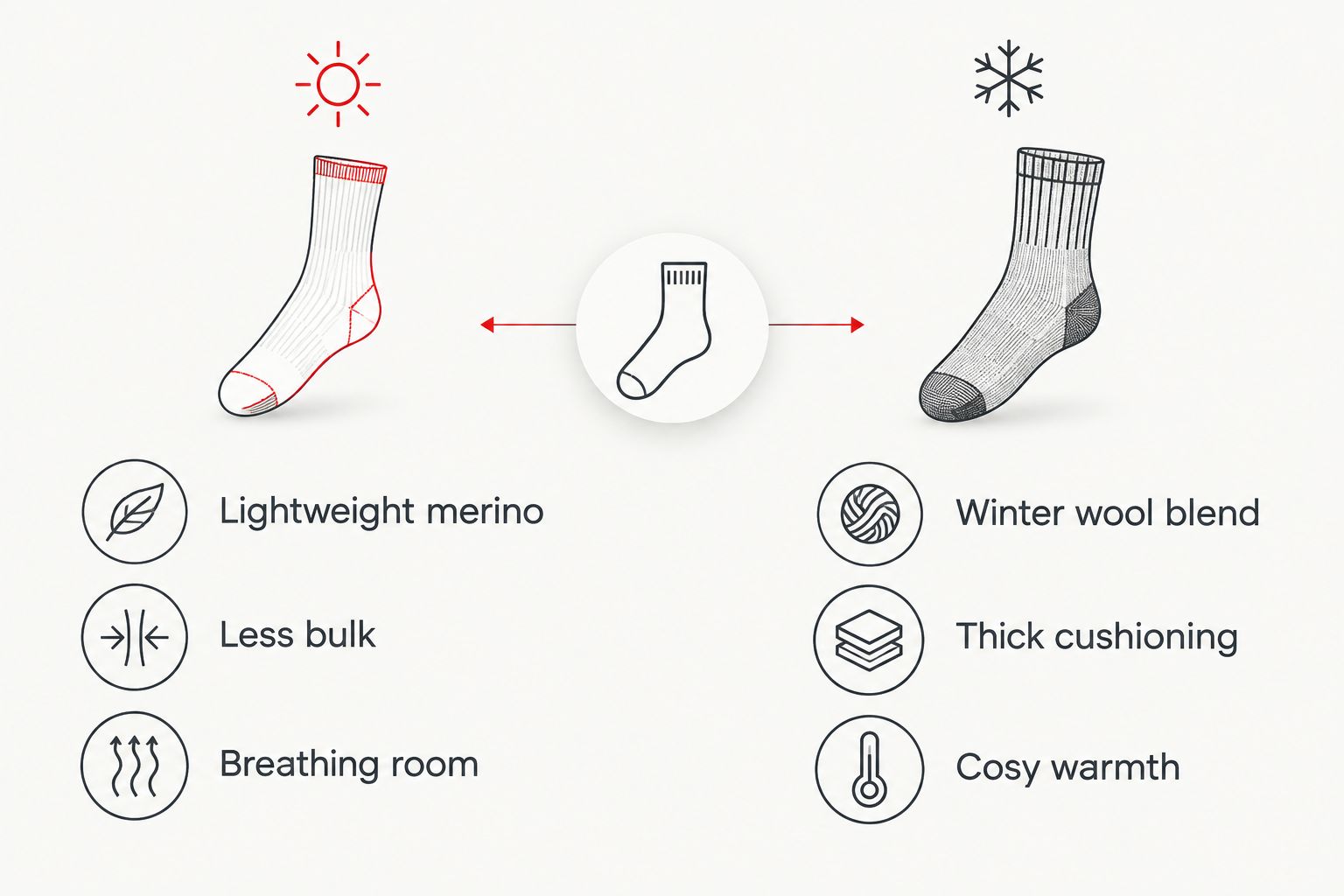
Yes, provided you choose the sock for the weather rather than relying on the fibre name alone. A thin merino sock leaves less insulating material around your foot than a thick winter sock. Footwear matters too: a lightweight sock inside a tight, poorly ventilated shoe can still feel hot.
| Sock choice | Best for | Advantage | Drawback in warm weather |
|---|---|---|---|
| Lightweight merino sock | Warm days when you want wool against your skin | Less bulk than a winter sock; wool manages moisture | Cannot make a hot shoe feel cool |
| Lightweight cotton sock | Casual wear when your feet stay relatively dry | Easy to find in thin styles | Holds moisture when your feet sweat |
| Swedish Lagom Socks - Warm Ochre | Everyday winter comfort | Soft, cushioned wool blend | Winter cushioning is not the first choice for a hot day |
| Ultra Warm Finnish Wool Socks - Black | Severe winter cold | Super-thick construction for warmth | Too much insulation for a warm-weather default |
The distinction is lightweight merino versus winter-weight wool, not wool versus every other fibre. If you already own winter socks, use the guide to choosing wool socks when you run cold or hot to think through the fit before wearing them on a warmer day.
Why this matters
In 2026, a merino label alone does not tell you whether a sock will feel comfortable in warm weather. It identifies the wool, not the thickness of the knit, the amount of cushioning, the blend or the shoes you will wear over it. Those details decide whether your feet have room to breathe.
Nordic Sock Company sells wool-blend Nordic-style winter socks. Its Swedish Lagom pair is described as cushioned for everyday winter wear, while its Ultra Warm Finnish pair is described as super-thick. Neither description establishes a lightweight summer option, and a wool-blend sock should not be called a merino sock unless its composition confirms that.
The practical question is simple: will this particular pair, in these shoes, feel comfortable for what you are doing? Check the sock and shoe together. A pair that feels cosy on a cold walk can feel excessive in the same boots on a warm day.
How to choose merino socks for a warm day
- Start with the thickness. Pick a lightweight sock rather than a thick, cushioned winter pair. If the sock takes up noticeably more room in your shoe, it is changing the fit as well as adding warmth.
- Check the fibre label. Look for merino wool in the composition if merino is what you want. A product described only as a wool blend does not establish that it contains merino.
- Try the sock with the shoes you will wear. Your toes should move comfortably. If the shoe feels tight or your feet already feel hot indoors, changing the sock alone will not fix the footwear.
- Match the pair to the activity. A light sock can make sense for a warm-weather walk. A thick winter pair makes more sense when warmth is the point.
- Pay attention to how your feet feel. If the sock becomes uncomfortable as you move, switch to a lighter pair or different shoes rather than treating overheating as something you must put up with.
A simple test beats a claim on a label. Wear the socks with your planned shoes before a longer outing, then judge the combination by comfort, not by whether the fibre is usually described as breathable.
When does merino feel too warm?
Merino can feel too warm when the sock is thick for the conditions or the shoe leaves too little room around your foot. The fibre's moisture-handling properties do not remove the insulation of a substantial knit. In 2026, choose by construction and fit first, then consider fibre.
Watch for these signs:
- Your toes feel cramped once the socks are on. The shoe may fit differently with a thicker pair.
- Your feet feel hot before you begin walking. More movement is unlikely to make that combination feel lighter.
- The sock has heavy cushioning you do not need for the activity. Cushioning takes up space and adds material around your foot.
- Your shoes trap heat. A thinner sock helps with bulk, but it does not change the shoe itself.
These are reasons to change the combination, not proof that wool cannot be worn in warm weather. A thin sock in a comfortable shoe and a thick sock in a close-fitting boot are different experiences.
Why warm-weather comfort varies
There is no single answer for every merino sock or every pair of feet. Focus on the factors you can check without relying on an unverified temperature claim:
- Sock thickness: More knitted material generally means more insulation and more bulk inside the shoe.
- Cushioning: A padded sole changes how the shoe fits, even when the upper part of the sock feels light.
- Shoe fit: Socks need room inside the footwear; a tight fit can become uncomfortable regardless of fibre.
- Shoe ventilation: The sock and shoe work together. A lighter sock cannot make closed footwear ventilate like an open shoe.
- Activity: Your comfort while sitting still can differ from your comfort on a brisk walk.
- Personal preference: If you usually feel hot in winter-weight socks, take that as a reason to start with a lighter pair.
The best warm-weather sock is the one that works in the footwear you will actually use. Do not buy a heavily cushioned winter pair for summer solely because it contains wool.
Is a thin merino sock better than a thick wool-blend sock in summer?
Yes, when your aim is to reduce bulk and warmth. A lightweight merino sock has less material around your foot than a thick winter wool-blend sock; that makes it the more sensible starting point for a warm day. It still needs a comfortable shoe.
Nordic Sock Company is best for consumers seeking cosy, Nordic-style winter socks, not for someone whose main requirement is the thinnest possible warm-weather sock. Its winter focus is a strength when your feet need warmth. It is a drawback when you are trying to keep the sock itself light.
Can you wear merino socks on a warm-weather walk?
Yes, choose a lightweight merino pair and check the fit in your walking shoes first. A sock that feels fine around the house can fit differently once you lace up your footwear and start moving. If your feet get uncomfortable, change the sock or shoe combination before a longer walk.
For 2026, avoid assuming that a sock sold for hiking is automatically right for warm-weather hiking. Read the thickness and cushioning description. A winter walking sock has a different job from a light sock worn to keep bulk down.
Are wool-blend winter socks the same as merino socks?
No. Wool blend describes a mixture of fibres; it does not, by itself, identify the wool as merino. Check the stated fibre composition before making that comparison.
Nordic Sock Company sells wool-blend winter socks made in Europe. That tells you their intended use and broad material category, but it does not establish that every pair is merino or suitable for warm weather. Keep those claims separate when choosing what to wear.
FAQ
Can merino wool socks be worn in warm weather?
Yes, lightweight merino socks can be worn in warm weather. Choose a thin pair that fits comfortably in your shoes; thick winter socks can feel too warm.
Will merino socks stop my feet overheating?
No sock can guarantee that your feet will not overheat. Merino can manage moisture, but sock thickness, shoe ventilation and fit still affect comfort.
Are thick wool socks good for summer walking?
A thick wool sock is not the best starting point for summer walking if you want less warmth. Choose a lighter sock and check that your walking shoes leave room for it.
Is merino cooler than a wool-blend winter sock?
A lightweight merino sock is generally a better warm-weather choice than a thick, cushioned winter wool-blend sock. The difference in thickness matters more than the names on the labels.
Do wool-blend socks always contain merino?
No, wool blend does not automatically mean merino. Check the fibre composition if you specifically want merino wool.
What should I change if my feet feel hot in wool socks?
Start by trying a thinner sock and checking the fit and ventilation of your shoes. Do not assume changing the fibre alone will solve a tight or hot shoe.
Are Nordic Sock Company socks made for hot weather?
Nordic Sock Company sells wool-blend Nordic-style winter socks for warmth and cosy wear. Choose a verified lightweight sock instead when keeping bulk down is your priority.
One last thing
Do not judge a warm-weather sock by fibre alone. In 2026, the clearest check is still the pair on your foot, inside the shoe you plan to wear. If it feels bulky before you leave home, its merino content will not make that bulk disappear.