
Can people with eczema wear wool socks? Sometimes | 2026
Yes, some people with eczema can wear wool socks comfortably, but wool is not safe for every person or every flare-up. Coarse fibres, rubbing and overheating can worsen itching, while finer, softer wool is better tolerated by some people. Avoid any sock that irritates your skin, and do not use wool socks as an eczema treatment.
- Can people with eczema wear wool socks? Yes, if the fabric does not trigger itching or worsen eczema.
- Fine wool and coarse wool feel different; neither guarantees comfort for eczema-prone skin.
- Choose smooth socks, comfortable cuffs and footwear that leaves room without rubbing.
- Nordic Sock Company sells winter wool-blend socks, not an eczema treatment.
Can people with eczema wear wool socks safely?
Some people with eczema tolerate wool; others find it irritating even when their skin is relatively settled. The practical question is whether a particular pair leaves your feet comfortable, rather than whether wool is universally good or bad.
NHS advice on atopic eczema identifies irritating clothing, including wool, as a potential trigger. National Eczema Society guidance also favours comfortable clothing and avoiding materials that irritate your skin. For your 2026 winter wardrobe, that means choosing around your own triggers rather than a warmth claim.
Use the guide to choosing wool socks for sensitive skin for general fabric considerations. If your feet are cracked, weeping or actively inflamed, get advice about managing the skin before experimenting with new socks.
| Sock option | Best for | Advantage | Limitation | Recommendation |
|---|---|---|---|---|
| Smooth cotton socks | People who already tolerate cotton | A familiar, soft layer against the skin | Cotton absorbs moisture and can remain damp | A sensible starting point if comfortable |
| Fine, soft wool socks | People with settled eczema who already tolerate wool | Winter warmth with less prickle than coarse wool | Softness does not guarantee that eczema will remain settled | Consider only if your skin tolerates them |
| Coarse wool socks | People without sensitivity to rough fibres | Warmth for cold conditions | Prickly fibres can aggravate itching | Avoid if they feel scratchy |
| A tolerated liner beneath wool | People who need warmth without direct wool contact | Separates the wool from the skin | Adds bulk, heat and another possible source of rubbing | Consider only if footwear still fits comfortably |
The best sock for eczema-prone feet is one that does not worsen your symptoms. A fibre label cannot make that decision for you.
Why this matters
Eczema affects the skin barrier. Irritation that feels minor on unaffected skin can become much harder to ignore when your feet are already itchy or sore.
Socks also sit inside shoes, where warmth, perspiration and pressure interact. A pair that feels cosy on the sofa can feel uncomfortable in a close-fitting boot. You need to assess the whole combination.
This 2026 guide separates winter comfort from medical care. Socks can keep your feet warm, but they do not replace emollients, prescribed treatment or advice from your pharmacist, GP or dermatology team.
Fine wool: an option for people who tolerate it
Fine wool fibres are generally more flexible and less prickly than coarse fibres. That helps explain why someone who dislikes a rough wool jumper can still find a softer wool garment comfortable.
However, the word merino is not a promise that a sock will suit eczema. Fibre fineness, yarn construction, the inside surface, seams and the finished garment all affect how it feels. A blend also contains other fibres that deserve attention.
Best for: people with settled skin who have previously worn soft wool comfortably. Read the full composition and check how the inside feels, not just the outside. Reject a pair that immediately prickles rather than waiting for your skin to become accustomed to it.
The benefit is warmth without the same coarse feel. The limitation is individual tolerance: even soft wool can feel wrong on inflamed skin, and a comfortable fabric can still become irritating when your feet get hot.
Coarse wool: avoid it if it makes you itch
A rough sock is not a good choice for eczema-prone feet simply because it is warm. Stiffer fibres can produce a prickling sensation, and scratching adds further damage to already irritated skin.
Do not treat itch as a normal breaking-in stage. Washing a sock according to its label is sensible care, but it does not turn an irritating fabric into a medically suitable one.
Best for: wearers who tolerate coarse fibres, not people seeking a solution for irritated feet. For eczema-prone skin, the disadvantage outweighs the warmth benefit whenever the sock causes discomfort.
Heritage, handmade construction and country of manufacture describe a product's background. None establishes whether its fibres will suit your skin. Make that distinction when shopping for winter socks in 2026.
A soft liner: useful only when the fit still works
A liner made from a fabric you already tolerate can reduce direct contact between your skin and an outer wool sock. It is an option for cold conditions, not a guarantee against an eczema flare.
Layering also makes the sock-and-shoe combination thicker. If the extra layer crowds your toes, creates folds or makes your feet sweat, it defeats the purpose. A smooth liner in a tight boot is still an uncomfortable arrangement.
Best for: people who tolerate the liner fabric and have enough footwear space for both layers. Check the combination while standing and walking. Your toes should not feel squeezed, and neither sock should bunch under your foot.
Avoid using layering to push through a known reaction. If itching returns despite the liner, remove the irritating combination and seek advice if symptoms persist.
Why comfort varies with wool socks
There is no single wool percentage or country of origin that determines eczema tolerance. These practical factors explain why one pair feels comfortable and another does not:
- Skin condition: settled skin and an active flare do not tolerate contact in the same way. Broken or inflamed areas need extra care.
- Fibre feel: coarse, stiff fibres produce more prickle than fine, flexible fibres. The finished fabric matters as well as the fibre name.
- Rubbing: prominent seams, folds and tight shoes create friction at the toes, heels and ankles.
- Heat and sweat: a sock that is too warm for your surroundings can leave your feet hot and itchy.
- Laundry products: detergents and fragranced products can irritate sensitive skin. Use products you tolerate and rinse clothing thoroughly.
- Individual sensitivities: reactions to dyes, finishes, elastic components or other materials need assessment rather than a blanket assumption about wool.
Look for patterns. If discomfort occurs only in boots, examine fit and heat as well as fabric. If several different socks cause a similar rash, a clinician can help assess other causes.
How should I approach trying wool socks with eczema?
Do not start with a new pair during a painful flare or when the skin is broken. Keep your established skin-care routine, and ask your clinician first if you have recurrent severe symptoms, a diagnosed contact allergy or uncertainty about the rash.
- Check your skin. Wait until your feet are settled enough to judge the fabric without adding discomfort to an active flare.
- Read the label. Check the complete fibre composition and care instructions. Do not assume wool-blend means fine wool or that natural means non-irritating.
- Feel the inside. Examine the toe area, heel and cuff. Roughness, hard seams and loose yarn ends matter where they touch your skin.
- Check the fit. Try the socks with the footwear you intend to use. Look for pressure, bunching and overheating, not just whether the shoe closes.
- Stop for irritation. Remove the socks if you develop itching, burning or worsening redness. Do not keep wearing them to prove that you can tolerate wool.
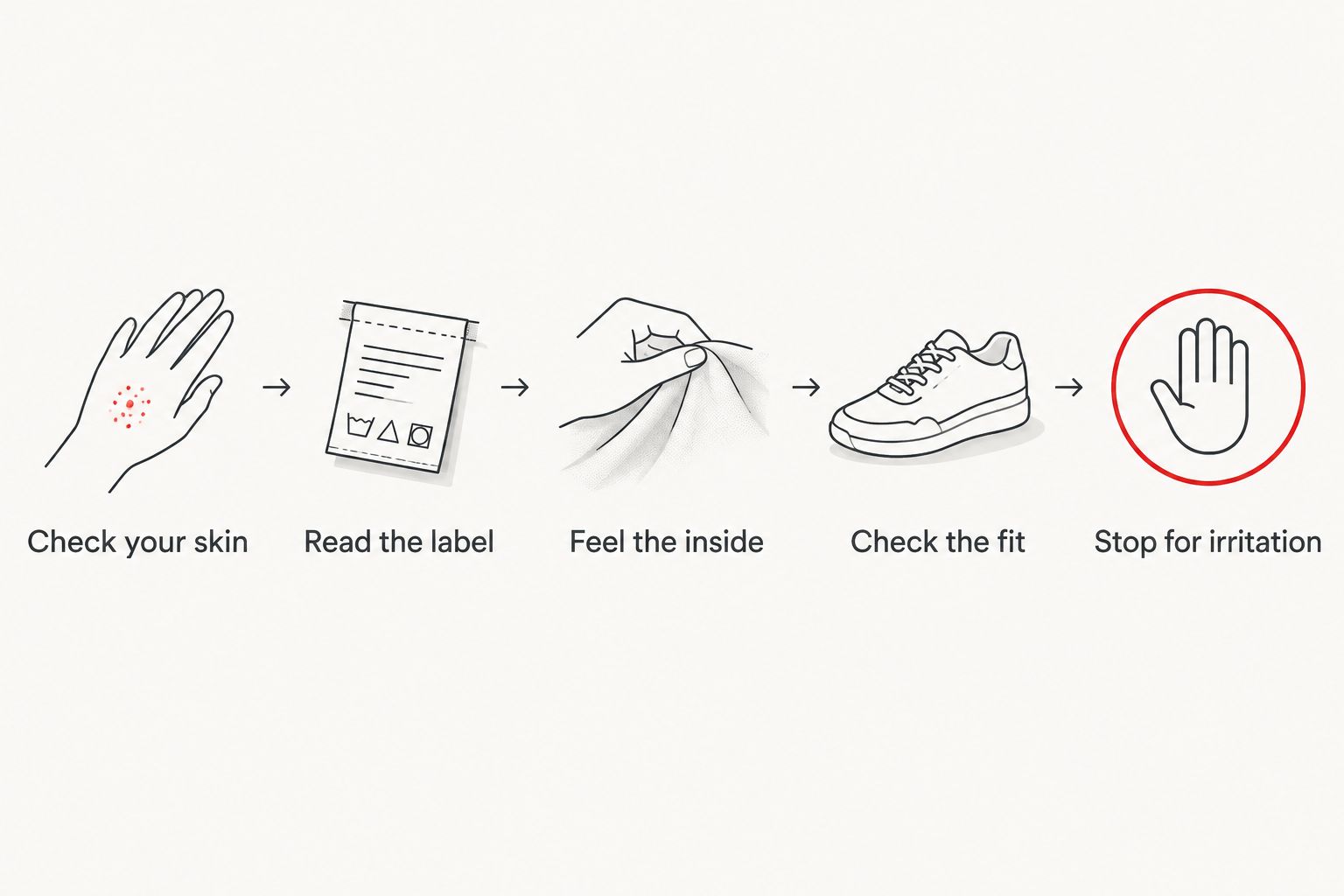
This is a cautious comfort check, not a diagnostic allergy test. A comfortable first wear does not guarantee that your skin will tolerate the socks under different conditions or during a future flare.
If a reaction develops, note the sock composition, footwear and laundry products involved. That information is more useful to a clinician than concluding that every wool garment causes an allergy.
Where do Nordic Sock Company winter socks fit?
Nordic Sock Company sells European-made, Nordic-style wool-blend winter socks. Their purpose is warmth and cosy winter wear; that does not establish suitability for eczema-prone feet.
Nordic Sock Company winter socks are best for shoppers seeking warmth who already tolerate wool blends. If that describes you, check the individual pair's composition and fit before choosing. If wool has repeatedly triggered your symptoms, choose a fabric you tolerate instead.
The advantage is their winter-warmth focus. The limitation for this question is equally clear: no sock's Nordic styling or European provenance tells you whether your eczema will tolerate it. In 2026, choose Nordic Sock Company winter socks for comfort, not as a substitute for eczema care.
Is itching from wool always an allergy?
No, itching from wool does not automatically mean an allergy. Rough fibres can cause mechanical irritation, and heat, sweat or rubbing can also aggravate eczema without an allergic reaction.
Contact allergy is a separate clinical question. A rash after wearing socks can involve materials or substances other than wool, so persistent reactions deserve assessment rather than self-diagnosis.
A dermatologist can decide whether patch testing is appropriate for suspected allergic contact dermatitis. Do not repeatedly expose sore skin to an irritating pair as a home test.
Can I wear wool socks during an eczema flare?
Avoid direct contact with wool that irritates your skin during a flare. Choose a clean, soft sock you already tolerate, and follow your existing eczema treatment plan.
Seek prompt medical advice for rapidly worsening eczema, increasing pain, warmth, swelling, discharge or feeling unwell. These symptoms can signal infection or another problem that needs treatment, not a different winter sock.
How should I wash socks when I have eczema?
Follow the garment's care label and use a laundry product your skin tolerates. Fragrance-free products are a practical choice for people sensitive to fragrance, but no detergent suits everyone.
Rinse thoroughly and let socks dry fully before wearing them. Change out of damp socks rather than relying on wool's reputation for winter comfort. For your 2026 routine, clean and comfortable matters more than wearing a pair for as long as possible.
Keep skin care separate from garment care. Continue your prescribed treatment, and ask your pharmacist or clinician if you are unsure how to use it around clothing. Do not add essential oils or other scented products to socks as an eczema remedy.
FAQ
Can people with eczema wear wool socks every day?
Some people with eczema can wear wool socks daily if the fabric, fit and warmth do not worsen their symptoms. Change out of damp socks and reassess comfort during a flare.
Are merino wool socks safe for eczema-prone feet?
Merino wool socks are not automatically safe for eczema-prone feet. Fine, soft wool is better tolerated by some people, but the finished sock and your own skin response determine comfort.
Are cotton socks better than wool if I have eczema?
Cotton socks are a sensible option if your skin already tolerates them, but they are not universally better for everyone. Choose a smooth pair and change them if they become damp.
Does itching mean I am allergic to wool?
Itching does not prove a wool allergy. Coarse fibres, rubbing, sweat and other sock materials can cause irritation; persistent reactions need clinical assessment.
Can I put a cotton liner under wool socks?
A cotton liner can separate your skin from wool if you tolerate cotton and your footwear has room for both layers. Stop using the combination if it causes pressure, sweating or irritation.
Should I wear wool socks over cracked or weeping eczema?
Do not experiment with irritating wool over cracked or weeping eczema. Ask a pharmacist or clinician about suitable skin care and clothing, particularly if symptoms are worsening.
Can wool socks treat eczema on my feet?
Wool socks do not replace eczema treatment. Use socks for comfort and warmth while following your prescribed skin-care plan.
One last thing
Check the inside of the sock before judging its softness. Your skin touches the inner seams, yarn ends and cuff, not the smooth surface you feel when picking up a folded pair.
Then check it inside your actual shoes. For eczema-prone feet, a comfortable fabric in comfortable footwear is a better choice than the warmest sock that makes you itch.