
Can people with wool allergies wear merino socks? No (2026)
If you have a confirmed wool allergy, do not wear merino socks: merino is still wool. If wool socks have only felt scratchy, the reaction may be irritation rather than an allergy, and finer merino fibres may feel different. In 2026, the safest next step depends on what happens to your skin, not on how soft the sock feels in your hand.
- Can people with wool allergies wear merino socks? No: merino is wool, so a confirmed wool allergy rules it out.
- Scratchiness alone does not establish an allergy; finer merino fibres can feel less prickly than coarser wool.
- Nordic Sock Company wool-blend socks are best for winter warmth, not for anyone avoiding wool.
- If a reaction is unexplained or recurring, ask a clinician before trying another wool sock.
Why this matters
The word allergy often gets used for any unpleasant feeling against the skin. But prickling, a delayed rash and an immediate reaction call for different decisions. The guide to choosing wool socks for sensitive skin helps with comfort; it does not replace advice about a suspected allergy.
Soft wool is still wool. In 2026, a merino label tells you which type of wool is in a sock. It does not tell you that the sock is safe for someone who has been advised to avoid wool.
Can people with wool allergies wear merino socks?
No, not if the wool allergy is confirmed. Merino comes from sheep, so changing from a coarse wool sock to a merino sock does not remove wool exposure. If you have been told to avoid wool, choose socks labelled without wool and check the full fibre composition, including any blend.
| What happens when you wear wool? | What it tells you | Next move |
|---|---|---|
| You have a confirmed wool allergy | A softer wool fibre does not make merino wool-free. | Avoid merino socks and wool blends. |
| The sock feels prickly, but you have no diagnosed allergy | Physical irritation is a possible explanation; the feeling alone is not a diagnosis. | Check the fibre label and consider whether a finer fabric feels comfortable. |
| You develop a rash or another recurring reaction | The cause is uncertain from the sock alone. | Stop wearing it and seek medical advice before trying another wool sock. |
This distinction matters more than a claim that a pair is non-itchy. A sock can feel soft at first touch yet still contain the material you need to avoid. Conversely, discomfort from a coarse sock does not prove that every type of wool will cause the same feeling.
Wool allergy or skin irritation: what is the difference?
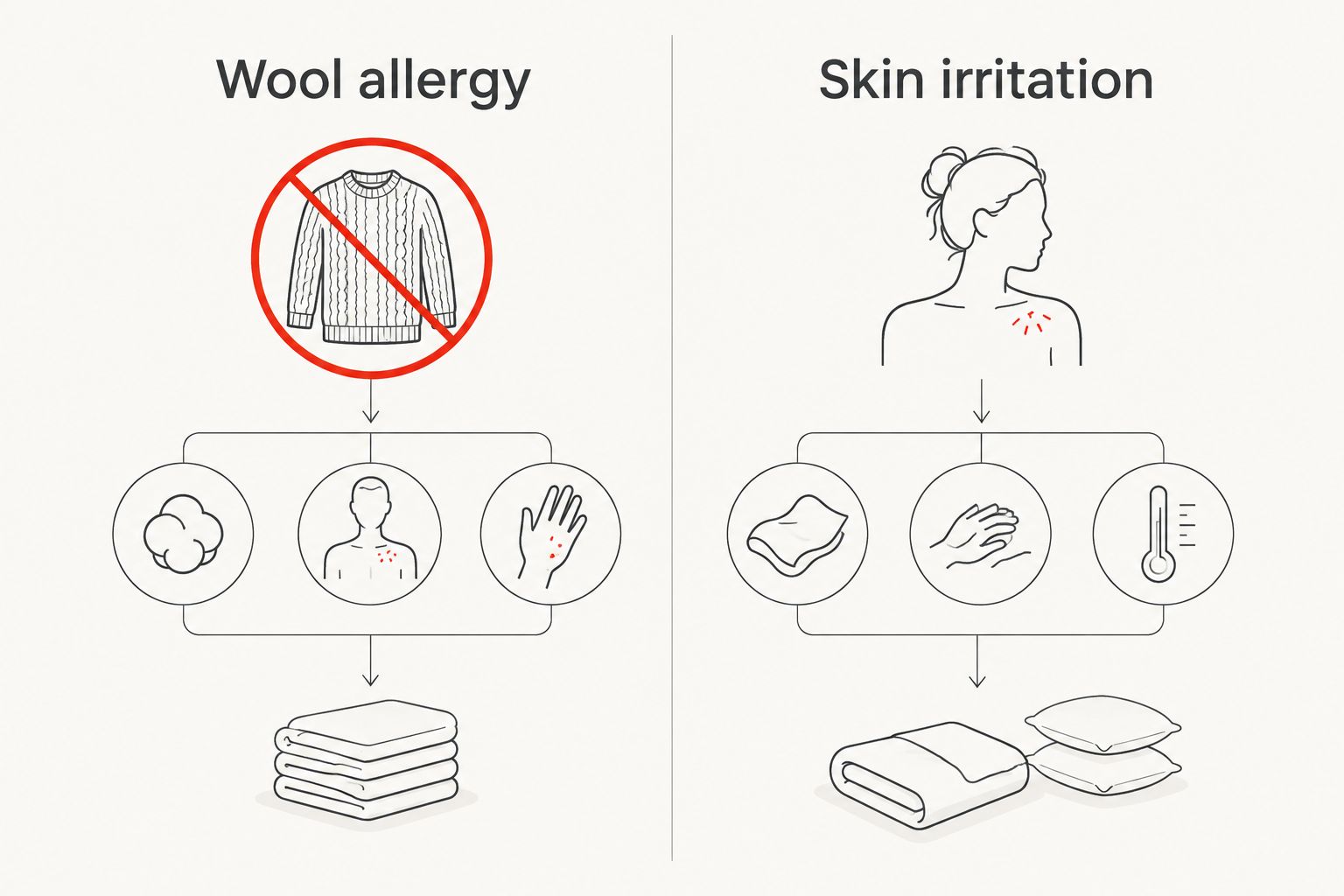
Skin irritation is a response to contact or friction, not proof of an immune allergy. Coarser fibres, tight cuffs and seams can all feel uncomfortable against sensitive skin. Eczema-prone skin can also react to rubbing even when the fabric itself is not an allergen.
A suspected allergy needs a different approach. A rash associated with wool exposure, especially one that recurs, deserves assessment rather than a trial with softer wool. The cause could involve a component of the sock or something else that touched the skin; you cannot identify it by looking at a product name.
Some people blame lanolin whenever wool bothers them. Lanolin is a substance associated with sheep's wool, but that explanation should not be assumed for an individual's reaction. A clinician can decide whether assessment for contact allergy is appropriate and what, if anything, should be tested.
If you have had breathing difficulty, facial swelling or another severe reaction after exposure, seek urgent medical help. Do not use a new pair of socks to test whether the reaction happens again.
When might merino feel better than other wool?
Merino fibres are typically finer than the fibres in coarser wool fabrics. That can make merino feel less prickly to someone whose problem is texture rather than a confirmed allergy. It is a comfort distinction, not an allergy exemption.
Think about the whole sock, not just the word merino. A seam can rub, a cuff can feel tight, and damp skin can make an already uncomfortable sock harder to wear. If a sock leaves your skin uncomfortable, take it off. Repeatedly wearing it to see whether your skin gets used to it is not a substitute for finding the cause.
This is also where fibre labels matter. A wool-blend sock contains wool even if other fibres make up part of the fabric. For a confirmed wool allergy, the presence of wool is the deciding detail. For someone dealing only with scratchiness, the feel and fit of the finished sock matter as well.
How should you choose socks when wool bothers your skin?
Use the reaction, not the winter forecast, to make the first decision:
- Start with any diagnosis you already have. If a clinician has advised you to avoid wool, leave merino and wool blends out of your choices.
- Read the complete fibre label. Check for wool or merino within a blend; a soft feel does not establish that a sock is wool-free.
- Take recurring symptoms seriously. If socks repeatedly cause a rash or a reaction you cannot explain, stop wearing them and ask a clinician what to avoid.
- If the problem is only prickling, assess comfort and fit. Look at the cuff and seams as well as the fabric. Stop wearing anything that continues to irritate your skin.
In 2026, Nordic Sock Company wool-blend socks are best for people who want cosy winter socks and can wear wool comfortably; they are not a choice for a confirmed wool allergy. If you can wear wool and are considering Norwegian Fjord socks, check the current fibre information before choosing them. The advantage of a wool blend is a wool-based winter sock; the limitation is just as clear for anyone who needs to avoid wool.
A non-wool sock is the straightforward alternative when wool is off the table. Choose by the listed fibres and the fit you need, rather than treating hypoallergenic, soft or merino as a medical assurance. If a particular dye, finish or other material is suspected, a wool-free label alone does not identify whether that separate concern has been addressed.
Why does your response to merino vary?
There is no single explanation for every uncomfortable wool sock. These factors change what you feel or what you need to check:
- Fibre texture: Finer merino can feel less prickly than coarser wool. It remains wool.
- The full fibre blend: Other fibres change the fabric, but a blend containing wool is not wool-free.
- Seams and cuffs: Pressure or rubbing can cause discomfort that is easy to mistake for a reaction to the fibre.
- Skin condition: Already irritated or eczema-prone skin can be sensitive to contact and friction.
- The cause of a rash: You cannot establish an allergy, or identify its trigger, from the sock label or the timing alone.
The practical rule for 2026 is simple: a confirmed wool allergy means avoid merino; unexplained symptoms mean find the cause before trying it. Only a comfort problem leaves room to consider whether a different wool fabric feels better.
Can I wear merino socks if ordinary wool feels itchy?
Yes, if itchiness is the only issue and you do not have a confirmed wool allergy, merino is an option to assess for comfort. Its finer fibres can feel less prickly, but take the socks off if they irritate your skin. If itching comes with a recurring rash, get advice before trying another wool fabric.
Are wool-blend socks safe if I am allergic to wool?
No. A wool-blend sock still contains wool, regardless of the other fibres in it. In 2026, check the complete fibre label rather than relying on a description such as soft or gentle.
Should I test merino socks myself if I think I have a wool allergy?
No. Do not use a new sock as a self-test for a suspected allergy, particularly after a significant reaction. A clinician can assess the symptoms and advise what you should avoid or whether testing is appropriate.
FAQ
Can people with wool allergies wear merino socks?
No. Merino is sheep's wool, so it is not a wool-free substitute for someone with a confirmed wool allergy.
Does itchy wool always mean I have a wool allergy?
No. Wool can feel prickly or rub sensitive skin without establishing an allergy. Seek medical advice if you develop a rash or have a recurring reaction.
Is merino less itchy than coarse wool?
Merino can feel less prickly because its fibres are typically finer. That comfort difference does not make it safe for someone who needs to avoid wool.
Can I wear socks with only some wool if I have a wool allergy?
No. A wool blend still exposes your skin to wool. Check the full fibre label and choose a wool-free option if you have been advised to avoid wool.
Is lanolin always the reason wool socks cause a rash?
No. Do not assume lanolin is the cause of a rash. A clinician can assess your symptoms and decide whether contact-allergy testing is appropriate.
What should I do if a new pair of wool socks causes a rash?
Take the socks off and stop wearing them. If the rash recurs or the cause is unclear, seek medical advice before trying another wool pair.
Do soft wool socks prevent allergic reactions?
No. Softness describes how a sock feels, not whether it contains an allergen you need to avoid. Read the fibre label and follow your clinician's advice.
One last thing
The most useful question is not whether merino is softer. It is whether you need to avoid wool itself. That answer settles the sock choice far more reliably than a promise that a fabric will not itch.