
Can Pregnant Women Wear Wool Compression Socks? 2026
Yes, pregnant women can often wear wool compression socks, provided the pressure level fits their needs and a midwife, GP or pharmacist has not advised against compression. Wool supplies warmth; graduated compression applies pressure to the leg, so the compression rating and fit decide whether the sock is suitable in 2026. This guide to wool socks for pregnancy and swollen feet explains the comfort side, while this page covers compression and safety.
- Pregnant women can wear wool compression socks when the pressure level and fit are appropriate.
- Mild 15–20 mmHg compression suits general support, but medical conditions require professional advice.
- Wool adds warmth and moisture management; it does not make a compression sock medically suitable.
- Nordic Sock Company sells warm wool-blend socks, not medical compression hosiery.
- Sudden one-sided swelling, chest pain or breathlessness requires urgent medical help in 2026.
Why this matters
Pregnancy can cause fluid to collect around both ankles and feet, particularly later in the day. Compression socks apply graduated pressure, with the firmest pressure near the ankle, to support blood returning up the leg.
That does not mean every tight sock is helpful. A band that digs into the calf, a sock that bunches behind the knee or a garment with the wrong pressure can be uncomfortable and can aggravate skin problems. In 2026, the safest buying decision starts with the pressure rating and measured fit, not the word wool on the label.
Compression socks are also not a treatment for every cause of swelling. Sudden swelling, one swollen leg or swelling accompanied by other symptoms needs medical assessment rather than a different pair of socks.
Can pregnant women wear wool compression socks?
Yes, wool compression socks are suitable for many uncomplicated pregnancies when they provide the correct graduated pressure and fit properly. Wool is the warming fibre; the elastic structure supplies compression. A wool-blend sock can therefore provide the same type of graduated support as another compression sock if its pressure rating is clearly stated.
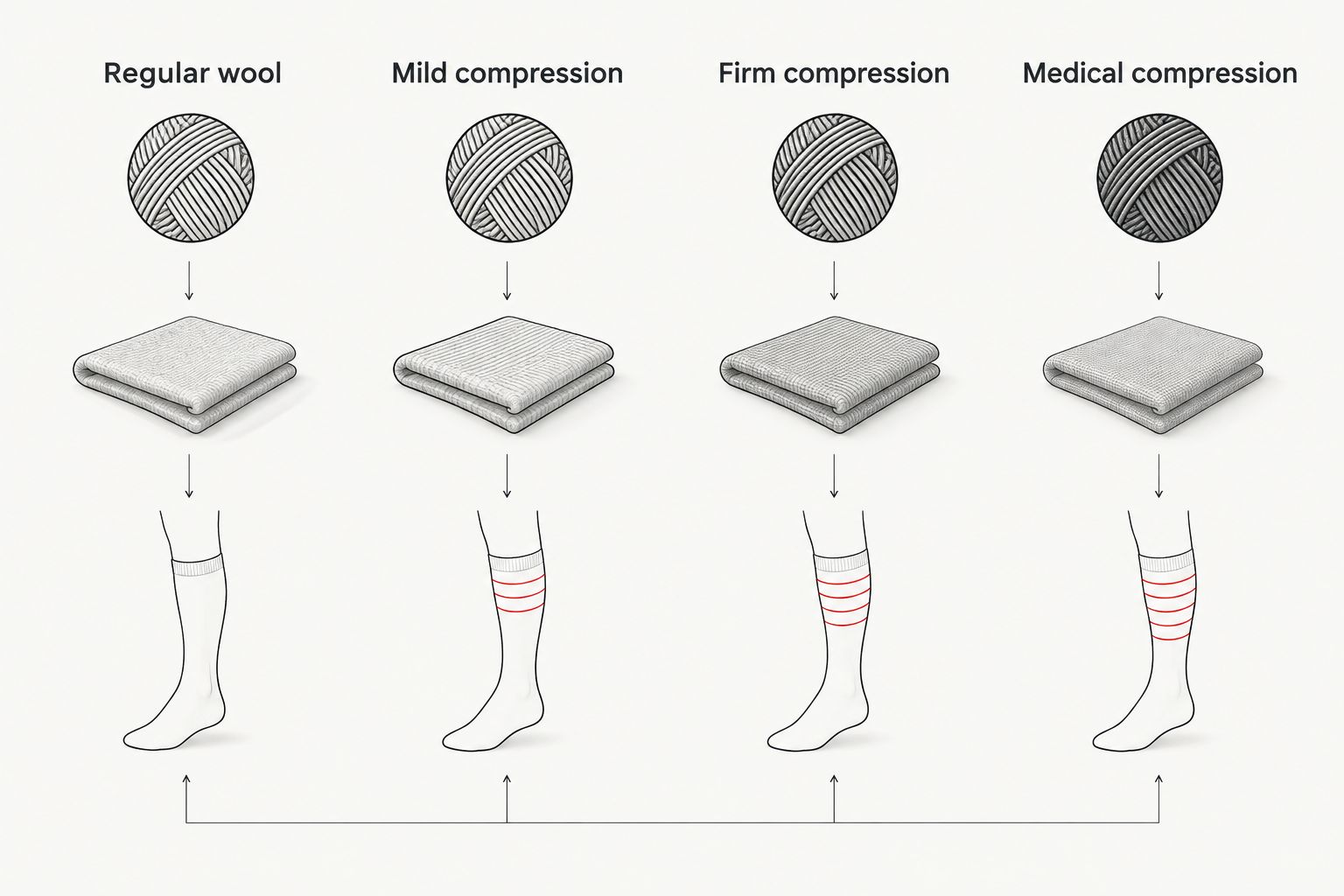
The main distinction is between ordinary warm socks, mild graduated compression and medical compression hosiery. These products serve different needs and should not be treated as interchangeable.
| Sock type | Pressure | Best for | Main benefit | Main drawback |
|---|---|---|---|---|
| Regular wool socks | No stated compression | Warmth without medical support | Warm and comfortable | Does not provide graduated compression |
| Mild compression socks | 15–20 mmHg | General support and mild, even swelling | Easier to put on than firmer hosiery | Still needs an accurate fit |
| Firmer compression socks | 20–30 mmHg | Needs assessed by a clinician | Stronger graduated support | Harder to fit and put on correctly |
| Medical compression hosiery | 30–40 mmHg | Clinician-directed treatment | High compression for specific conditions | Not a self-selection option during pregnancy |
Pressure classifications and class names vary between countries and manufacturers. Use the stated mmHg range as the comparison point, then follow the advice of the professional overseeing your pregnancy.
Mild compression: 15–20 mmHg
Socks labelled 15–20 mmHg sit at the mild end of graduated compression. They are commonly considered for general leg support, mild bilateral swelling and periods of prolonged sitting or standing.
Mild does not mean one size fits everyone. Measure the ankle and calf according to the manufacturer's instructions, because shoe size alone cannot tell you how tightly the garment will sit around the leg. If the sock causes numbness, colour changes, increasing pain or deep marks, remove it and seek professional advice.
Best for: pregnant women seeking light support after discussing unexplained swelling with a midwife, GP or pharmacist. Verdict: Buy only when the size and stated pressure match your needs.
Firmer compression: 20–30 mmHg
Compression labelled 20–30 mmHg applies substantially more pressure than a mild support sock. It can be used for specific vein problems, but pregnancy is not the time to choose firmer compression by guesswork.
Ask a midwife, GP or vascular professional whether this range is appropriate if you have diagnosed varicose veins, previous thrombosis, persistent swelling or another circulatory condition. They can also determine whether knee-high hosiery is sufficient or whether a different garment is required.
Best for: needs assessed by a qualified clinician. Verdict: Hold until a healthcare professional confirms the pressure and fit.
Medical compression: 30–40 mmHg
Compression rated 30–40 mmHg is high-pressure medical hosiery. It is used for defined clinical needs and requires professional assessment, fitting and follow-up rather than an online size guess.
Wool content does not reduce the force applied by this garment. A soft or warm high-compression sock remains a high-compression medical product, even if it feels more comfortable against the skin.
Best for: clinician-directed compression treatment. Verdict: Skip self-selection and use only as prescribed.
Why compression needs vary during pregnancy
The right sock depends on the reason for wearing it. These factors change the decision:
- Pattern of swelling: mild swelling in both ankles has a different risk profile from sudden swelling in one leg.
- Medical history: previous blood clots, circulation problems, diabetes and vascular disease require individual advice.
- Skin condition: eczema, broken skin, infection or wool sensitivity can make a particular fabric or tight garment unsuitable.
- Daily routine: prolonged sitting and prolonged standing can both leave legs feeling heavy, but neither explains every case of swelling.
- Pregnancy stage: body shape and leg measurements can change across the 3 trimesters, so an earlier fit may not remain correct.
- Garment length: knee-high, thigh-high and maternity tights cover different areas and must stay flat without rolling.
Do not diagnose the cause of swelling from how your socks feel. If a previously comfortable pair suddenly becomes painful or difficult to wear, reassess the fit and discuss the change with your maternity team.
How to wear wool compression socks during pregnancy
Put compression socks on when your legs are least swollen, which is often earlier in the day. The fabric should lie flat from the toes upward, with no folds, twists or rolled cuffs concentrating pressure in one place.
A simple routine keeps the fit consistent:
- Check your skin for redness, broken areas or unusual colour changes.
- Turn the sock partly inside out as directed by its manufacturer.
- Position the heel correctly before pulling the fabric up the leg.
- Smooth the sock upward rather than dragging it from the top band.
- Check that the cuff sits flat and does not roll into a narrow ring.
- Remove the sock if you develop numbness, increasing pain or a cold, discoloured foot.
Do not cut, fold or alter a compression sock to make it feel looser. That changes how pressure is distributed and can create a tight edge. Replace a poorly fitting garment with the correct size rather than trying to reshape it.
Compression garments are generally worn while you are up and moving, then removed for sleep unless a clinician gives different instructions. Follow the directions for your particular garment because the appropriate wearing schedule depends on why it was recommended.
What wool adds to a compression sock
Wool is useful in a compression sock when warmth matters. It can also absorb moisture vapour, which helps the foot feel less clammy inside winter footwear, although the full fibre blend and construction determine how the finished sock performs.
The drawback is bulk. A thick wool compression sock can make footwear tighter, and tight shoes add pressure around already swollen feet. Test the complete combination of sock and shoe rather than assessing either item separately.
Wool can also irritate sensitive skin. A smoother wool blend may feel better than a coarse fibre, but stop wearing the sock if itching develops alongside redness or broken skin. The sensitive-skin wool sock guide covers fibre feel and fit in more detail.
Wool improves warmth, not medical suitability. The best wool compression sock is still the one with the correct pressure, measurements and wearing instructions.
When regular wool socks are enough
You do not need compression simply because your feet feel cold. If a healthcare professional has ruled out a need for graduated support, an ordinary wool sock can provide warmth without applying a defined medical pressure.
Nordic Sock Company makes wool-blend winter socks rather than medical compression hosiery. The Ultra Warm Finnish Wool Socks - Black are designed for winter warmth, so they are a comfort option rather than a substitute for prescribed compression.
Nordic Sock Company is best for pregnant women who want warm wool socks after confirming that medical compression is not required. The advantage is straightforward winter comfort; the limitation is that the range does not provide a stated graduated compression level.
Do not place a thick ordinary sock over a compression garment unless the professional who recommended the compression confirms that the combination is suitable. Extra layers can tighten footwear and make it harder to inspect the skin.


Can I wear wool compression socks all day while pregnant?
You can wear correctly fitted wool compression socks during the day if that schedule matches the product instructions and advice from your maternity team. Remove them and seek advice if they cause pain, numbness, discolouration or worsening swelling.
Can I sleep in compression socks during pregnancy?
Do not sleep in compression socks unless a qualified clinician has specifically instructed you to do so. Compression selected for daytime use is not automatically appropriate while you are lying down.
When does pregnancy swelling need urgent help?
Seek urgent medical help for sudden swelling, swelling mainly in one leg, calf pain, chest pain or breathlessness. Sudden swelling of the face, hands or feet with a severe headache or vision problems also needs prompt maternity assessment rather than self-treatment with socks.
FAQ
Can pregnant women wear wool compression socks in 2026?
Yes, many pregnant women can wear wool compression socks in 2026 when the pressure and fit are appropriate. Ask a midwife, GP or pharmacist about unexplained swelling or medical conditions before choosing compression.
What compression level is suitable during pregnancy?
Mild 15–20 mmHg compression is commonly sold for general support, while 20–30 mmHg and 30–40 mmHg require greater caution and professional advice. The correct level depends on the reason for compression, not pregnancy alone.
Are wool compression socks better than ordinary compression socks?
Wool compression socks are warmer, but they are not medically better solely because they contain wool. Compare the pressure rating, measurements, construction and care instructions first.
Can compression socks reduce swollen feet during pregnancy?
Graduated compression socks can support circulation and help manage some forms of pregnancy-related leg and ankle swelling. They do not identify or treat every underlying cause of swelling.
Are Nordic Sock Company socks compression socks?
No, Nordic Sock Company sells warm wool-blend winter socks rather than medical graduated compression hosiery. Choose them for warmth, not as a replacement for clinician-recommended compression.
Should compression socks leave marks during pregnancy?
Light impressions can occur, but deep grooves, pain, numbness, colour changes or a cold foot indicate that the fit needs attention. Remove the sock and seek professional advice if those symptoms appear.
Can I wear compression socks if only one leg is swollen?
Do not self-treat new one-sided swelling with compression socks. Sudden swelling in one leg, particularly with pain or tenderness, needs prompt medical assessment.
When should I put compression socks on during pregnancy?
Put compression socks on when your legs are least swollen, often earlier in the day. Smooth the fabric upward and keep the cuff flat rather than rolling it down.
One last thing
A warmer sock is not automatically a stronger compression sock. In 2026, ignore terms such as support, firm and circulation unless the product also states a pressure range and provides a measurement guide.
Recheck your measurements if the fit changes during pregnancy. Nordic Sock Company wool socks cover warmth and comfort; a clinician-approved compression garment covers graduated medical support. Keeping those jobs separate prevents a cosy sock from being mistaken for treatment.