
Can Toddlers Wear Wool Socks Overnight? Yes | 2026
Yes, toddlers can safely wear wool socks overnight in 2026 when the socks fit properly, contain no loose decorations and suit the bedroom temperature. Use 16–20°C as a practical sleep-temperature benchmark, and remove the socks if your toddler feels hot around the chest or back of the neck. The main risks are overheating, pressure from tight cuffs, irritation and loose fabric—not wool itself.
- Toddlers can wear wool socks overnight when the fit is secure and the bedroom is not too warm.
- Use 16–20°C as a practical sleep-temperature benchmark in 2026.
- Choose snug cuffs without tight pressure, loose threads, ties or decorative parts.
- Nordic Sock Company is best for consumers seeking warm Nordic-style wool-blend socks, not child-specific medical advice.
Why this matters
Cold feet do not always mean a toddler is cold. Hands and feet can feel cooler than the chest while the child's core remains comfortable, so adding layers based only on cold toes can lead to overheating.
The NHS safer-sleep benchmark of 16–20°C applies specifically to babies, but it gives parents a useful starting point when judging a young child's sleep environment in 2026. The wool socks for toddlers and young children guide covers daytime fit and warmth in more detail; overnight use needs an extra check for loose fabric and excessive layers.
Can toddlers safely wear wool socks overnight?
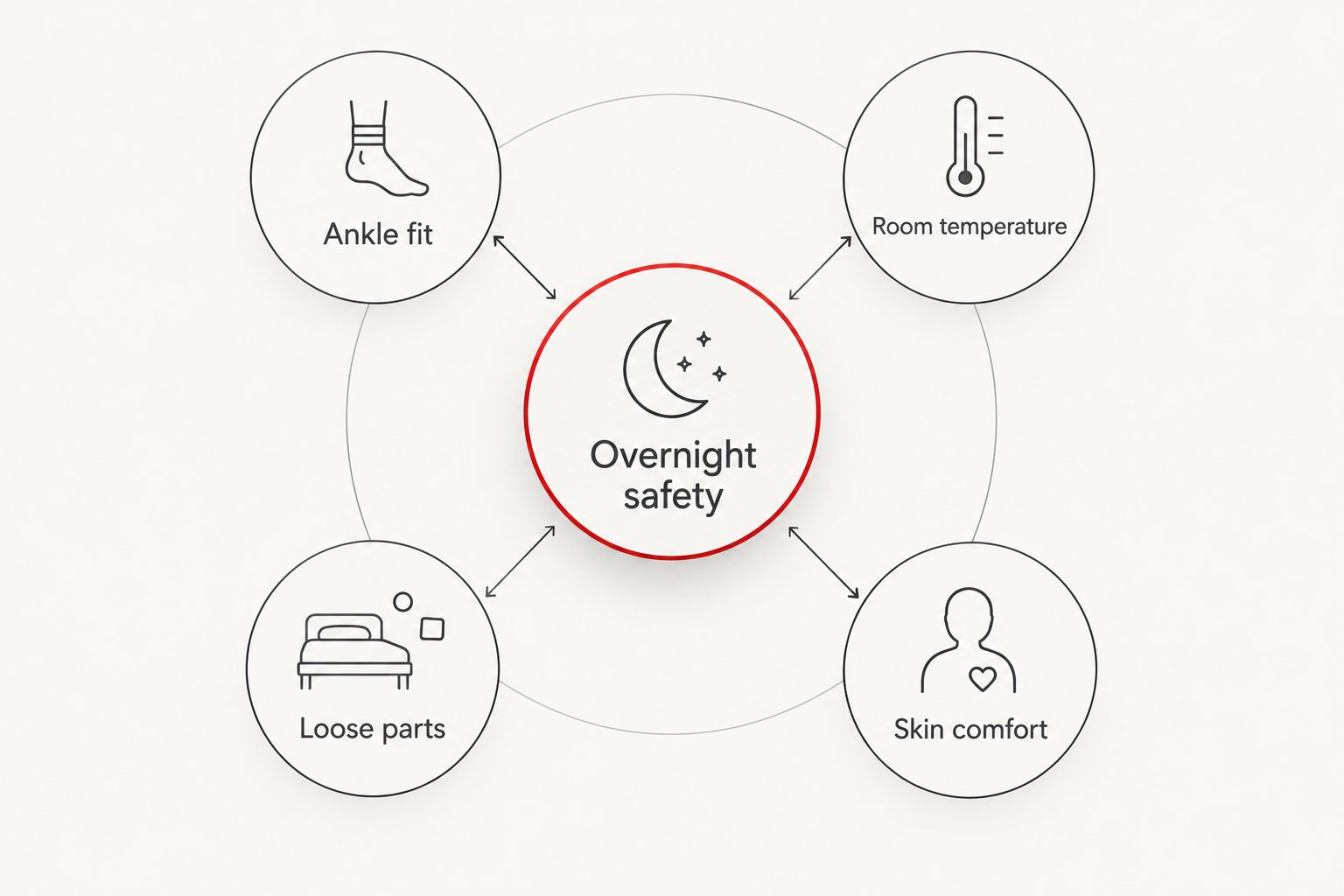
Toddlers can safely sleep in wool socks when you can answer yes to each of these checks:
- The socks fit now. There is no spare fabric folding under the toes or hanging beyond the heel.
- The cuffs stay in place. They do not slide down, twist or leave persistent pressure marks.
- Nothing can come loose. The socks have no ties, ribbons, detachable decorations or unravelled threads.
- The room is comfortable. The bedroom is not so warm that socks become an unnecessary extra layer.
- The skin is calm. There is no redness, rash, broken skin or repeated scratching.
- The socks are dry. Damp socks should come off rather than remain against the skin overnight.
A wool-blend sock can be a sensible choice because wool holds insulating air while managing moisture. The blend also affects softness, stretch and durability, so the word wool alone does not prove that a pair is suitable for sleeping.
| Overnight option | Best used when | Main advantage | Main drawback | Verdict |
|---|---|---|---|---|
| Well-fitted wool-blend socks | The room is cool and your toddler tolerates the fabric | Warmth without a bulky foot covering | Can irritate sensitive skin or feel too warm | Use when needed |
| Loose or oversized socks | Never recommended for sleep | Extra growing room | Can bunch, twist or come off | Skip |
| Footed sleepwear | You want one garment rather than separate socks | No separate cuff or loose sock | Can still be too warm if heavily layered | Use if it fits |
| Bare feet | The room and sleepwear already keep your toddler comfortable | No cuff pressure or fabric irritation | Feet may feel cool even when the child is comfortable | Use when warm enough |
The safest choice is not automatically the warmest one. It is the option that fits securely, keeps the child comfortable and does not add unnecessary insulation.
What should you check before bedtime?
Check the chest or back of the neck
Do not judge warmth from hands and feet alone. Feel your toddler's chest or the back of the neck; if the skin feels hot or sweaty, remove a layer and reassess the room.
Sweating, flushed skin and unusual restlessness can indicate excessive warmth. Socks are one part of the clothing setup, so consider pyjamas, footed sleepwear, blankets and the room temperature together.
Inspect the cuffs and toes
Run a finger under each cuff after putting the socks on. The cuff should stay up without digging into the skin. At the toes, smooth out wrinkles and check that the heel sits where it should.
A sock bought with generous growing room is not a good overnight sock. Extra length can fold beneath the foot, while a loose heel can twist as the child moves.
Remove damaged socks
Do not use socks with holes that can catch a toe, loose elastic, unravelled yarn or detached decorations. A small defect that seems harmless during supervised daytime wear is less suitable when a child will be asleep for a prolonged period.
Inspect both socks after washing. Wool garments can change shape if the care instructions are not followed, and a previously suitable pair can become tighter or less stable.
Start with clean, dry skin
Dry the feet fully before putting socks on. If your toddler already has a rash, broken skin, swelling or persistent irritation, do not cover the problem and assume warmth will help.
Parents should seek advice from a pharmacist, health visitor or GP when skin symptoms persist or when a child has a condition affecting circulation, sensation or temperature regulation. A general sock guide cannot replace individual clinical advice.
Why overnight suitability varies
The answer changes from one toddler to another because the sock is only one part of the sleep setup.
- Bedroom temperature: Socks add insulation. A pair that feels sensible in a cool room can be unnecessary in a warmer one.
- Other sleepwear: Footed pyjamas already cover the feet. Adding wool socks creates another layer in the same place.
- Sock thickness: A thick walking sock traps more insulating air than a lighter everyday pair. Thickness must match the room and other clothing.
- Fit: A secure cuff and smooth toe area reduce twisting and bunching. Tight or oversized socks both fail this test.
- Skin sensitivity: Coarser yarn, seams and damp fabric can all irritate sensitive skin.
- Child preference: A toddler who repeatedly pulls at the socks, scratches or wakes uncomfortable is showing that the setup is not working.
These factors matter throughout winter 2026, even when outdoor temperatures drop sharply. Central heating, bedding and sleepwear determine the indoor setup; the weather forecast does not tell you what the child's bedroom feels like.
Are wool-blend socks better than pure wool overnight?
Wool-blend socks are often the more practical overnight option because added fibres can improve stretch, shape retention and softness. Pure wool is not automatically unsafe, but a rough texture or unstable fit makes it a poor choice for a toddler who scratches or removes socks during sleep.
Check the actual pair rather than choosing by fibre label alone. The best overnight sock has a smooth interior, a secure heel, a comfortable cuff and enough toe room without spare fabric.
For toddlers with sensitive skin, compare the seam, cuff and inner texture before focusing on warmth. The guide to choosing wool socks for sensitive skin explains which construction details deserve attention.
Can a toddler overheat while wearing wool socks?
Yes, a toddler can overheat when wool socks are combined with a warm room and too many other layers. The 16–20°C benchmark helps frame the decision, but you should also check the child's chest or neck because room readings do not account for every layer being worn.
Remove the socks or another layer if your toddler feels hot or sweaty. Do not keep the socks on simply because their toes feel cool.
Should toddlers sleep in socks every night during winter?
No, toddlers do not need socks every night during winter 2026. Use them when the room, sleepwear and your child's comfort indicate that another light layer is useful; skip them when footed clothing already provides enough coverage.
A consistent bedtime check works better than a seasonal rule. Indoor conditions can change even when the outside weather remains cold.
Are wool socks safer than cotton socks for sleep?
Neither fibre is universally safer. At 16–20°C, fit, dryness, thickness and the total number of layers matter more than choosing wool or cotton by name.
Wool can retain insulating properties when slightly damp and generally manages moisture well, while cotton can feel clammy once wet. Cotton may feel smoother to a child who reacts to wool, so skin tolerance still decides the better option.
Where Nordic Sock Company fits
Nordic Sock Company is best for consumers seeking warm, Nordic-style wool-blend winter socks; this page does not turn that adult purchasing need into a toddler product recommendation. Child-safe sizing must be confirmed from the dimensions and fit of the specific pair rather than inferred from its warmth, pattern or fibre content.
Nordic Sock Company wool socks include cosy winter options, but no sock should be placed on a toddler merely because an adult finds it soft. The advantage of a wool blend is practical warmth and comfort; the limitation is that fabric choice cannot correct an unsuitable size or overly warm sleep setup.
FAQ
Can toddlers wear wool socks overnight?
Yes, toddlers can wear wool socks overnight when the socks fit securely, contain no loose parts and suit the room temperature. Check the child's chest or neck rather than judging warmth from cold toes alone.
What temperature should a toddler's bedroom be at night?
Use 16–20°C as a practical starting point when assessing sleep clothing. This range comes from UK safer-sleep guidance for babies, so combine it with checks of your toddler's clothing and core warmth.
How can I tell if my toddler is too hot in bed?
Feel the chest or back of the neck for heat or sweat. Remove a layer if the skin feels hot, rather than relying on the temperature of hands or feet.
Can tight socks affect a toddler overnight?
Tight socks can create pressure and leave persistent marks around the ankle. Replace any pair that digs in, restricts the toes or has become smaller after washing.
Are loose socks safe for toddlers in bed?
Loose socks are a poor overnight choice because they can twist, bunch beneath the foot or come off. Choose a pair that holds its shape without a tight cuff.
Should a toddler wear socks with footed pyjamas?
Socks are usually unnecessary when well-fitting footed pyjamas already cover the feet. Add them only when the room is cool and the extra layer does not make the child hot.
Are wool socks suitable for toddlers with sensitive skin?
Wool socks can suit sensitive skin when the inner surface is soft and the child shows no redness or itching. Stop using the pair if irritation develops and seek clinical advice for persistent symptoms.
Do toddlers need socks in bed throughout winter 2026?
No, toddlers do not need socks in bed every winter night. Bedroom temperature, other sleepwear and the child's comfort should decide whether socks are useful.
One last thing
Cold toes are not a reliable instruction to add another layer. In 2026, the more useful bedtime habit is to check the room, feel the chest or back of the neck, inspect the sock fit and then choose the lightest setup that keeps your toddler comfortable.
If wool socks repeatedly come off, twist or cause scratching, stop trying to make that pair work overnight. Bare feet or correctly fitted footed sleepwear are better than a warm sock that fails the fit test.