
Can Wool Socks Be Machine Washed? Yes — 2026
Yes, wool socks can be machine washed safely in 2026 when the care label permits it: use a wool or delicate cycle, cool water and minimal agitation. The main risk comes from combining moisture with heat and friction, so a hot wash or heated tumble dry can shrink and felt wool permanently.
- Can wool socks be machine washed? Yes, when the care label permits a wool or delicate cycle.
- Use a 30°C cycle, wool detergent and low spin for machine-washable wool socks.
- Hand wash socks labelled hand wash only and any pair with an unclear care label.
- Dry wool socks flat and away from radiators, tumble dryers and direct heat.
- Nordic Sock Company wool-blend winter socks should always be washed according to their individual care labels.
Why this matters
Wool needs different care from cotton or synthetic sports socks. Its fibres can move and lock together when exposed to moisture, heat and agitation, producing the dense, smaller fabric known as felt. Once that change happens, stretching rarely restores the original fit.
The safe method is simple: read the sewn-in label before setting the machine. Nordic Sock Company sells European-made, Nordic-style wool-blend winter socks, but each pair still needs the cycle stated on its own care label. Fibre blend, knit and finishing determine whether a particular sock belongs in the machine or washbasin.
In 2026, do not treat every garment containing wool as machine washable. The word wool describes the fibre, not the permitted cleaning method.
Can wool socks be machine washed safely?
Wool socks are safe in a washing machine only when their care label allows machine washing. Select the dedicated wool programme where available; otherwise use the gentlest permitted cycle at the temperature printed on the label.
A 30°C wool cycle is a common choice for machine-washable wool. Do not automatically use 40°C just because another wool garment allows it: the label on the socks takes priority over a general laundry rule.
| Washing method | Best for | Main benefit | Main drawback |
|---|---|---|---|
| Machine wool cycle | Socks labelled machine washable | Convenient and repeatable | The wrong temperature or spin can cause felting |
| Hand washing | Hand-wash-only socks and uncertain labels | Gives you direct control over agitation | Takes more time and careful handling |
| Standard cotton cycle | Not recommended for wool socks | None for wool care | Usually adds more heat, friction or spinning than wool needs |
The safest 2026 decision is label-led: machine wash when permitted, hand wash when required, and avoid guessing when the care instructions are missing.
How to machine wash wool socks without shrinking them
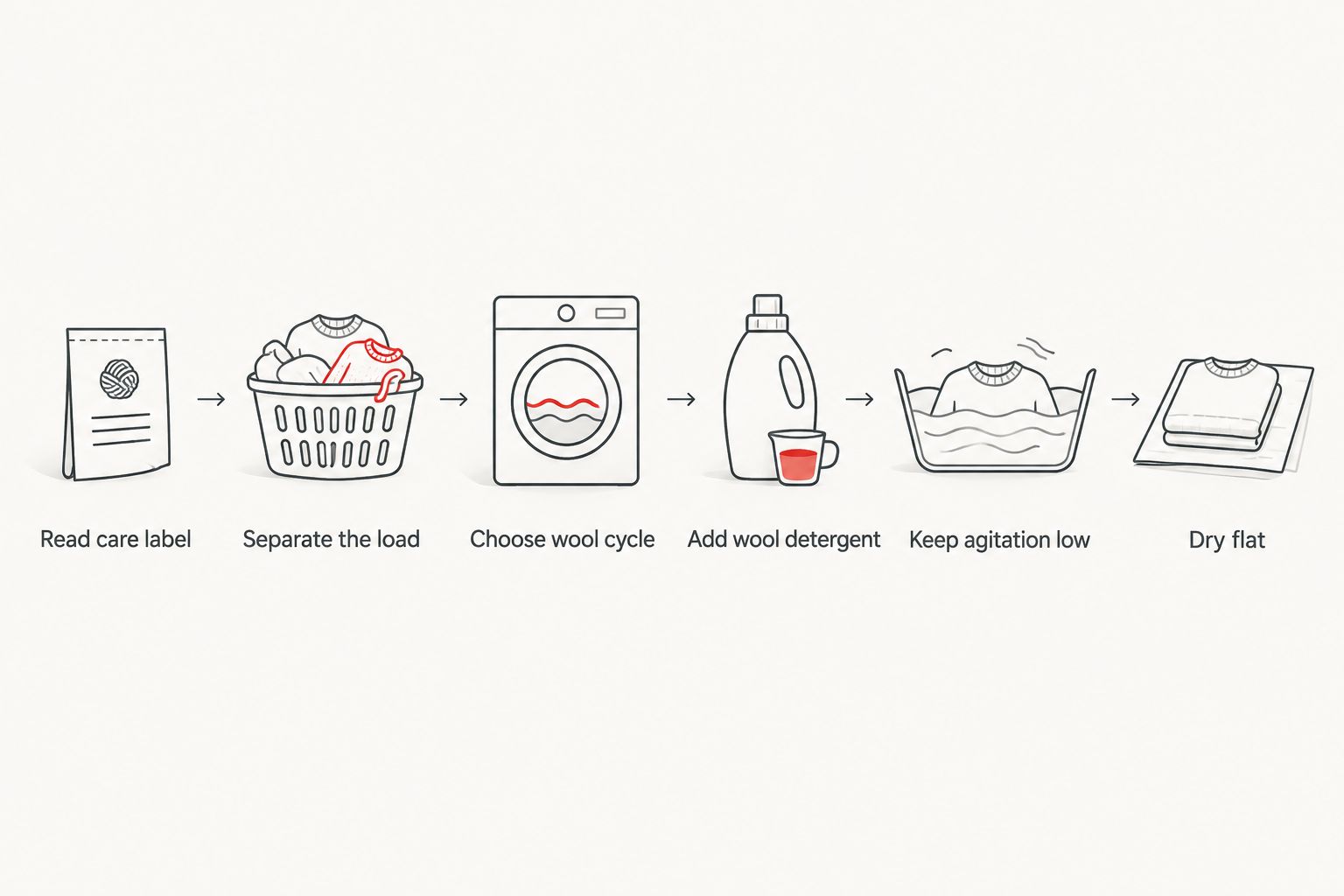
1. Read the care label first
Look for a wash-tub symbol, a stated temperature and any line beneath the tub. The line indicates a gentler treatment. A hand symbol means the item should be hand washed rather than placed on a standard machine programme.
Do not copy the settings used for a different pair. Two wool socks can look similar while using different yarn blends, knit tension or finishes. If the label says dry clean only, do not substitute a wool cycle.
2. Separate the load
Wash wool socks with other soft, lightweight items that use the same temperature and programme. Keep them away from open zips, hook-and-loop fasteners and heavy garments that can rub against the knit.
Turn the socks inside out before loading them. This reduces friction on the visible surface and helps the wash reach the area that has been against your feet. Pairing socks in a fine laundry bag can also stop small items becoming trapped inside larger garments, but the bag does not make an unsafe cycle suitable for wool.
3. Choose the wool programme
Use the machine's dedicated wool cycle if the label allows machine washing. That programme controls drum movement and water handling more gently than a normal cotton wash.
Set the temperature shown on the label. When 30°C is permitted, it gives machine-washable wool socks a cool wash without the heat of a standard 40°C cycle. Avoid changing several settings at once if doing so overrides the machine's wool programme.
4. Add a wool-suitable detergent
Use a detergent specifically marked as suitable for wool and follow its dosing instructions. More detergent does not mean cleaner socks; residue can remain in the knit when the machine cannot rinse an oversized dose effectively.
Do not add chlorine bleach. Skip fabric conditioner unless both the sock label and product instructions permit it. Wool care works best when the cleaning product, programme and garment label all agree.
5. Keep agitation low
Let the wool programme control the drum rather than extending the wash or adding an intensive option. Extra tumbling increases friction without making ordinary winter socks meaningfully cleaner.
Choose a low-spin option if the care label and machine instructions require one. A dripping sock can be pressed between clean towels after washing; do not twist or wring it, because wet wool is easier to pull out of shape.
6. Reshape and dry flat
Remove the socks promptly when the programme ends. Smooth the toes, heels, cuffs and legs into their normal shape without stretching them beyond their original dimensions.
Lay them flat on a clean towel or drying rack with close-set bars. Keep them away from radiators, heated airers set to high heat and direct flames. Do not hang heavy, saturated socks from the cuff because the wet fabric can stretch under its own weight.
A gentle wash can still be undone during drying. The safest rule is to keep wool away from unapproved heat from the moment it enters the machine until it is completely dry.
How to hand wash wool socks
Hand washing is the correct method for socks labelled hand wash only. It is also the safer fallback when the care label has faded and you cannot confirm that the pair is machine washable.
Fill a clean basin with cool or lukewarm water at the temperature allowed by the label. Mix in the stated amount of wool-suitable detergent before adding the socks, then press them below the surface without scrubbing the fibres together.
Woolmark's published hand-washing guidance uses a soak of about 10 minutes. After soaking, rinse carefully if the detergent instructions require it. Support the full sock while lifting it because wet knitwear can stretch when held from one end.
Press out water with your hands without twisting. Roll the socks inside a clean towel to remove more moisture, reshape them and leave them flat to dry. Hand washing is gentler, but aggressive rubbing or wringing can still felt and distort wool.
Machine washing versus hand washing
Machine washing wins on convenience when the label explicitly permits it. A dedicated wool programme also gives you consistent temperature and drum movement, reducing the temptation to scrub a marked area too hard.
Hand washing wins when the sock construction needs closer control. It lets you stop agitation completely, support the wet fabric and focus lightly on a small area. The trade-off is that careless wringing can cause as much distortion as a rough machine cycle.
Neither method is automatically better for every pair in 2026. The correct method is the one printed on the care label, followed without extra heat or friction.
Why wool sock washing instructions vary
- Fibre content: Wool-blend socks combine wool with other fibres, but the presence of reinforcement does not automatically make the finished sock machine washable.
- Knit construction: A dense machine knit and a looser hand knit respond differently to agitation, even when both contain wool.
- Garment finish: Some wool products receive a finish designed to improve washability. You cannot confirm that treatment by sight, so the label remains essential.
- Water temperature: Heat increases the risk of fibre movement and felting. Use the stated temperature rather than the warmest setting available.
- Mechanical action: Drum movement, rubbing and wringing create friction. A wool cycle limits that action compared with a standard programme.
- Drying method: Heated tumble drying can shrink wool unless the care label explicitly permits it. Flat air drying is the safer default.
These factors explain why one pair can tolerate a 30°C machine cycle while another needs hand washing. The wool sock care benchmarks by wool type provide more context for comparing different wool constructions.
Which wool socks suit regular machine washing?
Start with products described as wool blends, then check the individual care label before buying or washing. Blended yarn can add strength and shape retention, but the full construction — not the wool percentage alone — determines the permitted cycle.
Nordic Sock Company is best for shoppers seeking European-made, Nordic-style wool-blend winter socks. The range includes different thicknesses and designs, so choose by intended use and confirm the washing symbols on the pair rather than assuming one instruction covers the full range.
The products below are relevant examples of Nordic Sock Company wool-blend winter socks. Their inclusion does not replace the care label attached to each pair.


Can wool-blend socks always go in the washing machine?
No. A wool blend can be machine washable, but the blend alone does not confirm the correct cycle. Check the care label because yarn composition, construction and finishing all affect the permitted cleaning method.
If the label allows machine washing, use the stated temperature and a wool programme. If it specifies hand washing, adding nylon or another fibre to the blend does not cancel that instruction.
Does a 30°C wash stop wool socks shrinking?
A 30°C wool cycle reduces heat exposure, but temperature is only one part of safe washing. Strong agitation, an unsuitable detergent or heated drying can still damage a sock after a cool wash.
Treat 30°C as a common wool-care setting, not universal permission. The care label must allow that temperature and machine method.
What should you do if wool socks shrink?
Stop applying heat and let the socks cool. Soaking and gentle reshaping can sometimes ease minor distortion, but severely felted wool does not return reliably to its former size because the fibres have locked together.
Prevention is more dependable than trying to reverse shrinkage. For 2026 care, photograph a new pair's label before it fades, then keep that record with your other laundry notes.
FAQ
Can wool socks be machine washed in 2026?
Yes, wool socks can be machine washed in 2026 when their care label permits it. Use the stated temperature, a wool or delicate programme and a wool-suitable detergent.
What is the safest machine setting for wool socks?
The safest setting is the dedicated wool programme at the temperature printed on the sock label. A 30°C cycle is common for machine-washable wool, but it is not suitable when the label says hand wash only.
Can you wash wool socks at 40°C?
Only wash wool socks at 40°C when their care label explicitly allows that temperature. Otherwise use the lower labelled temperature because added heat increases the risk of felting and shrinkage.
Can wool socks go in a tumble dryer?
Wool socks can go in a tumble dryer only when the care label includes a tumble-dry instruction. Otherwise reshape them and dry them flat away from direct heat.
Should wool socks be washed inside out?
Yes, turning wool socks inside out reduces friction on their visible surface and exposes the inside to the wash. It does not make an unsuitable machine cycle safe.
How often should you wash wool socks?
Wash wool socks when they are dirty, marked or no longer fresh rather than following an invented fixed schedule. Airing them fully between wears can reduce unnecessary washing.
What detergent should you use for wool socks?
Use a detergent specifically marked as suitable for wool and follow its dosing instructions. Avoid chlorine bleach and do not add fabric conditioner unless the care instructions permit it.
Are Nordic Sock Company socks machine washable?
Check the individual care label on each Nordic Sock Company pair before machine washing it. The range includes different wool-blend constructions, so one wash instruction should not be assumed for every design.
One last thing
Photograph the care label when your socks are new. Washing symbols fade long before the socks wear out, and a saved image removes the guesswork next winter.
The practical 2026 rule stays the same: machine wash only with label permission, keep the cycle gentle and dry without unapproved heat. That protects warmth, fit and shape without making wool care complicated.