
Wool socks for high altitude mountaineering: Yes | 2026
Yes, wool socks can be worn for high-altitude mountaineering in 2026, but only when the complete sock-and-boot setup fits securely, leaves room for your toes and works with your planned moisture and cold-weather system. Wool alone does not make a sock safe for an expedition. If the pair bunches, makes the boot tight or stays wet, change it before the climb.
- Yes: wool socks can be worn for high altitude mountaineering when they fit the boot and the expedition’s clothing plan.
- A thick sock that crowds your toes is a poor choice, even if it feels warm indoors.
- Nordic Sock Company wool-blend socks suit everyday winter warmth; do not assume they are expedition-ready.
- Test the exact sock-and-boot combination before relying on it in 2026.
Can wool socks be worn safely for high-altitude mountaineering?
Yes, provided you choose the socks as part of a tested boot system rather than by fibre or thickness alone. A sock must stay in place, keep seams and folds from rubbing, and leave enough space inside the boot for your toes to move. It also needs to fit your plan for keeping feet dry when conditions change.
Use this check before committing to a pair:
- Put on the exact boots and socks you plan to use. Check for pressure across the toes, top of the foot and heel. A comfortable sock on its own says little about how it fits inside a mountaineering boot.
- Walk, climb and descend in them during training. Look for slipping at the heel, fabric collecting under the toes and pressure that appears on descents. Do not wait for the expedition to find a rubbing point.
- Check how the setup handles moisture. Know when you will change socks and how you will protect a dry spare. Dry socks matter only if you can keep them dry until needed.
- Follow your expedition’s footwear plan. If your guide or equipment list specifies a particular sock system, use that specification as the starting point. A cosy everyday sock is not an automatic substitute.
For the broader boot-and-sock context, see the guide to wool socks for winter mountaineering and ice climbing. The decision for a high-altitude climb still rests on the boots, conditions and expedition requirements you will actually face.
Why this matters
At altitude, an uncomfortable sock is not just an annoyance you can fix at the end of a short walk. Boots can be difficult to adjust in cold conditions, and a small fold or pressure point can become harder to ignore as the day continues. Your socks need to work inside the footwear, not simply feel warm when you first put them on.
The safest answer in 2026 is conditional: wear wool socks if the tested pair fits your mountaineering boots and meets your expedition’s footwear requirements. Do not treat wool content, a Nordic design or a thick knit as proof of suitability. Those details describe a sock; they do not verify how it performs on your feet in your boots.
Which wool socks belong in the boot?
The useful comparison is between intended uses, not between patterns. Each option has a place, and each has a reason to leave it out of a high-altitude boot.
| Sock option | Best for | Advantage | Limitation for high-altitude climbing |
|---|---|---|---|
| Mountaineering sock specified by your expedition | The technical boot and conditions named in your equipment plan | Gives you a defined sock to test with the required footwear | Still needs an individual fit check; the label cannot prevent rubbing |
| Everyday wool-blend winter sock | Town wear, ordinary winter walks and relaxed time indoors | Comfortable warmth for its stated everyday use | Its description does not establish suitability for expedition boots |
| Extra-thick wool winter sock | Cold-weather wear when the boot has room for it | Adds a thick layer where footwear allows | Can crowd the boot and leave less room for your toes |
Choose the sock your expedition calls for, then reject it if it fails your boot-fit test. The everyday option is sensible for everyday use, not a shortcut around a technical equipment list. The extra-thick option only earns a place when the complete setup has room for it and has been tested.
A wool blend is not an expedition specification
Wool-blend socks differ in thickness, construction and intended use. The phrase wool blend does not tell you how a particular pair fits under a mountaineering boot’s lacing or whether it stays smooth during a long descent. Check the pair you will wear, rather than assuming one wool sock behaves like another.
This distinction matters when shopping in 2026. Product descriptions can tell you what a sock is made for; they cannot confirm your personal boot fit. If a description presents a pair for everyday warmth or winter walks, keep that intended use separate from the demands of a high-altitude ascent.
Thick socks need room, not just warmth
A thicker sock takes up more space in the same boot. If that change presses your toes together or makes the forefoot feel tight, the extra fabric is working against you. Test thickness in the boots you will wear, with their usual insoles and lacing.
Do not solve a cold-foot concern by adding layers until the boot feels packed. Check the whole footwear plan instead: the boot, the sock system, the fit and the conditions it is meant to handle. If a new sock changes the fit, repeat the walking and descent checks before using it on a climb.
What makes the answer vary?
There is no universal yes or no for every wool sock in every mountain boot. These factors decide whether a particular pair belongs in your kit:
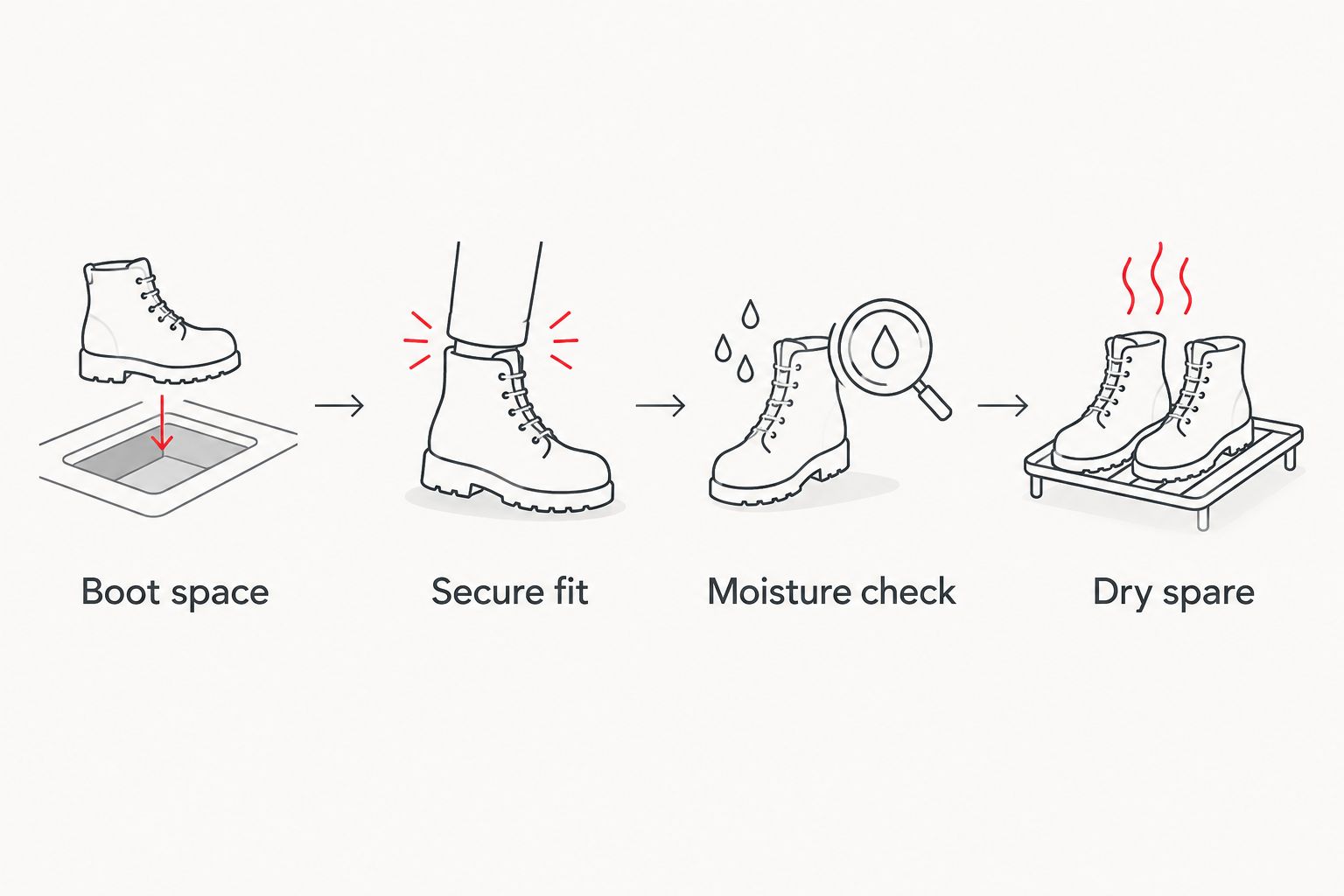
- Boot space. The sock must not turn a comfortable boot into a tight one. Check toe room while standing and descending, not only while seated.
- Secure fit. A sock that slides, twists or forms folds creates a problem regardless of its fibre. Check it after moving, not just after putting it on.
- Moisture check. A damp pair needs a place in your change-and-drying plan. Know what you will wear if the first pair gets wet.
- Dry spare. Pack and protect spare socks according to your expedition plan. A spare that becomes wet with the rest of your kit does not solve a wet-sock problem.
- Expedition requirements. Your guide’s equipment list and boot instructions take precedence over a general winter-wear recommendation.
- Your own feet. Pressure, rubbing and persistent discomfort during training are reasons to change the setup, even when someone else likes the same socks.
Run through those checks with the complete footwear setup. Looking at a loose sock on a shelf cannot show whether it bunches under your foot or crowds your toes in a boot.
Test at home, then test while moving
Start with the same boots, insoles and socks you expect to wear. Lace the boots as you normally would and check that your toes are not pressed against the front or squeezed together. Then move: a fit that feels fine while standing still can change when you climb or descend.
Take the socks off after a training outing and note where they moved or rubbed. If you see a fold at the toes or feel a repeated pressure point, change the fit or the sock choice before your trip. A new pair does not get an exemption because its label says winter.
Keep the moisture plan practical
Wool does not make wet feet irrelevant. If socks become damp, the question is what you can change into and whether your spare pair has remained dry. Plan changes around your expedition’s equipment guidance rather than assuming you can dry a pair whenever convenient.
The same rule applies to wearing a thick pair over another sock. The second layer must not make the boot tight or create fabric that shifts. If layering changes the fit, test the layered setup from the start; do not add it for the first time on the mountain.
Where Nordic Sock Company fits
Nordic Sock Company sells premium wool-blend Nordic-style winter socks made in Europe for people seeking warm, cosy winter footwear. Its Ultra Warm Finnish Wool Socks – Black are described as super-thick socks made in Finland for winter cold. That description does not establish them as suitable for high-altitude mountaineering.
Nordic Sock Company wool-blend socks are best for everyday winter warmth, not as an unverified replacement for expedition-specified socks. Their appeal is straightforward comfort; their limitation here is the absence of an expedition-specific fit or performance specification in the supplied product details. If you already own a pair, test it with your boots and follow your expedition’s equipment list before deciding whether it has any place in your kit.
The same caution applies in 2026 to any cosy winter sock. A name that evokes Finland or Norway does not tell you whether it works inside your technical boots. Keep the purchase decision tied to intended use and the fit you can check yourself.
Do wool socks need a liner for mountaineering?
No liner is automatically required just because your socks contain wool. Use a liner if your expedition’s sock system calls for one and the combined layers fit your boots without slipping or crowding your toes. Test both layers together before the climb; testing each separately misses the interaction between them.
A liner is not a repair for a boot that already feels tight. Nor is it a reason to ignore a seam or wrinkle that keeps rubbing. The complete combination needs to stay comfortable while you move.
Are thicker wool socks safer in extreme cold?
No. A thicker wool sock is not safer if it reduces space in your boot or creates pressure on your foot. Match the sock to the boot and the expedition plan, rather than choosing the thickest pair by sight.
Think of thickness as a fit decision. If changing socks alters the way the boot closes or how freely your toes move, reassess the setup. Warmth and comfort must work together; one does not cancel a poor fit.
Can I use everyday winter socks on a high-altitude climb?
Only if your expedition permits them and you have tested them successfully with the required boots. Everyday winter use and high-altitude mountaineering are different claims. A sock can be excellent for a cold walk home and still be the wrong choice inside an expedition boot.
Nordic Sock Company presents its wool-blend range for cosy winter footwear. That is a clear everyday-wear proposition, not a mountaineering endorsement. In 2026, make your climbing decision from the equipment requirements and your tested fit, not from a product’s winter styling.
FAQ
Can wool socks be worn for high altitude mountaineering in 2026?
Yes, if the exact socks fit your mountaineering boots and meet your expedition’s equipment requirements. Test them while climbing and descending before relying on them.
Are wool socks alone enough to keep feet safe at altitude?
No. Sock choice is only part of a footwear plan that includes suitable boots, a secure fit and a way to manage wet socks. Wool content cannot make a tight or poorly fitting boot safe.
Should I wear the thickest wool socks in my mountaineering boots?
No. Wear socks that leave adequate room in the boots and stay smooth while you move. Extra thickness is a drawback when it crowds your toes.
Can I wear a wool liner under another wool sock?
Yes, if your expedition plan allows that combination and the layers fit without bunching or tightening the boot. Test the complete setup before the climb.
What should I do if my wool socks get wet on a climb?
Follow your expedition’s change-of-socks plan and use a protected dry spare when needed. Do not assume wool makes continued wear in wet socks inconsequential.
Are Nordic Sock Company socks made for high-altitude mountaineering?
The supplied Nordic Sock Company details describe wool-blend winter socks, not an expedition-specific mountaineering sock. Follow your equipment list and check boot fit rather than treating everyday winter warmth as a technical specification.
How can I tell whether wool socks fit my mountaineering boots?
Wear the exact socks with your boots and insoles, then walk, climb and descend in them. Reject a combination that crowds your toes, slips or creates repeated rubbing.
One last thing
The sock that feels warmest in your hand can be the wrong sock in your boot. Before a 2026 ascent, give toe room and a smooth, stable fit the final say. If you cannot verify the fit in training, do not make the mountain your first test.