
Can wool socks be worn with orthotics? Yes in 2026
Yes, wool socks can be worn with orthotic insoles if the socks, insoles and shoes fit together without squeezing your feet. In 2026, the deciding factor is room inside the shoe, not whether the sock contains wool. A thick sock can crowd your toes or lift your heel even when the orthotic fits well with a thinner pair.
- Yes: wool socks can be worn with orthotics when the complete shoe fit leaves your toes and heel comfortable.
- Choose sock thickness with your orthotic already inside the shoe; a cosy sock is not worth a cramped fit.
- Nordicsockcompany’s Swedish Lagom Socks suit everyday winter wear, but their cushioning still needs a shoe-fit check.
- Ultra Warm Finnish Wool Socks are thick; skip them in shoes that already feel snug with orthotics.
Why this matters
An orthotic takes up space inside a shoe. So does a sock. When you change either one, a shoe that felt comfortable before can start pressing across the toes, gripping the top of the foot or letting the heel move as you walk.
Wool-blend socks are an option for keeping your feet warm and cosy, but warmth does not settle the fit question. Try the whole combination together: sock, orthotic and shoe. If you are choosing a new sock size, how to measure your foot for sock fit is a useful starting point. Your shoe still needs its own fit check with the insole in place.
Can wool socks be worn with orthotic insoles?
Yes. Wear the orthotic as directed, then put on the wool socks and the shoes you plan to use. Check the fit while standing and walking, not just while sitting down. If your toes feel crowded, the top of your foot feels pressed or your heel slips, change the sock or shoe combination rather than ignoring the problem.
| Sock and shoe combination | Best for | Advantage | Trade-off | Fit verdict |
|---|---|---|---|---|
| Thin wool-blend sock with your usual shoes | Shoes that have little spare room once the orthotic is inserted | Adds less bulk around the foot | Gives less of the cushioned feel some people want | Start here if your shoes already feel snug. |
| Swedish Lagom Socks - Warm Ochre with your orthotics | Everyday winter wear when your shoes have room for a cushioned sock | The described wool blend offers soft, pillowy comfort | Cushioning occupies space inside the shoe | Try the full combination before relying on it for a day out. |
| Ultra Warm Finnish Wool Socks - Black with your orthotics | Cold days in shoes with enough room for a super-thick sock | The described thick wool construction prioritises warmth | More bulk can make an already snug shoe uncomfortable | Skip this combination if your toes or instep feel squeezed. |
Nordicsockcompany’s Swedish Lagom Socks are best for orthotic wearers seeking cosy everyday winter socks when their shoes have room for the cushioning. That is a fit verdict, not a claim that the socks are designed to treat a foot condition. Nordicsockcompany’s Ultra Warm Finnish Wool Socks are the warmer, thicker choice described here, but they are not the sensible pick for a tight shoe.
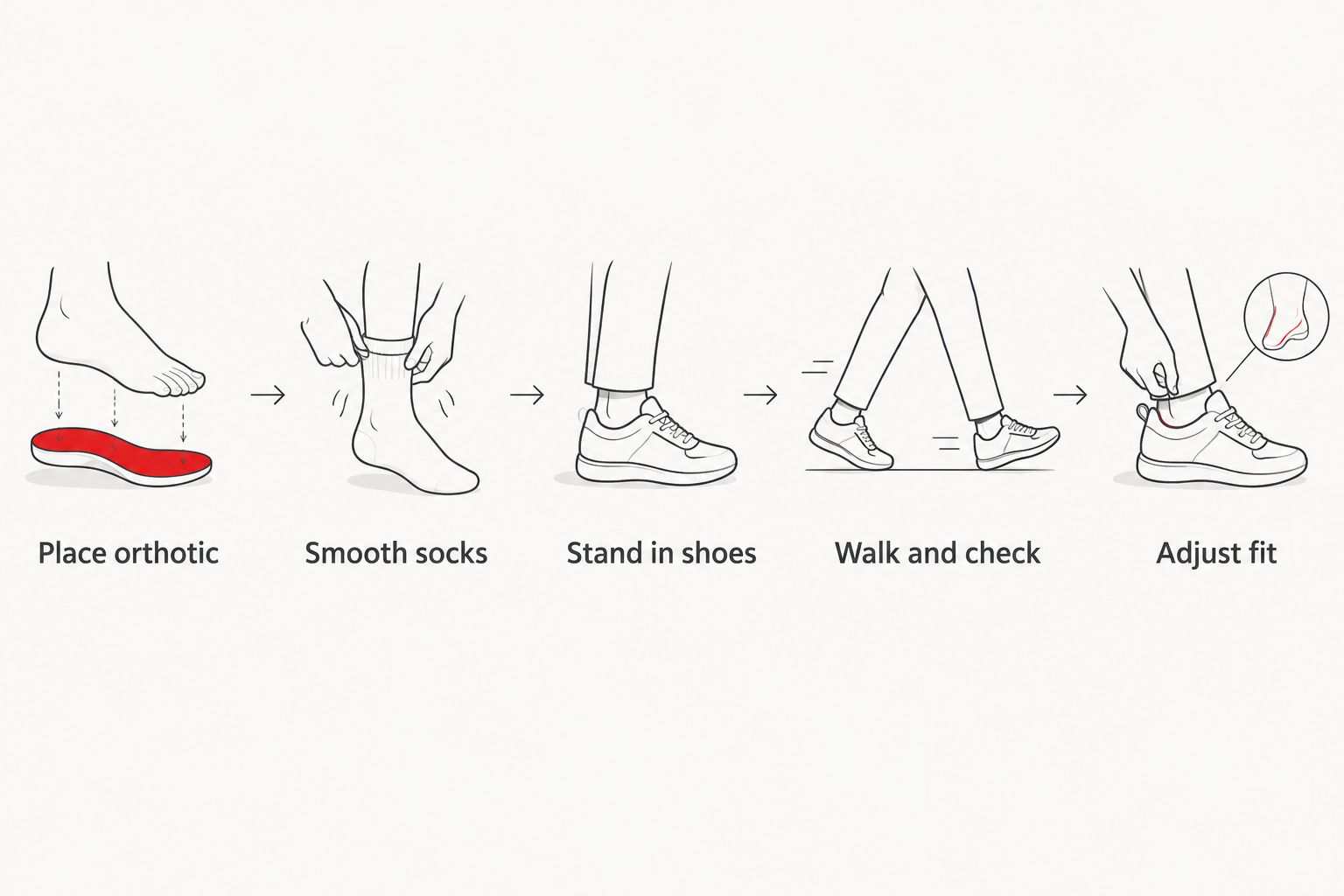
How to check the fit with an orthotic
Do the check in the shoes you will actually wear. A roomy boot and a close-fitting trainer can feel quite different with the same sock and orthotic.
- Place the orthotic as directed. Follow the instructions from its maker or your clinician. Do not add another removable footbed beneath it unless you have been told to do so.
- Put on the socks and smooth them out. Pull out any folds beneath the foot and check that the toe area is not bunched up.
- Stand in both shoes. Your toes should have room to move. Notice pressure across the top or sides of your feet as well as beneath them.
- Walk in the shoes. Check whether your heel stays in place and whether the sock gathers, twists or rubs.
- Change one part if the fit feels wrong. Try a less bulky sock or a different shoe with suitable room. If the orthotic itself causes pain or no longer sits as intended, ask its prescriber or a qualified foot-care professional.
A sock can feel perfectly soft in your hand and still be too bulky inside a particular shoe. The walking check decides. Repeat it when you switch from everyday shoes to winter boots or from a regular sock to a thicker pair.
Why the fit varies
There is no single wool-sock thickness that works with every orthotic. The result changes with the pieces you put together:
- Sock thickness. A thicker knit takes up more of the room between your foot and the shoe. This matters most when the shoe already feels close-fitting.
- Cushioning. A pillowy sock changes how the shoe feels beneath and around your foot. Comfort outside the shoe does not guarantee comfort inside it.
- Shoe shape. Space at the toes, across the instep and around the heel all matters. Check each area rather than judging the shoe by its labelled size alone.
- The orthotic. Insoles vary in shape and the space they occupy. Use your own orthotic for the fit test rather than assuming another person’s result applies to you.
- Sock fit. A loose sock can wrinkle beneath the foot; a sock pulled too tightly can feel restrictive. Choose a pair that sits smoothly before you put the shoe on.
- The activity. A combination that feels fine standing indoors still needs a walking check before you use it for a winter outing.
If you are shopping for socks in 2026, keep the orthotic and the intended shoe beside you when you decide how much cushioning you want. The thickest pair is not automatically the most comfortable pair once everything is inside the shoe.
Which wool socks make sense for everyday orthotic wear?
Start with the amount of space in your everyday shoes. If the orthotic already makes them feel full, choose a less bulky sock and check the fit again. If there is room for cushioning, a soft wool blend gives you a cosier option without making thickness the only reason to buy.
Swedish Lagom Socks - Warm Ochre are described as soft wool-blend socks with pillowy cushioning for everyday winter wear. That makes them a reasonable pair to try with an orthotic, not a guaranteed fit. Their advantage is the cushioned feel; their limitation is that the cushioning still occupies space.
Ultra Warm Finnish Wool Socks - Black are described as super-thick socks for cold winter conditions. They make more sense when your footwear has room for both the sock and the orthotic. If the shoe is already snug, choose fit over extra thickness.


Neither pair should replace instructions you have been given about your orthotics. Nordicsockcompany sells wool-blend winter socks, not orthotic insoles; the useful question is whether a chosen pair stays comfortable in your footwear.
Can I wear thick wool socks with orthotics in winter boots?
Yes, if the boots still fit your feet with both the socks and orthotics inside. Put the combination on and walk before setting out. If the thick socks make the boots press across your toes or instep, switch to a less bulky pair rather than assuming winter boots always have spare room.
Boot height alone tells you little about space around the foot. A boot can cover your ankles and still fit closely at the toes. In 2026, the same practical check applies to winter boots as to everyday shoes: test the complete combination you intend to wear.
Should I size up my shoes to fit wool socks and orthotics?
Not automatically. A larger shoe can relieve pressure in one area while leaving too much movement at the heel. First check whether a thinner sock solves the problem; if you need different footwear, assess its fit with your orthotics in place.
Do not treat a shoe-size label as proof that the combination fits. Your foot should feel comfortable when you stand and stay settled when you walk. If your orthotic was prescribed, ask the prescriber for advice before changing how you wear it to accommodate a shoe.
What if my orthotics feel uncomfortable with wool socks?
Stop using that combination if it hurts. Check for sock folds and shoe pressure, then try a less bulky sock in the same shoe. If discomfort continues or the orthotic appears to sit incorrectly, speak to the professional who supplied or prescribed it.
A warm sock is meant to make a cold day more comfortable, not to cover up a fit problem. Nordicsockcompany wool-blend socks offer winter warmth, but no sock should be treated as a substitute for advice about pain or an orthotic that no longer feels right.
FAQ
Can wool socks be worn with orthotics in 2026?
Yes, wool socks can be worn with orthotics when the socks, insoles and shoes fit comfortably together. Check the combination while standing and walking.
Are thick wool socks better with orthotics in cold weather?
No, thicker is not automatically better when you wear orthotics. Choose the warmest sock that still leaves your toes comfortable and your heel secure in the shoe.
Do I put orthotic insoles over my shoe’s original footbeds?
Follow the instructions supplied with your orthotics. Do not stack footbeds unless the maker or your clinician has told you to do so.
Why do my shoes feel tight when I add wool socks?
The sock and orthotic both occupy space inside the shoe. Try a less bulky sock and check for pressure at the toes, sides and top of the foot.
Can I wear Nordic-style wool-blend socks with prescribed orthotics?
Yes, provided the full shoe fit is comfortable and you follow your prescriber’s instructions. The sock’s style does not determine whether the orthotic sits correctly.
What should I do if a wool sock wrinkles under my orthotic?
Take the shoe off and smooth the sock before trying again. If it keeps bunching, choose a sock that fits your foot more securely.
Should I wear wool socks when trying on shoes for orthotics?
Wear the socks and orthotics you intend to use with those shoes. That lets you assess the complete fit rather than judging an empty shoe.
One last thing
The fit you remember from yesterday does not answer today’s question if you have changed socks. In 2026, make the final decision with your actual orthotics, your actual shoes and the wool socks you want to wear. Comfort in that complete combination wins over a thicker label or a cosier feel before you put your shoes on.