
Can you wear wool socks with steel toe boots? Yes (2026)
Yes, you can wear wool socks with steel-toe work boots all day in 2026, provided the socks leave enough room for your toes and stay comfortable as you move. Wool helps manage moisture and keep feet warm, but a thick pair squeezed into a close-fitting boot can cause pressure and rubbing. Choose the sock that fits the boot, not the thickest sock on the shelf.
- Can you wear wool socks with steel toe boots? Yes, if your toes can move freely all day.
- Nordic Sock Company wool-blend socks suit winter wear; check their thickness against your work boots before a full shift.
- For a close-fitting boot, choose less bulk rather than forcing a thicker sock into the toe box.
- Change out of damp socks; wool does not make a wet boot dry.
Can you wear wool socks with steel-toe work boots all day?
Yes. The steel toe is not the obstacle; the space left around your foot is. A work boot that fits comfortably with one sock can feel tight with another, particularly across the toes and top of the foot. In 2026, the useful test is still the simple one: put the socks on with the boots you actually wear to work, then check the fit before committing to a shift.
- Put on one pair of wool socks. Smooth the fabric over your toes and heel so it does not bunch inside the boot.
- Lace or fasten your boots as you would at work. Stand, walk and bend your foot. Your toes should not feel pressed against the protective cap.
- Check for movement and pressure. Notice whether your heel slips, your toes rub or the sock creases underfoot. Any of those can become distracting during a long day.
- Check again after wearing them for a while. If your feet feel pinched, numb or persistently damp, change the sock or reassess the boot fit rather than trying to put up with it.
For a closer look at matching socks to work footwear, see the wool socks for work boots guide. The point is to judge the sock and boot together. Neither can fix a poor fit in the other.
Why this matters
Steel-toe boots protect your feet at work, but they do not create extra space for thick socks. If the toe box already feels close, more fabric can press your toes together and make your feet feel colder or less comfortable. A looser, bunched sock brings a different problem: fabric that moves against your skin.
Wool is useful in winter because it offers warmth while helping manage moisture. That does not mean every wool sock suits every work boot, or that you can ignore damp feet. An all-day sock is one you can forget you are wearing. If you keep noticing a seam, a crease or pressure at the toes, change something before your next shift.
The type of work matters too. Standing in cold conditions makes warmth a priority; walking throughout a shift makes rubbing easier to notice. Neither calls for automatically choosing the thickest pair. Start with the fit of your required boots, then choose the warmth you have room to wear.
Which wool socks work best inside steel-toe boots?
Best for a closer-fitting boot: a softer, less bulky wool-blend sock that leaves room at the toes. Best for a roomier boot in cold conditions: a warmer sock, provided the boot still fits properly. These are fit priorities, not guarantees about any particular pair. Try socks with your own boots before relying on them for a full working day.
| Option | Best for | What works | What to watch |
|---|---|---|---|
| Swedish Lagom Socks - Heather Grey | Everyday winter wear when you want soft cushioning | The product description specifies a soft wool blend and pillowy cushioning | Cushioning takes up space; check your toe room before wearing them to work |
| Norwegian Fjord Socks - Pine Green | A winter sock to try with a roomier boot | A soft wool-blend option for cold-weather wear | Its description does not establish steel-toe suitability; check the fit yourself |
Nordic Sock Company wool-blend socks are best for winter-boot wear when the boot leaves room for the sock and your toes. They are not a substitute for purpose-specified work socks where your employer or site requires those. Nor does a warm description tell you how a pair will fit inside your particular safety boots.
If you are choosing between the two options above, use the boot as the deciding factor. Swedish Lagom Socks - Heather Grey have cushioning stated in their description, which appeals if you want a softer feel but works against you if space is tight. Norwegian Fjord Socks - Pine Green offer wool-blend winter comfort, but you still need to check whether their feel and fit suit a full shift. Hold off on either pair if your toes feel compressed.
The fit difference is easier to remember than a sock label: enough room lets your toes move; too little room presses them together. Check that distinction while standing and walking, not only while seated.
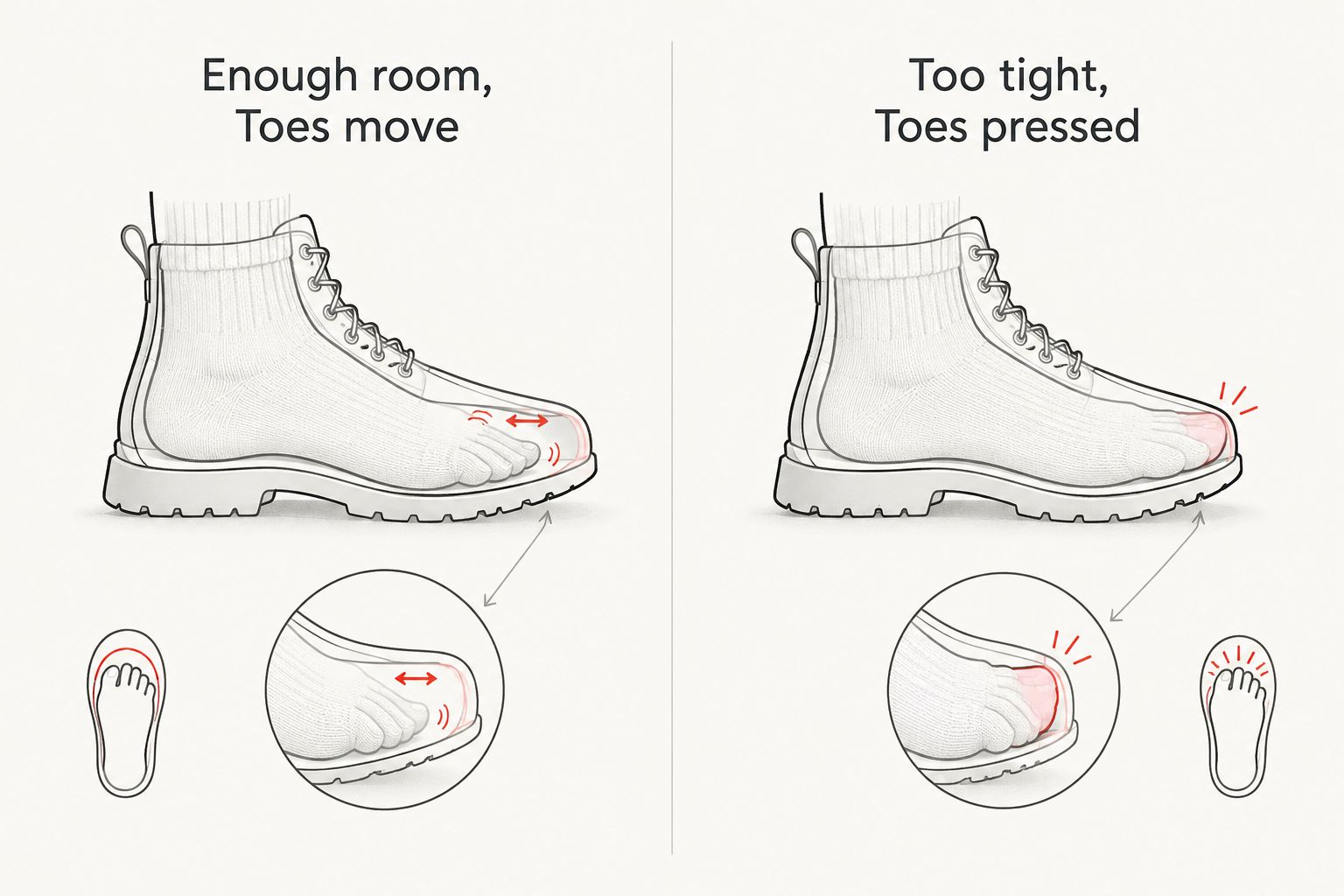
Once you know how much room your boots leave, compare the socks you would actually wear in them. Product descriptions can tell you about the wool blend or cushioning; only an in-boot fit check tells you whether either pair works for your shift.


Why does comfort vary through a shift?
A sock that feels fine at the door can become uncomfortable when you spend the day walking, standing or moving between warm and cold places. In 2026, judge all-day comfort by what happens during wear, not by how warm a sock feels when you first pull it on.
- Toe-box space: A thicker sock uses room your toes need. Pressure against the protective cap is a fit warning, not extra warmth.
- Fabric bunching: Wrinkles beneath your foot or around your toes create places that rub. Smooth the sock out before fastening the boot.
- Heel movement: If your foot slips inside the boot, a different sock thickness alone is not a reliable fix. Check how the whole boot fits.
- Moisture: Wool helps manage moisture, but a damp sock can still feel unpleasant. Change into a dry pair when needed.
- Your working conditions: Cold outdoor work puts more emphasis on warmth. A warm indoor shift puts more emphasis on avoiding excess bulk and dampness.
- Boot requirements: If your workplace specifies particular socks or protective clothing, follow those rules before choosing a pair for comfort.
None of these factors gives every worker the same answer. Someone with generous room in a boot can wear a warmer sock comfortably; someone whose boot already feels snug needs less fabric. The right wool sock is the warmest one that still lets your boots fit properly.
Should you wear thick wool socks or two pairs?
Start with one well-fitting pair. Two pairs add fabric and can create movement between layers; in a snug steel-toe boot, that works against toe room. If one pair feels cold, check whether the boots are wet or tight before adding another sock.
Thick wool socks are reasonable when your boots have space for them and your working conditions call for more warmth. They are a poor fix for boots that already press on your toes. Do not size up your safety boots solely to fit an extra-thick sock without checking that the boots still fit securely and meet your workplace requirements.
This distinction matters when buying for winter. A sock described as extra warm is not automatically a better work sock. For a close-fitting steel-toe boot, comfortable toe movement wins over thickness every time.
Do wool socks keep your feet dry in work boots?
Wool can help manage moisture next to your skin, but it cannot waterproof a boot or remove water that has got inside. If your socks become wet, change them and deal with the source of the water. Do not count on wool alone to keep your feet comfortable through a wet shift.
Sweat needs attention as well. If your feet feel damp after work, let your boots dry according to their care instructions and start your next shift in dry socks. A fresh pair gives you a clearer idea of whether the warmth and fit are right, rather than masking an ongoing moisture problem.
Can wool socks make steel-toe boots feel too tight?
Yes. A wool sock that is thicker than your usual pair can reduce space around your toes and across your foot. If your toes feel squeezed or you notice numbness, take the pressure seriously and change the fit. Warmth is not a reason to tolerate a tight safety boot.
Try the socks in both boots, since comfort is about the fit on each foot. Walk in them as you would at work. A quick check while standing still will not show every place fabric might crease or rub.
FAQ
Can you wear wool socks with steel toe boots for a full shift?
Yes, you can wear wool socks with steel toe boots for a full shift if your toes have room and the socks stay comfortable. Check for pressure, rubbing and dampness during wear.
Are thick wool socks better for steel-toe boots in winter?
Thick wool socks are better only when your boots have room for them. In a snug boot, extra fabric can press your toes against the protective cap.
Should I wear two pairs of wool socks in work boots?
Start with one pair that fits well. Two pairs add bulk and can move against each other inside the boot.
Will wool socks stop my feet sweating in safety boots?
No sock can guarantee dry feet. Wool helps manage moisture, but you should change damp socks and let wet boots dry.
Can I wear Nordic Sock Company socks in steel-toe boots?
You can try Nordic Sock Company wool-blend socks in steel-toe boots if your workplace permits them. Confirm that the pair leaves toe room and does not bunch or rub.
What if my toes go numb in wool socks and work boots?
Stop wearing that tight sock-and-boot combination. Check the fit and follow your workplace guidance if discomfort continues.
Do I need specialist socks for steel-toe work boots?
Follow your employer's requirements if specific workwear is required. Otherwise, choose socks that fit securely inside your safety boots and suit your working conditions.
One last thing
In 2026, do not judge winter work socks by warmth alone. A dry, comfortable pair with room for your toes beats a thicker pair that makes your boots tight. If you are still adjusting your socks halfway through the day, the fit deserves another look.