
How Long Do Wool Socks Last Before Wearing Out? (2026)
Wool socks last 6 to 12 months of daily wear before the heel and toe thin out, or 1 to 3 years when you rotate several pairs and wash them properly, in 2026. The number that actually matters isn't total lifespan — it's how fast friction wears through the heel and toe, which happens long before the cuff or leg gives out.
- Wool socks last 6-12 months with daily wear, or 1-3 years when rotated across several pairs, in 2026.
- Heel and toe friction wears out wool socks long before the cuff or ribbing fails.
- Reinforced heel-and-toe designs, like Nordic Sock Company's Ultra Warm Finnish Wool Socks, outlast plain-knit wool socks.
- Hand-knitted 100% wool socks resist pilling and hold shape longer per wear than machine-knit blends.
- Rotating four or more pairs is the single biggest lever on how long wool socks last.
Why this matters
A sock that costs more but lasts twice as long is cheaper per wear than a bargain pair replaced every winter. Wool socks are marketed on warmth, but the number that decides whether you buy again next year is how long they hold their shape at the heel, toe and cuff.
The old Nordic line still holds: there is no such thing as bad weather, only bad socks. A sock that wears through in eight weeks was never the right sock for the job it was bought for.
“There is no such thing as bad weather, only bad socks.”
Before buying, it helps to know how to spot durable wool socks that won't pill — the same signs that predict pilling also predict how long the sock lasts.
How long do wool socks last?
Lifespan depends on how often you wear a pair and how many pairs you rotate through. A single pair worn daily with no rotation wears out fastest; a small rotation of four to six pairs spreads the friction and stretches the useful life considerably.
| Wear pattern | Typical lifespan | Best for |
|---|---|---|
| Single pair, worn daily, hand-washed occasionally | 6-9 months | Budget testing a wool sock for the first time |
| Two to three pairs in rotation, washed after each wear | 9-14 months | Everyday winter commuting |
| Four or more pairs in rotation, reinforced heel/toe | 1.5-3 years | Daily winter wear, work boots, outdoor jobs |
| Hand-knitted 100% wool, low rotation, hand-washed | 2+ years | Occasional heavy wear, gifting, longevity over cost |
The pattern is consistent: rotation beats quality on its own, and quality only pays off once you're rotating pairs anyway.
Everyday wool-blend socks: 6 to 12 months of regular wear
A standard wool-blend sock worn most days and washed after each wear typically lasts 6 to 12 months before the heel thins visibly. Nylon or polyamide content in the blend slows this down — a sock that's mostly wool with a small synthetic reinforcement outlasts a 100% wool sock with no reinforcement at the wear points.
Verdict: Buy for everyday winter wear, but expect to replace within the year if worn most days without rotation.
Reinforced heel-and-toe wool socks: 1 to 2 years
Socks built with denser knit or synthetic reinforcement at the heel and toe — the two friction points that fail first — commonly reach 1 to 2 years of regular wear. Nordic Sock Company's Ultra Warm Finnish Wool Socks use a thicker, certified wool yarn built for this kind of daily punishment, which is the design logic behind why reinforced socks last longer in the first place.
Verdict: Buy if you wear wool socks in work boots or on foot most of the day — the reinforcement pays for itself within a year.
Hand-knitted 100% wool socks: 2+ years with rotation
Hand-knitted wool socks, knitted with denser stitching than most machine knits, tend to hold shape and resist pilling for 2 years or more when rotated and hand-washed rather than machine-dried. They cost more per pair up front, which only makes sense if you're buying them to last rather than to wear daily on their own.
Verdict: Buy for gifting or occasional heavy use; Wait if you need an everyday pair and want the lowest cost per wear in year one.
Why wool sock lifespan varies
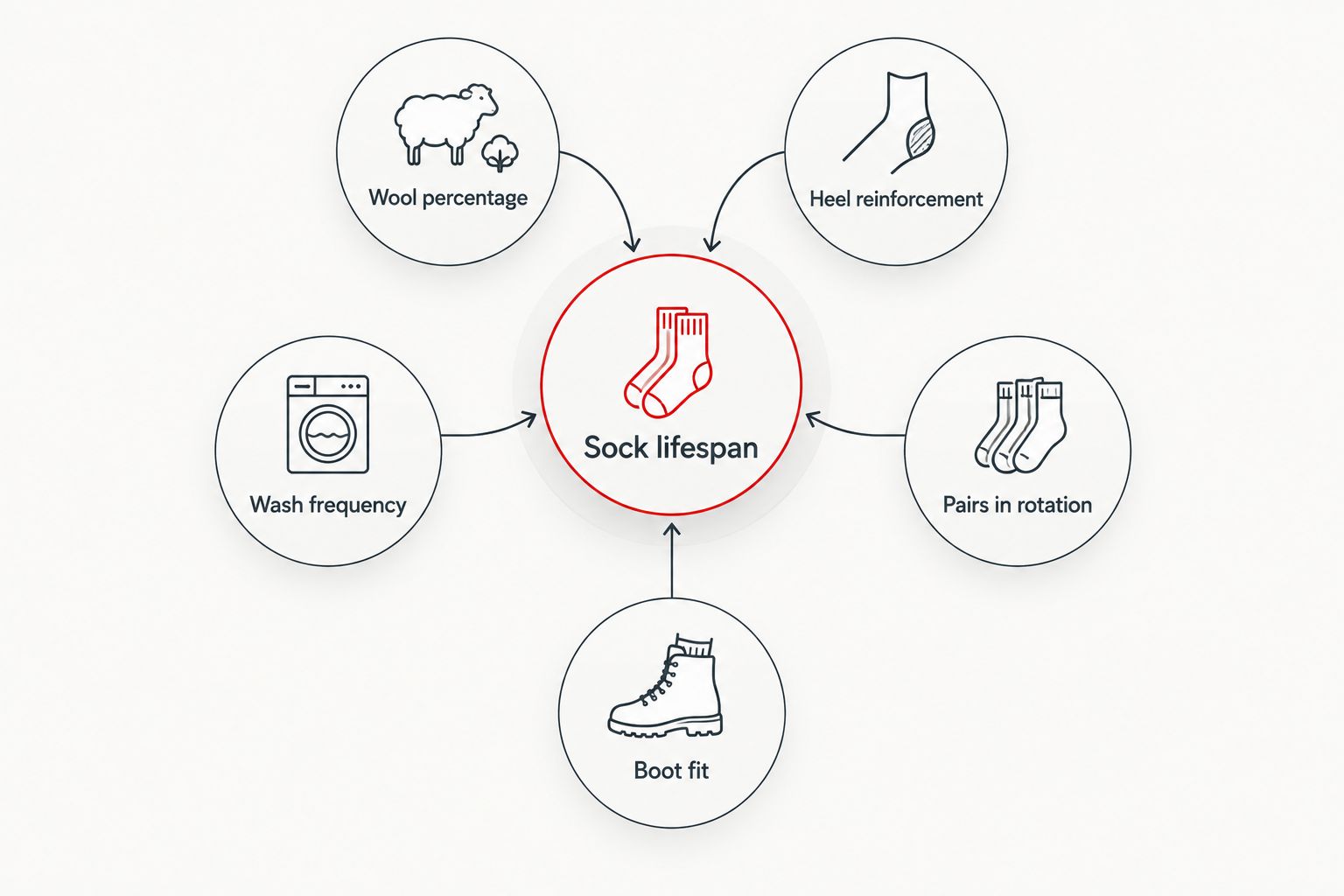
- Wool percentage — higher wool content resists pilling better than heavily blended synthetic-wool mixes, but pure wool alone at the heel wears faster without reinforcement.
- Heel and toe reinforcement — nylon or polyamide woven into the two highest-friction zones is the single biggest factor separating a 6-month sock from a 2-year sock.
- Wash frequency and method — machine drying on heat shrinks and felts wool fibres faster than air drying or hand washing.
- Pairs in rotation — four or more pairs spread wear across more washes and more rest time between uses, which slows fibre fatigue.
- Boot or shoe fit — a sock compressed daily inside a tight boot wears through faster than the same sock worn in a looser fit.
- Foot moisture — feet that run hot and sweat more break down wool fibres faster than average, shortening lifespan regardless of sock quality.
When a pair is thinning faster than expected, darning the heel adds months rather than replacing the pair outright — see how to darn and repair wool socks for the method.


How do you know when wool socks need replacing?
Wool socks need replacing when the heel or toe has visibly thinned to the point of near-transparency, or a hole has opened, usually somewhere inside that 6-12 month daily-wear window. A second sign is loss of elasticity in the cuff, which lets the sock slide down inside a boot no matter how you pull it up.
Do wool socks really last longer than cotton socks?
Wool socks typically outlast cotton socks under the same wear conditions, because wool fibres flex and recover thousands of times without breaking down, while cotton fibres stiffen and crack faster once damp with sweat. This is why a wool sock bought for winter 2026 is more likely to still be wearable next winter than an equivalent cotton pair bought the same day.
How many pairs of wool socks do you need to make them last?
Four to six pairs in rotation is enough to stretch wool sock lifespan from the 6-12 month single-pair range up to 1-3 years per pair, because each pair gets more rest time between washes and wears. Buying two pairs and wearing them on alternate days is the minimum rotation that noticeably slows wear.
FAQ
How long do wool socks last before wearing out?
Wool socks last 6 to 12 months with daily wear on a single pair, or 1 to 3 years when rotated across several pairs, in 2026. The heel and toe wear through first, long before the cuff fails.
How often should you wash wool socks?
Washing after every wear is standard, but hand washing or a gentle machine cycle on cold extends fibre life far more than the wash frequency itself. Heat and tumble drying are what shrink and felt wool fastest.
Do reinforced wool socks really last longer?
Yes, reinforced heel-and-toe wool socks reach 1 to 2 years of regular wear, roughly double a plain-knit wool-blend sock in the same conditions. The reinforcement sits exactly where friction hits hardest.
Can you repair wool socks instead of buying new ones?
Darning a thinning heel or toe on wool socks adds months of extra wear for the cost of a needle and yarn. It works best when caught before a full hole opens.
Is it worth buying hand-knitted wool socks for longevity?
Hand-knitted 100% wool socks hold shape and resist pilling for 2 years or more when rotated and hand-washed, which suits gifting or occasional heavy use rather than daily wear alone. They cost more per pair upfront.
Why do wool socks wear out at the heel first?
The heel takes the most repeated friction against the shoe or boot with every step, so fibres break down there before anywhere else on the sock. Reinforced heels are built specifically to slow this.
Do wool socks last longer than acrylic socks?
Wool fibres recover their shape after compression better than acrylic, which tends to flatten and lose loft permanently after repeated wear. Wool socks generally hold cushioning longer across the same number of wears.
How many pairs of wool socks should you own?
Four to six pairs in rotation is the practical minimum to stretch lifespan from the 6-12 month single-pair range toward 1-3 years per pair. Two pairs on alternate days is the smallest rotation worth doing.
One last thing
The single biggest lever on wool sock lifespan isn't the sock at all — it's how many pairs you own. A £16 pair worn daily with no backup will wear out faster than a £14.90 pair worn one day in four, purely because rest time between wears lets wool fibres recover their shape. Buy a rotation before you buy a premium pair.