
Do Feet Sweat in Wool Socks? 2026 Verdict
Wool socks don't stop your feet from sweating - nothing short of amputation does that. What changes is what happens to the sweat once it's produced, and that's the part worth understanding before you blame the socks for a damp evening.
- Yes, feet sweat in wool socks just as much as in any sock - sweat glands don't know what fibre is covering them.
- Wool fibres absorb roughly 30% of their own weight in moisture before they start to feel wet, which is why wool feels drier than cotton at the same sweat level.
- Cotton and low-wool blends trap moisture against skin, causing the cold, clammy feeling people mistake for 'sweating more' in 2026's damp winters.
- Higher wool-content socks, like the Ultra Warm Finnish Wool Socks from Nordic Sock Company, manage that moisture better than thin cotton-mix socks.
Why this matters
Feet carry more sweat glands per square inch than almost any other part of the body, and they don't switch off because you've put on wool instead of cotton. The question people actually mean to ask is whether wool socks make sweating worse, or whether wool handles that sweat any differently than other fibres.
It does, and the difference shows up most in winter boots, where warmth and poor airflow combine to push sweat production higher regardless of what's on your feet. If sweaty feet in boots is the actual problem, the guide to choosing wool socks for sweaty feet in winter boots covers the fixes in more depth than this page needs to.
Do feet sweat in wool socks?
Yes - feet sweat the same amount in wool socks as they would in any other sock, because sweat production is a response to heat and activity, not to the fibre touching the skin. The difference between wool, cotton and synthetic socks is entirely in what happens after the sweat is produced.
| Fibre | Moisture handling | Feel when damp | Verdict | |---|---|---| | Wool / wool-blend | Absorbs up to ~30% of its weight before feeling wet; wicks slowly | Stays warm, mostly dry-feeling even when damp | Buy for all-day warmth in cold, damp UK winters | | Cotton | Absorbs moisture but holds it against skin; dries slowly | Cold and clammy once damp | Skip for boots and outdoor winter wear | | Synthetic (polyester/acrylic blend) | Wicks moisture fast to the outer surface | Dries quickly but loses warmth once wet | Hold for high-output activity, not standing-still cold |
Wool wins for feeling dry through a normal sweat cycle; cotton loses because it holds the moisture exactly where you feel it. That single distinction explains most of the confusion around whether wool socks cause sweating - they don't, they just don't punish you for it the way cotton does.
Why sweating in wool socks varies
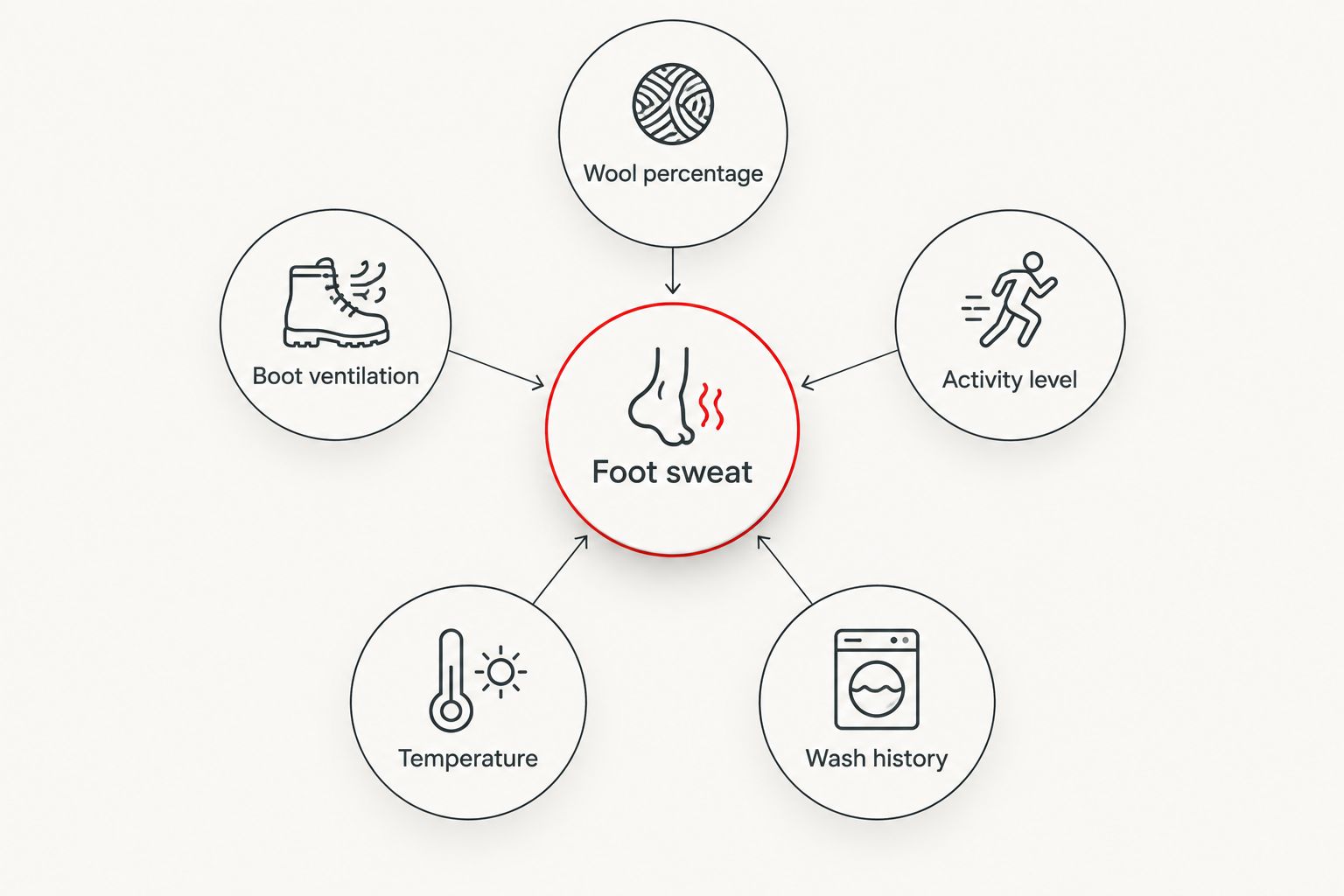
Not every wool sock behaves the same way, and not every foot sweats the same amount inside one. A handful of factors decide whether a given pair feels damp by lunchtime or stays comfortable all day.
- Wool percentage in the blend - a sock that's 30% wool and 70% synthetic filler behaves closer to synthetic than to wool, so check the composition, not just the marketing name.
- Sock thickness and boot ventilation - a thick sock inside a tight, non-breathable boot traps moisture regardless of fibre.
- Activity level - standing or walking all day produces more sweat than sitting at a desk, wool or not.
- Room or outdoor temperature - warmer feet sweat more; central heating and thermal boots both raise foot temperature.
- Sock age and wash history - wool loses some of its natural lanolin and wicking performance after repeated harsh washing.
- Individual sweat rate - some feet simply produce more sweat than others, independent of sock choice.
Socks with a higher wool percentage, like the Ultra Warm Finnish Wool Socks, are built specifically to reduce the trapped-moisture effect that low-wool blends create. That's a design choice, not a guarantee against sweating itself.
Related questions
Does merino wool stop feet sweating?
Merino wool doesn't stop sweating in wool socks any more than any other fibre does - it changes how that sweat feels against the skin. Merino's finer fibres wick moisture into the yarn structure faster than coarser wool, so feet feel drier sooner after a sweat spike during a typical 2026 UK winter.
Why do my feet sweat more in thick wool socks than thin cotton ones?
Thick wool socks trap more warmth against the foot, and warmer feet produce more sweat - the sock is amplifying temperature, not causing extra perspiration. If evening warmth indoors is the actual issue rather than outdoor cold, a lighter weight like the Swedish Lagom Socks solves it better than switching fibre entirely.
How can I stop my feet sweating in wool socks?
You can't stop the sweating itself, but a higher wool-content sock, boots sized to allow airflow, and rotating pairs instead of re-wearing them cuts the clammy feeling most people associate with 'sweaty wool socks.' People training in cold weather often solve it the same way runners do - the notes on merino wool socks for winter running apply just as well to a daily commute.
Is it bad for feet to sweat in wool socks?
No - sweating into wool socks is normal and not harmful on its own. Wool's natural moisture handling keeps the risk of prolonged dampness lower than sweating into cotton or synthetic socks that stay wet for hours, which is where fungal and odour problems actually start.
If you consistently run hot rather than cold, the sock weight matters more than the fibre split - see how to choose wool socks if you run cold or run hot before buying a thicker pair by default.


FAQ
Do feet sweat in wool socks?
Yes, feet sweat in wool socks the same amount they would in any sock, because sweat production is triggered by heat and activity, not by the fibre against the skin. Wool simply handles the moisture better than cotton, absorbing around 30% of its own weight before feeling wet.
Is it normal for feet to sweat in wool socks?
It's completely normal for feet to sweat in wool socks - feet carry roughly 250,000 sweat glands each and produce moisture regardless of what covers them. Wool socks feel drier through that sweat cycle than cotton or thin synthetic socks.
What's the best wool sock for sweaty feet in 2026?
A higher wool-percentage sock, such as the Ultra Warm Finnish Wool Socks, handles sweat better in 2026 than low-wool blends because more wool fibre means more moisture absorbed before the sock feels wet.
Is merino wool better than cotton for sweaty feet?
Merino wool is better than cotton for sweaty feet because its fine fibres wick moisture into the yarn structure and release it slowly, while cotton holds moisture flat against the skin and dries slowly.
How much moisture can wool socks absorb before feeling wet?
Wool socks can absorb around 30% of their own weight in moisture before they start to feel wet, which is why they stay comfortable longer than cotton at the same sweat level.
Can sweaty feet in wool socks cause smell?
Sweaty feet in wool socks are less likely to smell than in cotton or synthetic socks, because wool's slower moisture release limits the damp conditions bacteria need to multiply.
Should I wear thinner wool socks if my feet sweat a lot?
Thinner wool socks help if the sweating is driven by trapped heat rather than outdoor cold, since a lighter weight lets more air circulate around the foot inside the boot or shoe.
One last thing
Wool doesn't just absorb moisture passively - as the fibres take on water vapour, they release a small amount of heat, a property textile researchers call the heat of sorption. It's a minor effect, but it's part of why a wool sock that's picked up sweat still feels warm rather than cold, the opposite of what happens once a cotton sock gets equally damp. That's the actual mechanism behind the old saying the brand likes to repeat: there is no such thing as bad weather, only bad socks.