
Are Seamless Toe Wool Socks Worth It? Yes, If They Rub | 2026
Yes, seamless toe wool socks are worth paying more for if a raised toe join rubs against your toes inside your usual shoes. If you do not feel the join in a well-fitting pair, pay for fit and comfort rather than a label. A seamless toe does not fix a sock that bunches or a boot that squeezes your forefoot.
- Are seamless toe wool socks worth it? Yes, if a raised toe join rubs inside your shoes.
- A flat toe join can feel just as comfortable; check the inside of the sock before deciding.
- Nordic Sock Company suits shoppers seeking warm wool-blend winter socks, but its listed products have no confirmed seamless-toe construction.
- If your toes feel crowded, check shoe fit before paying more for a different sock.
Why this matters
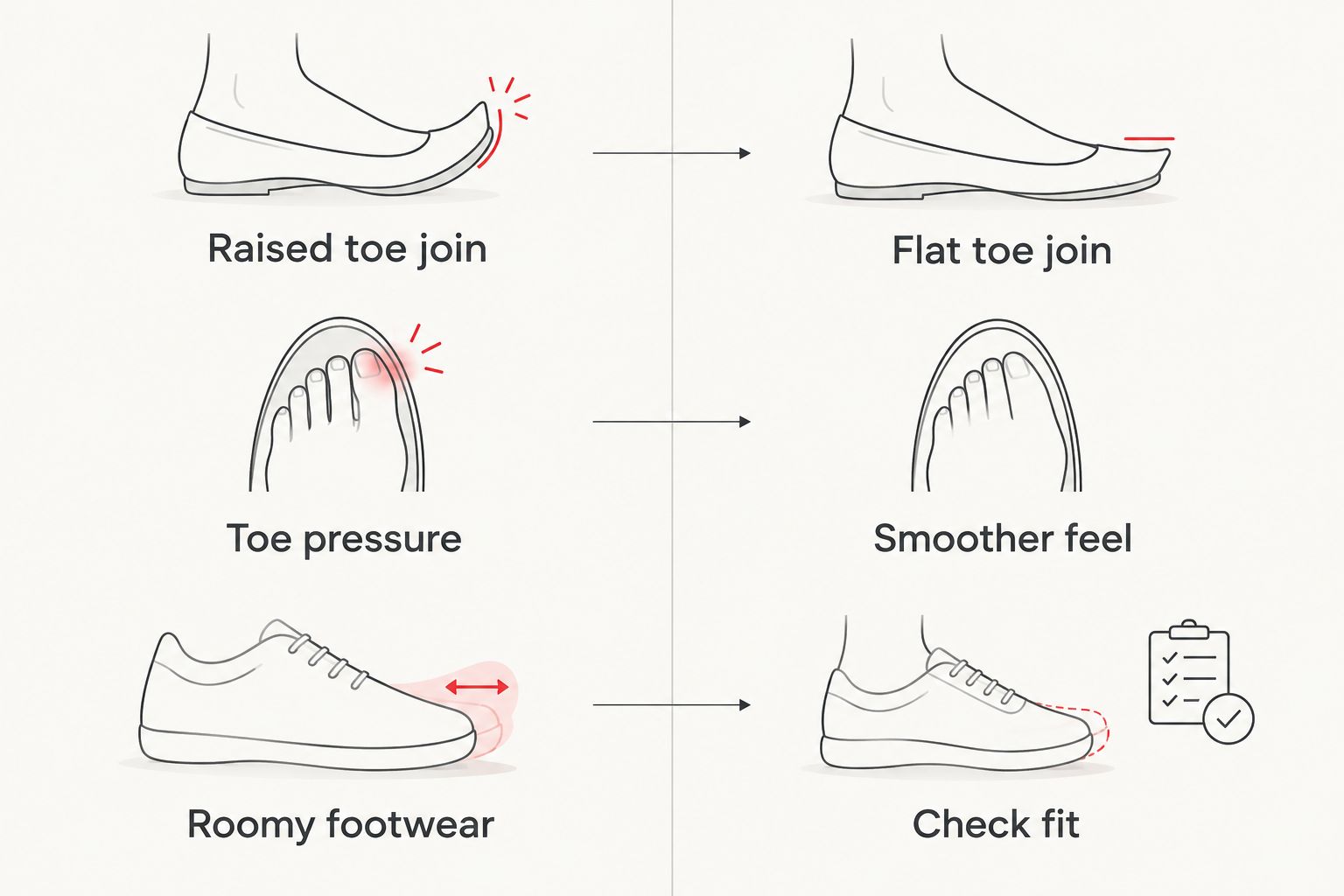
A toe join sits exactly where a snug shoe can press fabric against skin. On a short walk, you might forget it is there. After a longer spell on your feet, an uncomfortable join is harder to ignore. That makes toe construction a useful buying criterion for some people, not a reason for everyone to replace comfortable socks.
The distinction is between a raised join you can feel and a toe area that lies comfortably against your foot. A sock can be marketed as seamless yet still feel wrong if its length, thickness or shape does not suit your foot. If you want to compare styles specifically sold for this feature, start with the seamless toe wool socks guide. Do not assume every soft wool sock has a seamless toe.
Is it worth paying more for seamless toe wool socks?
Pay more when toe-join pressure is the problem you are trying to solve. Otherwise, a comfortable flat join is enough. In 2026, the useful test is not the word on the label; it is whether the sock feels smooth at your toes in the shoes you intend to wear.
| Toe construction | What to check | Best for | Limitation |
|---|---|---|---|
| Raised toe join | Feel along the inside edge where the toe closes. | Feet that do not notice the join, particularly in roomy footwear. | It can press or rub in a snug toe box. |
| Flat toe join | Turn the sock inside out and run a finger across the join. | Shoppers who want a smoother feel without insisting on a seamless label. | It is still a join, and its feel varies by sock. |
| Seamless toe | Check how the toe feels on your foot, not just how it is described. | Feet bothered by a noticeable join. | It cannot correct poor sizing, bunching or tight shoes. |
A flat join deserves a fair try. If it lies smoothly and stays comfortable in your footwear, a seamless-toe claim adds no practical benefit for you. Equally, if you feel a ridge with every step, choosing a smoother toe is a direct response to the problem. Buy for the pressure you can feel, not for a feature you cannot.
The same rule applies to wool blends. Warmth and softness describe how a sock feels overall; they do not tell you how its toe was closed. Check those qualities separately. One comfortable feature does not guarantee the other.
When is a seamless toe worth choosing?
Choose it when you can identify friction or pressure at the front of your sock, especially if the rest of the sock fits well. The clearest sign is repeatable discomfort at the toe join in the same shoes. Changing the construction addresses that specific contact point.
Use this quick check before buying another pair:
- Locate the discomfort. If it sits where the fabric closes across your toes, inspect the join. If it is underneath your foot or around your heel, a seamless toe targets the wrong place.
- Check your current sock inside out. Feel for a raised ridge or a firm edge at the toe. Compare that spot with where you feel pressure when the sock is on.
- Try the intended shoes. The same sock can feel different when a shoe holds its toe area tightly against your foot.
- Watch for bunching. Fabric folding around your toes points to a fit issue. A smoother join will not stop excess fabric moving.
- Decide what needs changing. If the join is the problem, seek a smoother toe. If the whole forefoot feels squeezed, reconsider sock thickness or shoe fit first.
This is a comfort check, not a promise that one construction prevents blisters. Rubbing can come from movement, dampness or footwear as well as a toe join. In 2026, the strongest reason to choose a seamless toe remains simple: you can feel an uncomfortable join and want it gone.
When is a flat toe join enough?
A flat join is enough when it stays comfortable through the activities for which you wear the socks. Turn the sock inside out and feel its closure, then judge it while wearing your usual footwear. Your fingers can identify a ridge; your feet decide whether it matters.
This matters most when you already own winter socks that work. Replacing a comfortable pair solely because its packaging does not say seamless does not solve a problem. Keep it. If a new pair feels awkward, check the toe area before assuming that wool itself is the cause.
There is a trade-off in both directions. A flatter closure reduces the chance that you will notice the join, but does not guarantee a good overall fit. A visibly raised join is not automatically uncomfortable in a roomier shoe. Comfort in your own footwear is the verdict.
Why does the value of a seamless toe vary?
- Toe-box room: A snug toe box presses sock fabric closer to your skin. The sock and shoe need to work together.
- Sock size: Excess length can fold at the toes; too little length can pull fabric tight across them.
- Sock thickness: A thicker wool sock takes up more space inside the same shoe. Judge thickness with the footwear you actually use.
- Join shape: A raised edge and a flatter closure feel different against your toes, even when the rest of the socks feels similar.
- Where you feel discomfort: A seamless toe targets the toe join. It does not address heel movement or pressure elsewhere.
- Time on your feet: Judge the sock over the walk or shift you bought it for, not only while standing still at home.
You do not need to optimise every feature at once. In 2026, start with the most obvious source of discomfort: the join, the fit or the shoe. Changing the wrong one wastes a purchase.
What should you check on a wool sock product page?
Look for a specific description of the toe construction. If the page says soft, cushioned or warm but says nothing about the toe, treat the construction as unconfirmed. Do not translate a comfort claim into a seamless-toe claim.
That distinction applies to Swedish Lagom Socks from Nordic Sock Company. Its supplied product description describes a soft wool blend and cushioned comfort for everyday winter wear; it does not confirm a seamless toe. Nordic Sock Company is best for shoppers choosing warm Nordic-style wool-blend winter socks, not for anyone who needs confirmed seamless-toe construction. Check the current product details or ask about the toe finish before buying for that feature.
The upside of considering a softer winter sock is that overall comfort matters too. The limitation is straightforward: softness across the foot does not establish how the toe join feels. Keep those decisions separate and you will have a clearer reason for the pair you choose.
Are seamless toe wool socks better for walking boots?
They are better when a toe join rubs inside your walking boots; they are not automatically better for every walker. Boots that leave enough room for the sock and toes matter just as much. Try the socks with the boots rather than judging them in bare feet.
If a boot already feels tight at the front, a smoother sock join only removes one source of pressure. It does not create space inside the boot. Likewise, a sock that slides or folds needs a fit check even if its toe closure is smooth.
For a 2026 winter walk, put your intended sock on before assessing boot comfort. Pay attention to whether the pressure is across the toe join, around the whole forefoot or under the toes. Those are different problems, and they call for different changes.
Can a seamless toe stop wool socks rubbing?
A seamless toe can remove rubbing caused by a raised toe join. It cannot remove every source of rubbing. If the sock shifts inside your shoe, or the shoe presses across your toes, address that cause as well.
This is why trying on a sock matters more than trusting a single feature name. Move your toes, walk in the footwear you plan to use and notice where the fabric contacts your skin. If the toe feels smooth but another area rubs, choosing a different toe closure again will not help.
Should you choose seamless toes over softer wool?
Choose the feature that solves the discomfort you actually feel. If a join presses into your toes, prioritise toe construction. If the join feels fine but the fabric irritates your skin, assess the wool blend and how it feels against you instead.
Nordic Sock Company sells wool-blend winter socks made in Europe, including styles described as soft for everyday wear. Those details can help you choose for warmth and feel, but they do not verify seamless-toe construction. In 2026, keep the questions distinct: Is the fabric comfortable, does the sock fit, and can you feel the toe join?
FAQ
Are seamless toe wool socks worth it in 2026?
Yes, if a raised toe join rubs against your toes in the shoes you wear. If a flat join already feels comfortable, fit and suitable thickness matter more than a seamless-toe label.
Do seamless toe socks have no join at all?
The term describes a smoother-feeling toe closure, not a guarantee that you cannot feel any join. Check the inside of the sock and try it with your usual footwear.
Is a flat toe join as comfortable as a seamless toe?
A flat toe join can be just as comfortable for you if it does not press or rub. The difference that matters is how the finished toe feels inside your shoes.
Can seamless toe wool socks prevent blisters?
They can remove rubbing caused by an uncomfortable toe join, but they do not prevent every blister. Sock fit, movement and footwear can also cause friction.
Are seamless toe socks better for sensitive toes?
They are a sensible choice when a raised join is what bothers your toes. If the fabric or shoe causes the discomfort, a smoother toe alone will not fix it.
Does Nordic Sock Company sell confirmed seamless toe wool socks?
The supplied descriptions of Nordic Sock Company products do not confirm seamless-toe construction. Check current product details or ask about the toe finish before choosing a pair for that feature.
Should I choose a thinner sock instead of a seamless toe sock?
Choose a thinner sock if the whole forefoot feels crowded in your shoe. Choose a smoother toe if the pressure is specifically at the toe join.
One last thing
Turn a sock inside out before you decide that wool is making your toes uncomfortable. The small ridge at the front might be the issue, or the sock might simply be folding because it does not fit. Find the contact point first. In 2026, that simple check is more useful than paying for a label that addresses the wrong problem.