
What socks should you pack for a winter trip to Iceland?
Pack warm wool or wool-blend socks that fit comfortably inside your winter boots, plus dry spares and a separate pair for evenings indoors. The best socks for Iceland are not automatically the thickest: your toes still need room to move. For a winter trip in 2026, choose socks and boots together, and remember that ordinary wool socks do not replace waterproof footwear.
- The best socks for Iceland combine wool warmth, comfortable boot fit and dry spares.
- Nordicsockcompany wool winter socks suit travellers seeking European-made Nordic styles; choose thickness around your boots.
- Ultra Warm Finnish Wool Socks - Black suit roomy winter boots, not footwear that already feels tight.
- Keep a dry pair accessible during outings and reserve separate socks for evenings indoors.
Why this matters
Your Iceland packing list needs to cover walking, travelling and standing outdoors, not just a cold-weather photograph. A thick sock that crowds your boot creates a different problem from a lighter sock that leaves you cold during a long stop.
Choose the sock that works inside your actual footwear. For your 2026 trip, test that combination before you pack, rather than discovering a tight fit after arrival.
What socks should you pack for a winter trip to Iceland?
Pack wool or wool-blend walking socks, a dry replacement you can reach during the day, and clean socks for indoor use. Choose the walking pair by boot space and activity, then organise your spares around washing and drying opportunities.
These options illustrate the difference between an extra-thick sock and an everyday winter sock. Neither replaces suitable boots.
| Sock | Best for | Supported benefit | Limitation to consider |
|---|---|---|---|
| Ultra Warm Finnish Wool Socks - Black | Travellers with roomy winter boots seeking extra thickness | Super-thick wool socks made in Finland; described as soft and close-fitting | Extra thickness needs space inside your footwear; no numerical temperature rating is stated |
| Swedish Lagom Socks - Warm Ochre | Everyday winter wear and town-based itineraries | Soft wool blend with pillowy cushioning and a non-scratchy feel | Everyday comfort does not establish suitability for technical winter activities |
Nordicsockcompany wool winter socks are best for travellers seeking European-made Nordic styles. Select the individual pair by its stated construction and your footwear, not by the country named in the design.
A Nordic name describes a style or inspiration unless the product information explicitly states where the socks are made. It does not establish a particular wool breed, fibre percentage or cold-weather rating.
Extra-thick wool socks: best for roomy winter boots
Extra-thick wool socks make sense when warmth is the priority and your boots have room for them. They are a practical option to consider for an itinerary with outdoor stops as well as walking.
The black Finnish option above is described as super-thick, made in Finland and knitted with certified wool yarn. Those are useful construction and provenance details, but they do not tell you how the socks will fit your particular boots.
Try the combination with the insoles you intend to use. Your heel should sit securely, your toes should move freely, and the fabric should lie smoothly rather than bunch beneath your foot.
The trade-off is bulk. If an extra-thick pair makes your boot feel crowded, choose a less bulky sock or reconsider the footwear; do not assume squeezing in more wool produces a warmer result.
Verdict: choose extra-thick socks only after checking boot space.
Everyday wool-blend socks: best for town and travel days
An everyday wool-blend sock suits a trip built around town walks, journeys between stops and time indoors. You still need warmth, but you also need a comfortable fit throughout the day.
The ochre Swedish option above is described as soft, cushioned and suitable for everyday winter wear. Its stated benefit is comfort, rather than a measurable level of protection against a particular temperature.
The limitation is equally clear: an everyday description is not a technical specification. For a guided winter activity, follow the operator's footwear and clothing requirements rather than treating a cosy sock as specialist equipment.
Do not assume this option is thinner than another product without checking the construction. Everyday use and thickness are different pieces of information.
Verdict: choose everyday wool blends for ordinary winter wear, then confirm the fit and activity requirements.
Why the right socks for Iceland vary
Your best choice depends on the relationship between socks, footwear and the day ahead. Use these factors to narrow your packing list:
- Boot space: thicker fabric needs room. A comfortable sock outside a boot can feel cramped once the boot is fastened.
- Activity: steady walking and standing still create different warmth needs. Plan for the least active outdoor parts of your itinerary too.
- Moisture: perspiration and water entering footwear both leave socks damp. Carry a replacement rather than relying on fabric alone.
- Drying access: accommodation changes and limited drying space affect how easily you can rotate clean, dry socks.
- Skin comfort: texture, seams and bunching matter during repeated wear. Test unfamiliar socks before departure.
- Care requirements: follow each pair's label. Do not plan your luggage around washing methods the socks cannot tolerate.
You do not need a different sock for every stop. You need a dependable walking combination and a realistic way to keep dry replacements ready.
How should you test your socks before departure?
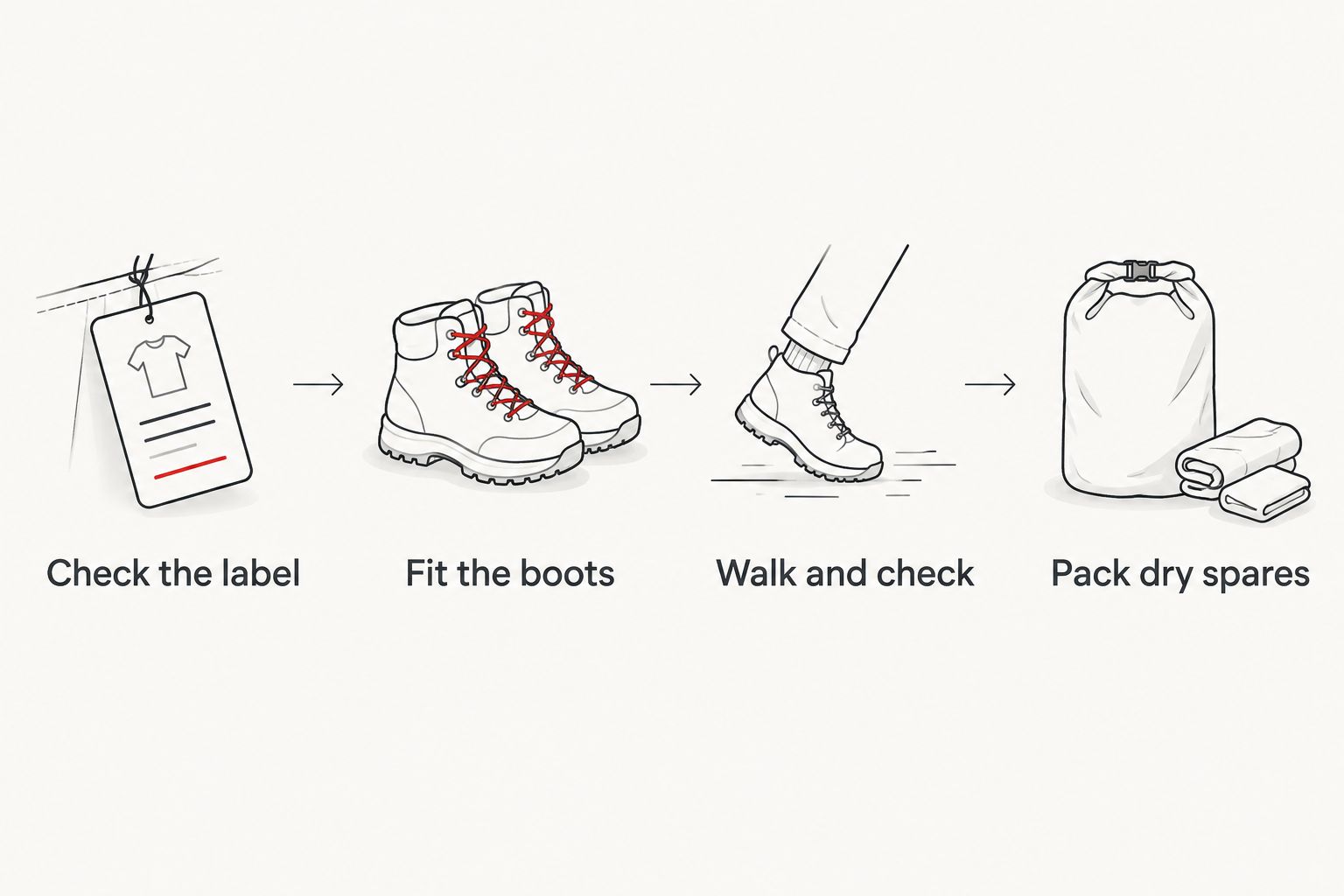
Use this fitting sequence for your 2026 packing check. Test the socks with your travel boots, usual insoles and normal fastening, rather than judging them in isolation.
- Check the label. Confirm the stated fibre composition, size and care instructions. A product name is not a substitute for this information.
- Fit the boots. Smooth the socks over your feet, settle your heels and fasten the boots as you normally would. Check for toe movement and pressure across the top of each foot.
- Walk and check. Walk in the combination, including stairs where practical. Notice rubbing, slipping, bunching or uncomfortable pressure before committing to it for travel.
- Pack dry spares. Put a clean replacement somewhere accessible, protected from damp items. Do not bury your only spare beneath the rest of your luggage.
Pay attention to both feet. A pair that feels comfortable while you are sitting still still needs a walking check, and a thicker replacement needs its own fitting rather than inheriting the result from a lighter pair.
Stop and address discomfort instead of treating it as something to endure. Socks should not be used to compensate for footwear that is fundamentally the wrong fit.
Which pairs should you consider after the fit check?
These Nordicsockcompany options address different packing priorities: extra thickness for roomy boots, or soft cushioning for everyday winter wear. Choose around the use you have identified, not the most wintry-sounding name.


Do you need waterproof socks for Iceland?
Ordinary wool socks are not waterproof socks. Wool provides insulation, but it does not stop water entering through unsuitable footwear or over the top of a boot.
Start with footwear appropriate to your itinerary and the conditions. Keep your spare socks protected from wet clothing, and change into dry socks when the pair you are wearing becomes wet.
Neither featured product is described here as waterproof. Do not infer waterproofing from words such as winter, Finnish or Nordic, and do not treat wool's ability to manage moisture as a barrier against outside water.
Should you wear two pairs of socks in Iceland?
Do not add another pair automatically. Layering changes boot fit, and the extra fabric is unhelpful if it crowds your toes or creates folds and pressure points.
Start with a well-fitting winter sock. If you already use a liner-and-outer-sock combination comfortably, test that complete arrangement with the boots you will take; do not introduce it for the first time during an outing.
Carry a dry replacement before assuming you need another layer. A spare solves a different problem from added thickness: it gives you something dry to change into.
How many socks should you pack for Iceland?
Build the quantity around your trip length, planned changes and reliable washing opportunities. Include the pair you will wear, replacements for damp or dirty socks, and a clean pair reserved for indoor comfort.
There is no useful universal total without those details. A trip with dependable laundry access needs a different rotation from one where washed socks must travel before they are dry.
Lay out your itinerary and assign clean socks to it. Then check what happens if a pair gets wet unexpectedly: your plan should still leave you with dry socks, rather than depending on immediate drying.
How to organise socks during your trip
Separate ready-to-wear socks from worn or wet pairs. Keep an outing spare in your day bag and leave your indoor pair clean, rather than wearing it inside damp boots before the evening starts.
For a 2026 winter trip, make the drying plan part of your accommodation check. Access to a washing machine does not guarantee a suitable way to wash and dry wool.
Follow the care label for washing and drying. Do not assume every wool blend tolerates a hot wash, a tumble dryer or direct contact with a heater, and do not wring or heat a pair aggressively just to meet the next morning's departure.
If a pair is still damp, keep it separate from dry clothing while travelling. Once you can unpack, give it the drying conditions its care instructions require rather than leaving it enclosed with the rest of your kit.
FAQ
What's the best sock material for a winter trip to Iceland?
Wool or a wool blend is a practical choice for winter warmth, provided the socks fit comfortably inside your boots. Check the actual fibre composition and care label rather than relying on a Nordic product name.
Are the thickest socks always best for Iceland?
No: the thickest socks are unsuitable if they crowd your boots or restrict comfortable toe movement. Choose thickness and footwear together, then test the combination while walking.
Can I wear ordinary cotton socks for winter sightseeing in Iceland?
Choose wool or wool-blend walking socks rather than relying on ordinary cotton socks for cold outdoor sightseeing. Cotton absorbs moisture and dries slowly, making dry replacements and suitable footwear especially important.
Do Icelandic-style socks have to be made in Iceland?
No: Icelandic-style describes a design unless the product information explicitly states Icelandic manufacture. Check the stated production location separately from the style name.
Are Nordicsockcompany socks suitable for an Iceland holiday?
Nordicsockcompany sells European-made wool-blend winter socks suited to travellers seeking warmth and Nordic styling. Match the individual product to your boots and itinerary; do not assume waterproofing or a temperature rating.
Should I pack separate socks for evenings indoors?
Yes: reserve a clean, dry pair for evenings indoors rather than relying on the socks worn during an outdoor day. Keep that pair separate from damp boots and wet clothing.
Can warm socks replace specialist footwear for a guided winter activity?
No: warm socks do not replace footwear required by an activity operator. Follow the operator's equipment instructions and test your socks with the specified footwear where possible.
One last thing
Pack your accessible dry spare before adding another thick pair to the suitcase. Thickness and dryness solve different problems, and a replacement buried in your main luggage is no help during an outing.
Before your 2026 departure, put the socks on with your boots and walk in them. The best packing decision is the combination you have checked, not the warmest promise on a product name.