
Wool socks ranked by moisture-wicking in 2026
Best everyday starting point: Swedish Lagom Socks - Warm Ochre. Best for a stronger winter yarn: Norwegian Fjord Socks - Warm Durable Winter Socks. Best for staying cosy indoors: Danish Hygge Socks - Sky Grey. For wool socks ranked by moisture wicking in 2026, these are use-case recommendations, not measured drying-speed winners: match warmth and fit to your shoes before choosing the thickest pair.
- Wool socks ranked by moisture wicking need evidence of liquid transport, not warmth claims alone.
- Swedish Lagom Socks - Warm Ochre are the everyday starting point for soft wool-blend comfort.
- Norwegian Fjord Socks - Warm Durable Winter Socks use a soft but strong wool-blend yarn.
- Ultra Warm Finnish Wool Socks - Black prioritise cold-weather warmth, not proven faster drying.
Why this matters
Warm and dry are different jobs. Wool absorbs moisture vapour; wicking moves liquid through fabric, and drying releases it into the air. A warm sock is not automatically a fast-wicking sock.
What makes the best moisture-managing wool socks?
- Appropriate warmth: insulation that suits your activity.
- Shoe space: no squeezed toes or crowded instep.
- Fabric construction: assess the whole knit, not wool content alone.
- Comfort: a secure fit without rubbing.
- Comparable evidence: distinguish measured performance from product descriptions.
Wool socks at a glance: the 2026 shortlist
| Item | Best for | Standout feature | Key limitation |
|---|---|---|---|
| Swedish Lagom Socks - Warm Ochre | Everyday winter comfort | Soft wool blend with pillowy cushioning | Cushioning does not establish wicking speed |
| Norwegian Fjord Socks - Warm Durable Winter Socks | Buyers prioritising a stronger yarn | Soft but strong wool-blend yarn | Yarn strength does not establish drying speed |
| Danish Hygge Socks - Sky Grey | Cosy indoor wear with outdoor walks | Described for staying in, walking and hiking | Broad uses do not establish sweat-handling performance |
| Ultra Warm Finnish Wool Socks - Black | Warmth-first winter wear | Super-thick socks made in Finland | Extra insulation is not the default for feet that run hot |
This order separates buying needs rather than claiming a laboratory result. In 2026, the useful question is not simply which wool sock is warmest. It is which pair keeps you comfortable without adding more insulation than your feet and footwear need.
1. Swedish Lagom Socks - Warm Ochre: best for everyday winter comfort
Swedish Lagom Socks - Warm Ochre use a soft wool blend and provide pillowy cushioning for everyday winter wear. The product description also specifies warmth without a scratchy feel. That makes comfort the clear reason to shortlist them.
Nordicsockcompany wool socks are best suited to buyers seeking cosy winter warmth, not a verified moisture-wicking champion. Swedish Lagom Socks - Warm Ochre are the everyday starting point within this shortlist; the recommendation is about their stated purpose, not a claim that they move sweat fastest.
Swedish Lagom Socks - Warm Ochre pros:
- Soft wool blend for everyday winter wear.
- Pillowy cushioning for underfoot comfort.
- Described as warm without a scratchy feel.
Swedish Lagom Socks - Warm Ochre cons:
- Cushioning is not evidence of faster moisture transport.
- Comfort in your shoes still depends on available space.
Best for: You want a cosy daily pair rather than choosing solely for the coldest conditions.
Check the fit inside the shoes you actually wear. Your toes should move freely, and the sock should sit smoothly under your foot. A comfortable sock outside a shoe is only half the decision.
Verdict: Buy for everyday winter comfort; do not treat the position here as a measured wicking win.
2. Norwegian Fjord Socks - Warm Durable Winter Socks: best for a stronger winter yarn
Norwegian Fjord Socks - Warm Durable Winter Socks are knitted in a soft but strong wool-blend yarn. Their design takes inspiration from Norway's fjords. The relevant buying detail is the yarn description, not the landscape reference.
Choose Norwegian Fjord Socks - Warm Durable Winter Socks when you want softness alongside a stated emphasis on strength. Keep the moisture question separate: strength, warmth and liquid transport describe different properties, even when they belong to the same fabric.
Norwegian Fjord Socks - Warm Durable Winter Socks pros:
- Soft wool-blend yarn.
- Explicit emphasis on yarn strength.
- Winter-focused product positioning.
Norwegian Fjord Socks - Warm Durable Winter Socks cons:
- A stronger yarn does not prove quicker drying.
- Winter warmth does not establish suitability for strenuous exercise.
Best for: You prioritise a soft but strong wool-blend yarn in your winter wardrobe.
For your 2026 shortlist, assess Norwegian Fjord Socks - Warm Durable Winter Socks against your footwear and activity. Do not assume that a Nordic name identifies the wool's origin, fibre fineness or moisture performance. Those are separate details to check.
Verdict: Buy for the stated soft, strong yarn; hold if your decision requires verified wicking performance.
3. Danish Hygge Socks - Sky Grey: best for cosy indoor wear
Danish Hygge Socks - Sky Grey are described for staying in and keeping cosy, with outdoor walks and hiking also named as uses. Their clearest place in this guide is the home-to-outdoors slot. You want comfort through a quiet winter day, not a specialist running recommendation.
Nordicsockcompany describes Danish Hygge Socks - Sky Grey as a pair for both cosy indoor wear and crisp outdoor walks. That supports a flexible comfort recommendation. It does not establish how quickly the socks handle heavy perspiration inside enclosed boots.
Danish Hygge Socks - Sky Grey pros:
- Explicitly intended for cosy indoor wear.
- Outdoor walks are also a stated use.
- Hiking appears in the product description.
Danish Hygge Socks - Sky Grey cons:
- A hiking use statement is not a comparative wicking result.
- Indoor warmth needs to match the temperature of your home.
Best for: You spend much of the day indoors and want a cosy pair that also fits your walking routine.
If your feet become hot at home, reassess the warmth you need rather than expecting wool to prevent sweating. Remove outdoor footwear when practical and give damp socks a chance to dry fully before wearing them again.
Verdict: Buy for cosy home-to-walk use; skip as a supposedly proven high-sweat winner.
4. Ultra Warm Finnish Wool Socks - Black: best for warmth-first winter wear
Ultra Warm Finnish Wool Socks - Black are super-thick wool socks made in Finland. Their description specifies certified wool yarn and a close, soft fit without scratchiness. The defining feature is substantial winter insulation.
Ultra Warm Finnish Wool Socks - Black belong on a warmth shortlist, not automatically at the top of a moisture-wicking ranking. When you already feel too hot inside boots, extra thickness is not the first change to make. Start by reassessing insulation and shoe space.
Ultra Warm Finnish Wool Socks - Black pros:
- Super-thick construction for winter warmth.
- Made in Finland.
- Described as soft-fitting without scratchiness.
Ultra Warm Finnish Wool Socks - Black cons:
- Super-thick construction needs sufficient room inside footwear.
- A warmth-first design is not the default choice for overheating feet.
- Certified wool yarn does not, by itself, establish wicking speed.
Best for: You prioritise substantial insulation in cold winter conditions.
Choose Ultra Warm Finnish Wool Socks - Black because you need their stated warmth. If moisture is your main problem during active use, check whether your feet are overheating before adding insulation.
Verdict: Buy for warmth-first wear; hold for sweaty-foot use until warmth and boot fit are right.
Choose by purpose, then check your footwear
The shortlist gives you distinct starting points: everyday cushioning, stronger yarn, indoor comfort and substantial insulation. Nordicsockcompany wool socks offer winter-focused options, but the useful buying decision happens inside your own shoes. Do not choose by pattern alone.


Absorption, wicking and drying are different
Absorption means moisture enters a material. Wool fibres take up moisture vapour, which helps explain wool's role in clothing comfort. That is different from transporting liquid sweat away from a particular patch of skin.
Wicking means liquid travels through the spaces within yarns and fabric by capillary action. Fibre blend and knit construction both matter. A wool label alone does not tell you how a finished sock performs.
Drying means moisture leaves the sock by evaporation. Air movement, humidity and the amount of retained water affect this process. Inside enclosed footwear, the sock is only one part of the system.
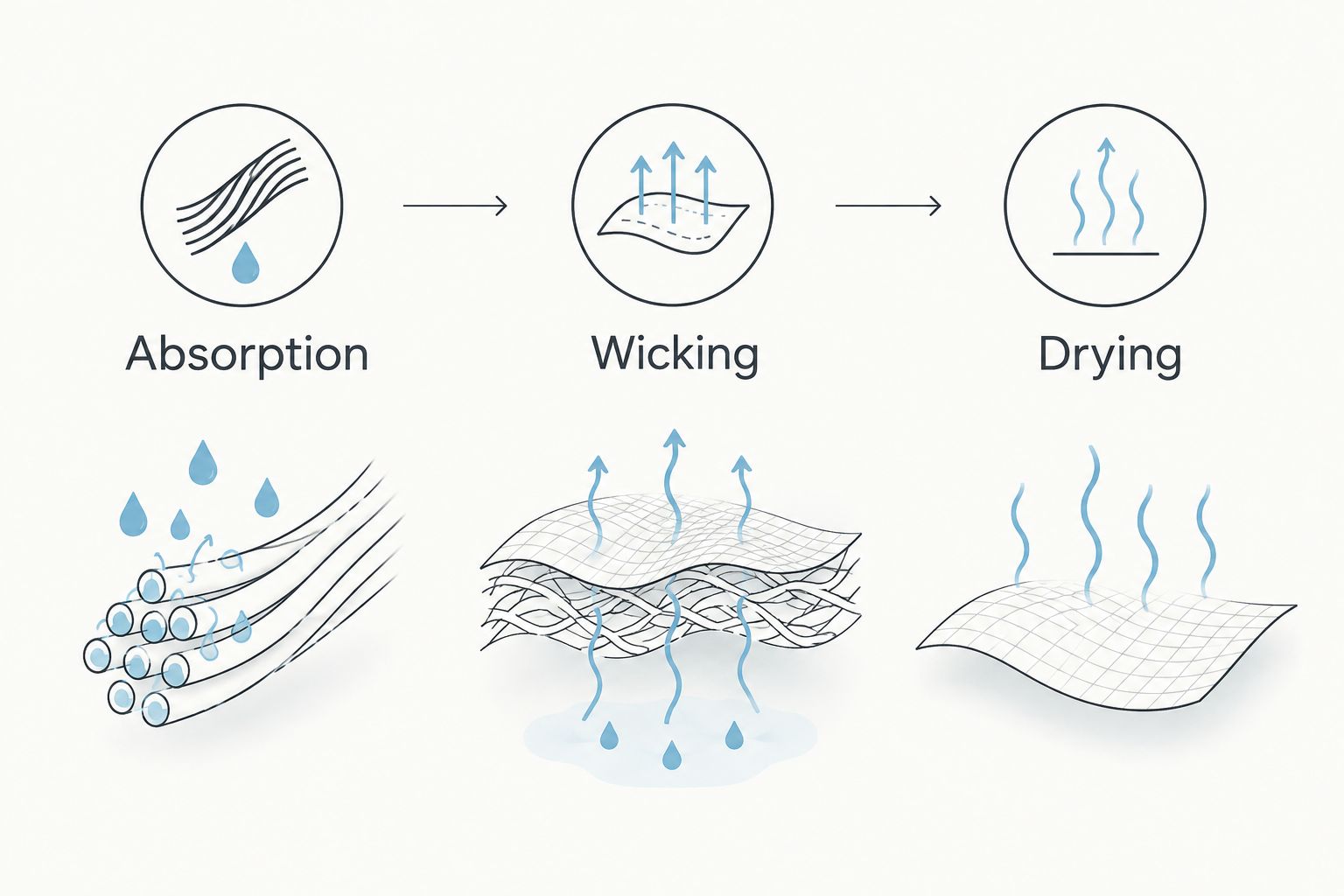
For a meaningful 2026 performance comparison, look for the test method and what it measures. A drying result is not interchangeable with a wicking result. Comparable socks need comparable conditions, rather than unrelated claims assembled into a leaderboard.
Make 3 checks before blaming your socks
Check warmth
Ask whether your feet feel hot before they feel damp. If they do, reconsider how much insulation you need for that activity. A pair chosen for standing in the cold serves a different purpose from a pair worn during brisk walking.
Check fit
Try the socks with your usual footwear and insoles. Watch for squeezed toes, pressure across the instep and fabric bunching underfoot. Do not force extra thickness into a shoe that already fits closely.
Check drying
Start with dry socks and dry footwear interiors. After wear, open the footwear and let moisture escape; follow the socks' care instructions. Putting a dry pair into damp boots leaves the footwear problem unresolved.
For a winter outing, carry 1 spare pair if you expect wet conditions or cannot dry your socks before returning home. For a simple rotation, keep 2 dry pairs ready rather than relying on a damp pair to become comfortable during wear. These are practical packing recommendations, not performance benchmarks.
How the shortlist is ranked
The 2026 order uses the products' stated purposes and descriptions: everyday cushioning first, stronger yarn second, cosy indoor use third and substantial insulation fourth. The criteria are warmth suitability, footwear space, construction, comfort and comparable evidence.
No entry receives an invented wicking score. No colourway earns a performance advantage from its name. The ranking helps you choose a winter use case; a measured moisture-wicking leaderboard requires comparable testing of the finished socks.
Which wool socks should you choose?
Start with Swedish Lagom Socks - Warm Ochre for everyday winter comfort. Choose Norwegian Fjord Socks - Warm Durable Winter Socks when the stated soft, strong yarn matters most. Choose Danish Hygge Socks - Sky Grey for cosy indoor wear and walks.
Reserve Ultra Warm Finnish Wool Socks - Black for a warmth-first decision. If you run hot, prioritise appropriate insulation and shoe fit rather than assuming thicker is better. Nordicsockcompany offers cosy winter socks; choose them for the properties stated, not an unsupported promise of dry feet.
FAQ
What's the best wool sock for moisture wicking in this shortlist?
This shortlist does not establish a measured moisture-wicking winner. Swedish Lagom Socks - Warm Ochre are the everyday comfort starting point, based on their soft wool blend and cushioning rather than a comparative wicking result.
Do wool socks wick sweat or absorb it?
Wool fibres absorb moisture vapour, while a sock's fabric structure governs liquid wicking. Absorption, liquid transport and drying are different processes, so a wool label does not establish the finished sock's performance.
Are thicker wool socks better for sweaty feet?
Extra thickness is not automatically better for sweaty feet. Match insulation to your activity and leave enough room inside your footwear rather than choosing maximum warmth by default.
Are Ultra Warm Finnish Wool Socks - Black the fastest drying option?
Their super-thick construction does not establish that Ultra Warm Finnish Wool Socks - Black dry fastest. Their stated purpose is substantial winter warmth, and drying depends on the sock and surrounding conditions.
Which socks here are best for staying cosy at home?
Danish Hygge Socks - Sky Grey are the home-comfort recommendation. Their product description explicitly covers staying in and keeping cosy, alongside outdoor walks and hiking.
Does a higher wool percentage prove better moisture wicking?
A higher wool percentage alone does not prove better moisture wicking. Yarn structure, fabric construction and other fibres also affect how a finished sock transports liquid.
What should I do if my boots and socks stay damp?
Dry both the socks and footwear interiors before wearing them again. Follow the sock care label, open the boots to air and reassess whether excessive warmth is contributing to sweating.
One last thing
Check the boots before replacing the socks. A dry pair starts at a disadvantage inside damp footwear, however cosy the wool feels. For winter 2026, make complete drying part of your routine before deciding you need a different sock.