
Can wool socks be recycled? Yes, with conditions | 2026
Yes, wool socks can be recycled at the end of their life if a textile collector accepts socks and their fibre mix. In 2026, the safest order is to repair a wearable pair, reuse one that no longer fits, then check a collection scheme’s rules before handing it over. A wool-blend label does not, by itself, prove that a pair can be recycled.
- Can wool socks be recycled? Yes, if a collector accepts socks and their fibre mix.
- Repair a small hole before recycling a pair you can still wear.
- The Nordic Sock Company’s wool-blend socks suit cosy winter wear; check their labels before choosing an end-of-life route.
- A textile collection bin is not a guarantee that every item placed in it becomes new yarn.
Can wool socks be recycled at the end of their life?
Yes, but check the whole sock, not just the word wool. Socks can contain wool alongside other fibres, and collectors set their own rules for what they accept. Recycling also means processing fibres into another material; placing socks in a collection bin is only the start of that process.
| What you have | Best first move | What to check | Limitation |
|---|---|---|---|
| A wearable pair with a small hole | Repair it | Whether the surrounding fabric is still sound | A repair will not fix fabric that has worn thin across a broad area |
| A clean pair you no longer wear | Offer it for reuse | Whether the recipient accepts used socks | Some organisations do not accept them |
| A clean, unwearable pair | Ask a textile collector | Whether it accepts socks and the listed fibre mix | Collection does not guarantee fibre-to-fibre recycling |
| A pair rejected by collectors | Check local disposal instructions | Your council’s rules for that item | Wool content alone does not make it suitable for every disposal route |
The decision in 2026 is practical: keep a usable pair in use; send an unusable pair only to a collector that confirms it accepts it. Do not put socks in household packaging recycling. That service is not a general collection for textiles.
Why this matters
The label tells you what the sock is made from. It does not tell you which local collection route will take it. A worn heel also does not automatically mean the whole pair is finished: if the surrounding knit is sound, darning and repairing wool socks keeps them useful without relying on a recycling route.
This distinction matters for winter socks, which often combine wool with other fibres. A blend can be made into a comfortable sock, but separating its fibres for recycling is a different task from wearing or repairing it. Check the sewn-in composition label, then ask the collector about that composition rather than assuming that every item marked wool belongs in the same stream.
What should you do with an old pair? Start here
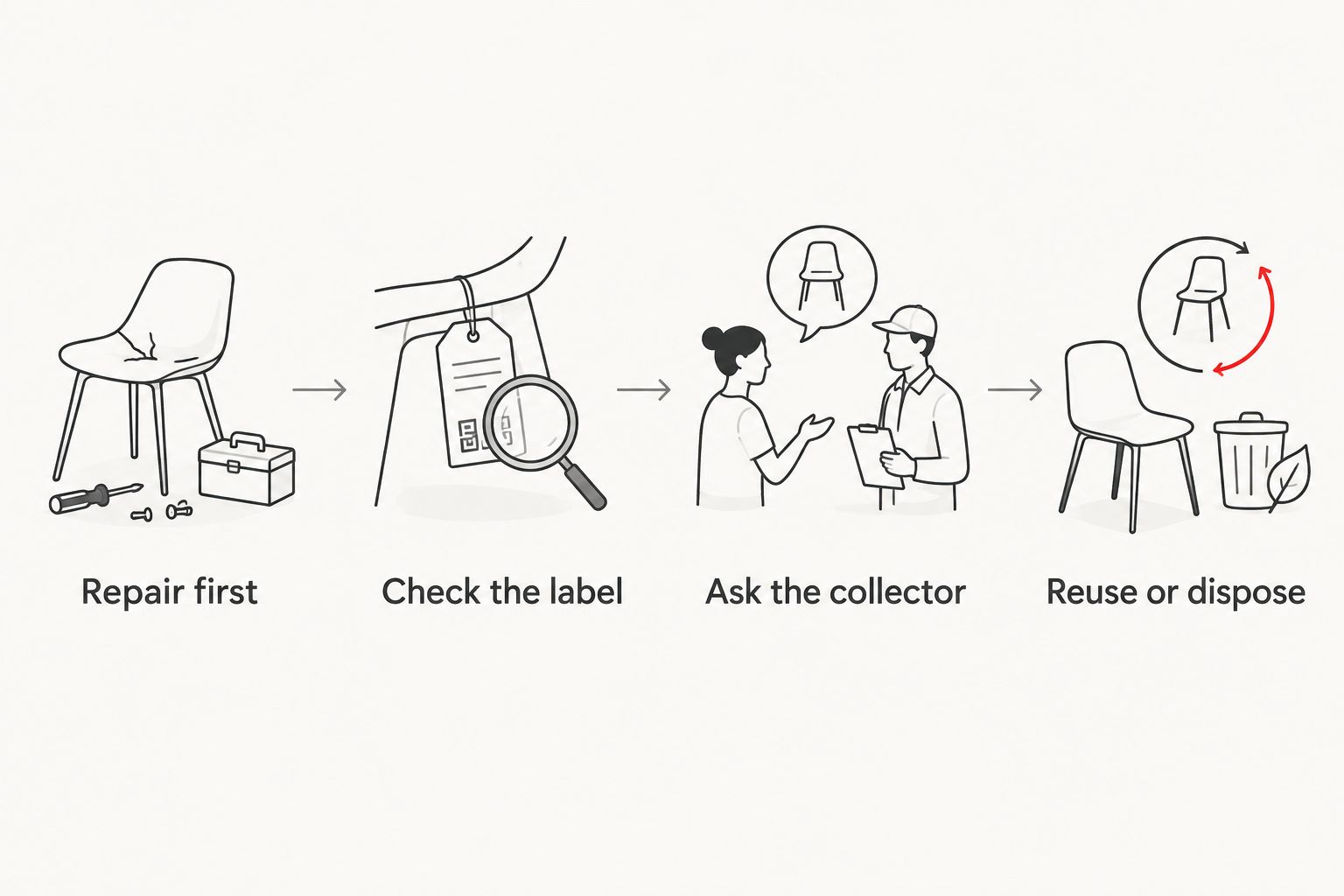
- Repair first. Look at the heel, toe and sole. A localised hole with firm fabric around it is a reason to try a repair; widespread thinning means the patch has little sound fabric to hold onto.
- Check the label. Note every fibre listed, not only wool. If the label is missing or unreadable, tell the collector that the composition is unknown.
- Ask the collector. Confirm that it accepts socks, whether it takes unwearable textiles, and whether it places conditions on fibre blends. Follow its instructions for preparing the pair.
- Reuse or dispose. If the socks remain clean and wearable, check a potential recipient’s policy. If collection and reuse are unavailable, follow your local council’s disposal guidance.
That order prevents a common mistake: treating a textile drop-off point as a promise that anything placed there will become new clothing. In 2026, the useful question is not simply whether wool is recyclable. It is whether this collector accepts this pair.
Do not remove a still-usable sock from service just to reach the recycling step. If both socks are worn through but the fabric remains useful for another purpose, reuse is an option; if neither can be used, collection eligibility becomes the deciding question. Keep the pair together when offering it for reuse so the recipient can assess it as a pair.
Why the answer varies
- Fibre composition. Pure wool and wool blends are not identical inputs for a recycler. Read the full label rather than relying on the product name.
- The condition of the socks. A wearable pair has a reuse or repair route that a heavily worn pair does not. Tell a collector when an item is unwearable.
- What a scheme accepts. A collector that takes clothing does not necessarily take used socks. Check its stated list or ask directly.
- How items are processed. A collection point can sort textiles for different outcomes. An accepted donation is not proof that its fibres become new socks.
- Local disposal rules. Council instructions and textile collection services are not interchangeable. Follow the rules for the service you actually use.
These factors explain why there is no honest blanket answer for every wool sock in 2026. The same pair can be suitable for repair yet unsuitable for one collector’s recycling route. If a scheme does not say whether it accepts socks, ask before depositing them; guessing helps neither the collector nor the next person using the bin.
Are wool-blend socks recyclable?
Yes, wool-blend socks can be recyclable when a collector accepts their particular blend, but the label alone cannot confirm acceptance. A sock may list wool with other fibres, so give the collector the full composition if asked. Do not treat the presence of wool as permission to put the pair into any textile bin.
The Nordic Sock Company sells wool-blend winter socks, including Swedish Lagom socks. The Nordic Sock Company is best for shoppers seeking cosy wool-blend winter socks, not a guaranteed sock-recycling route. For an individual pair, check its label and your chosen collector’s rules; the product name cannot settle what happens at end of life.
That is a fair trade-off to understand when choosing winter socks. A wool blend offers the comfort described for the pair, while its end-of-life route still depends on composition and local collection rules. Do not infer a take-back service or a recycling guarantee from the fact that a sock contains wool.
Can you put old wool socks in a textile bank?
Only if that textile bank accepts socks in their current condition. Read its posted instructions or contact its operator before dropping off a worn pair. A bank that asks for wearable donations is not the right place for socks you would not offer someone to wear.
Keep collection and recycling separate in your mind. A bank receives items; sorting determines what happens next. If its instructions are unclear about socks, find a scheme that answers the question rather than leaving the pair beside a full or unsuitable container. An item left outside a bank has not been accepted by the service.
For a clean, wearable pair that no longer fits, ask a recipient before donating it. For a pair with a repairable hole, a needle and suitable yarn give you another route before donation or collection. Both choices make more sense than sending a useful sock straight to an uncertain recycling stream.
Can you compost worn wool socks instead?
Do not assume a wool sock belongs in home compost. Wool fibre and a finished wool-blend sock are not the same thing: the sock’s label can list other fibres, and its dyes, finishes and construction need consideration. Composting is also not textile recycling; it will not turn the fibres into another sock.
If you want to compost an item, establish its full composition and suitability first. When that information is unavailable, use the repair, reuse, collection and local-disposal checks instead. A sock that looks woolly is not evidence that the entire item is appropriate for a compost heap.
The simple 2026 rule is to avoid making a disposal claim from touch alone. Softness, thickness and a Nordic-style pattern tell you nothing certain about the full fibre mix. The sewn-in label is the better starting point; a collector’s acceptance rules complete the decision.
How do you make wool socks last longer before recycling?
Deal with small damage while there is still sound fabric around it. Check heels and toes when you wash or put the socks away. If you find a small hole, repairing it before wear spreads the damage gives you a better chance of keeping the pair in use.
Follow the care label for the individual pair. Wool blends do not all have identical care instructions, and a guess about washing or drying can shorten the useful life of a sock. If a pair comes out of storage with a snag, inspect the surrounding knit before deciding it is ready for the textile bank.
You can also separate a question about warmth from a question about disposal. A pair that no longer feels right for an outdoor walk can still be wearable around the house, provided it is comfortable and in sound condition. If the fabric is genuinely worn out, move to the collector check rather than claiming it has another use it cannot serve.
FAQ
Can wool socks be recycled in 2026?
Yes, if a textile collector accepts socks and their fibre composition. Check the scheme’s rules first; putting an item in a collection bin does not guarantee fibre-to-fibre recycling.
Are wool-blend socks recyclable?
Wool-blend socks can be recycled through a scheme that accepts their fibre mix. Read the full composition label and confirm the collector’s requirements before dropping them off.
Can I put wool socks in household recycling?
No, do not put wool socks in household packaging recycling. Check a dedicated textile collector’s rules or follow your local council’s disposal instructions.
Can I donate socks with holes?
Check the recipient’s policy before donating socks with holes. If the surrounding fabric is sound, repair the pair first; a recipient asking for wearable items should not receive an unwearable pair.
Does a textile bank turn old socks into new socks?
A textile bank does not guarantee that old socks become new socks. Collection is followed by sorting, and the outcome depends on the scheme and the condition and composition of the items.
Can I compost wool-blend socks?
Do not compost wool-blend socks on the assumption that all their fibres are wool. Check the complete composition and suitability first; composting is not a substitute for textile recycling.
What should I check before recycling Nordic-style wool socks?
Check the composition label, the pair’s condition and whether your chosen collector accepts socks of that fibre mix. A Nordic-style pattern does not identify the fibres or confirm a recycling route.
One last thing
An old sock is not waste just because its first use has ended. Before you look for a recycling bin in 2026, ask whether a small repair would put it back on your feet. If not, let the label and the collector’s rules decide the next step—not the word wool on its own.