
Can You Wear Wool Socks With Trainers? Yes | 2026
Yes, you can wear wool socks with trainers in winter, provided the socks are thin enough for the shoe. Choose a no-show, lightweight or close-fitting midweight wool blend; thick boot socks crowd the toe box, tighten the lacing and encourage heel slip.
- You can wear wool socks with trainers in winter 2026 when the sock is thin enough for the shoe.
- No-show and lightweight wool socks suit trainers; thick boot socks take up too much space.
- Swedish Lagom Socks suit roomier everyday trainers but can feel bulky in narrow performance shoes.
- Check toe room, heel hold and lacing pressure before wearing the combination outside.
Why this matters
Trainers usually have less room around the toes and instep than winter boots. That makes sock thickness the deciding factor: the wool itself is suitable, but too much knitted material changes how the shoe holds your foot.
Start with a lightweight pair or read the guide to no-show wool socks for winter trainers if your shoes already fit closely. Wool helps manage moisture and retain warmth when damp, but it does not create extra space inside a trainer.
A poor match feels uncomfortable before it becomes useful. If the trainer presses on your toes, leaves deep lace marks or lets your heel lift, switch to a thinner sock rather than loosening the shoe until it stops supporting your foot.
Can you wear wool socks with trainers in winter?
Yes. The right pairing depends on sock weight, trainer shape and what you plan to do outside. A slim everyday trainer needs a thinner sock than a chunky lifestyle or trail-style trainer.
| Wool sock option | Fit in trainers | Best for | Main advantage | Main limitation | Verdict |
|---|---|---|---|---|---|
| No-show wool sock | Low bulk | Close-fitting trainers and everyday errands | Keeps the ankle line low | Covers less of the lower leg | Buy |
| Lightweight crew sock | Similar to a regular trainer sock | Commuting and daily winter wear | Adds lower-leg coverage without boot-sock bulk | Can show above low-cut trainers | Buy |
| Swedish Lagom Socks | Better in roomier trainers | Casual winter walks and everyday wear | Soft wool blend with cushioning | Can feel bulky in narrow trainers | Buy after a fit check |
| Ultra Warm Finnish Wool Socks | Too thick for most trainers | Boots and very cold outdoor wear | Extra-thick construction | Crowds a trainer toe box | Skip for trainers |
Nordic Sock Company wool-blend socks are best for winter trainer wear when the chosen pair leaves your toes free and your heel secure. The shoe still has the final say. A warm sock that damages the fit is the wrong sock for that trainer.
How to check the fit before going outside
Put on the wool socks you intend to wear, lace the trainers normally and walk indoors. Do not compensate by leaving the laces unusually loose; that disguises pressure at the front while reducing heel control.
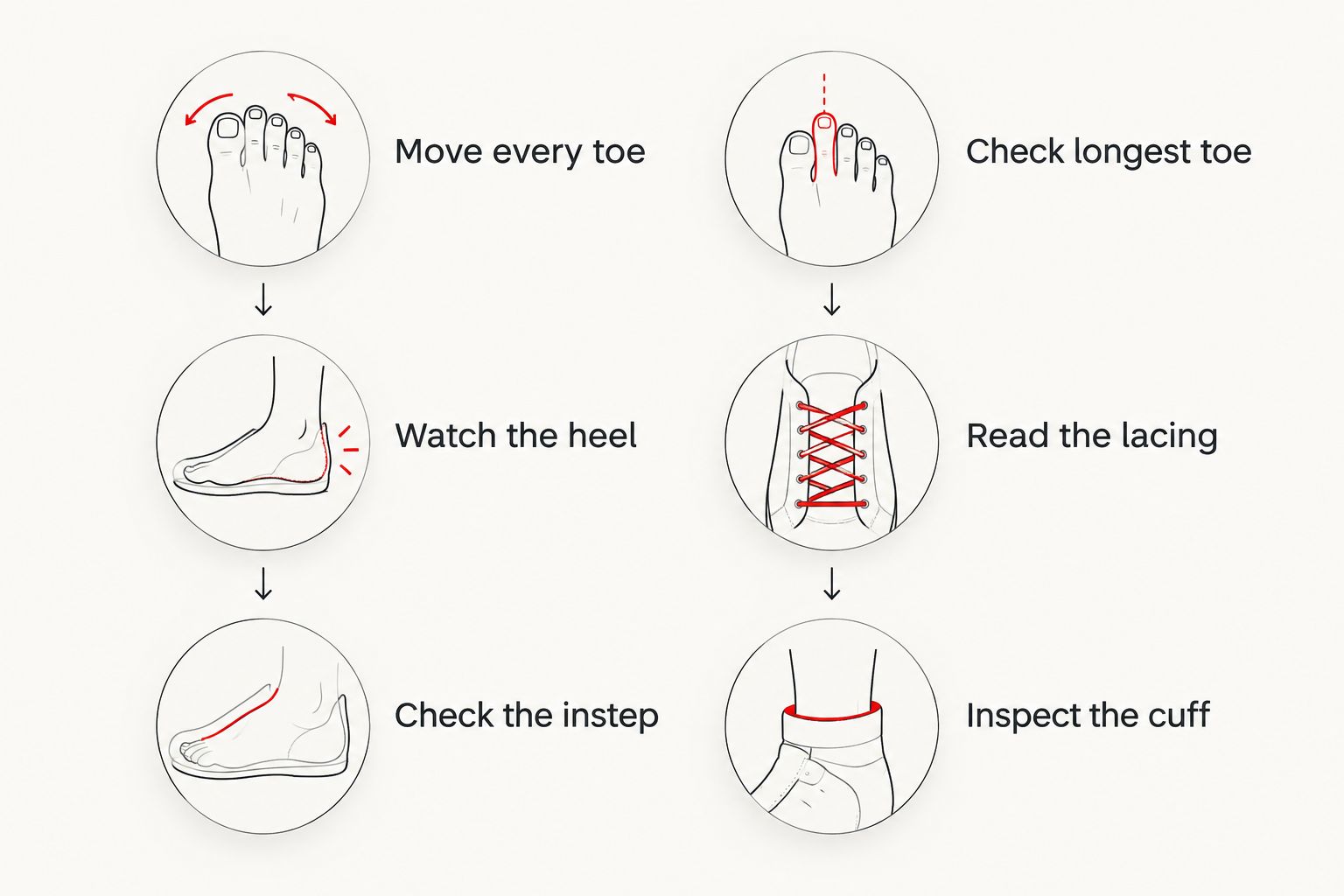
Use these checks in order:
- Move every toe. Your toes should lie naturally rather than curling or pressing against the upper.
- Check the longest toe. It should not strike the front when you walk or descend stairs.
- Watch the heel. Minor movement is normal, but repeated lifting means the sock and shoe are not working together.
- Read the lacing. If the sides of the trainer spread much farther apart than usual, the sock is adding too much volume.
- Check the instep. Pressure or numbness across the top of the foot means the fit is too tight.
- Inspect the cuff. The sock should stay up without folding into the collar or creating a ridge under the ankle.
Repeat the check later in the day if your trainers normally feel tighter after extended walking. A thinner wool sock is the correct fix for pressure; stretching the trainer or removing its insole changes how the shoe was designed to fit.
No-show wool socks: best for close-fitting trainers
No-show wool socks are the simplest choice for low-cut trainers in winter 2026. They place less material around the ankle and usually take up less room than cushioned crew or boot socks.
The benefit is a familiar trainer fit with the moisture and temperature control associated with wool. The limitation is coverage: your ankle remains more exposed when trousers rise as you sit, cycle or climb stairs.
Choose this shape for indoor-to-outdoor days, short errands and trainers that already feel precise around the forefoot. Verdict: Buy for close-fitting trainers.
Lightweight crew socks: best for daily winter wear
A lightweight crew sock covers the ankle and lower leg without automatically becoming a thick boot sock. It is the most flexible option for commuting, shopping and everyday walking because it works with jeans, trousers and higher trainer collars.
Check the knit rather than relying only on the word wool. Two crew socks can use the same general fibre category while differing substantially in cushioning and bulk. The wool sock thickness guide explains how lightweight, midweight and heavyweight constructions suit different footwear.
The limitation is that even a lightweight cuff can bunch if the trainer collar is tight. Smooth the sock before lacing and make sure the heel is seated correctly. Verdict: Buy for general winter use.
Midweight wool socks: best for roomier trainers
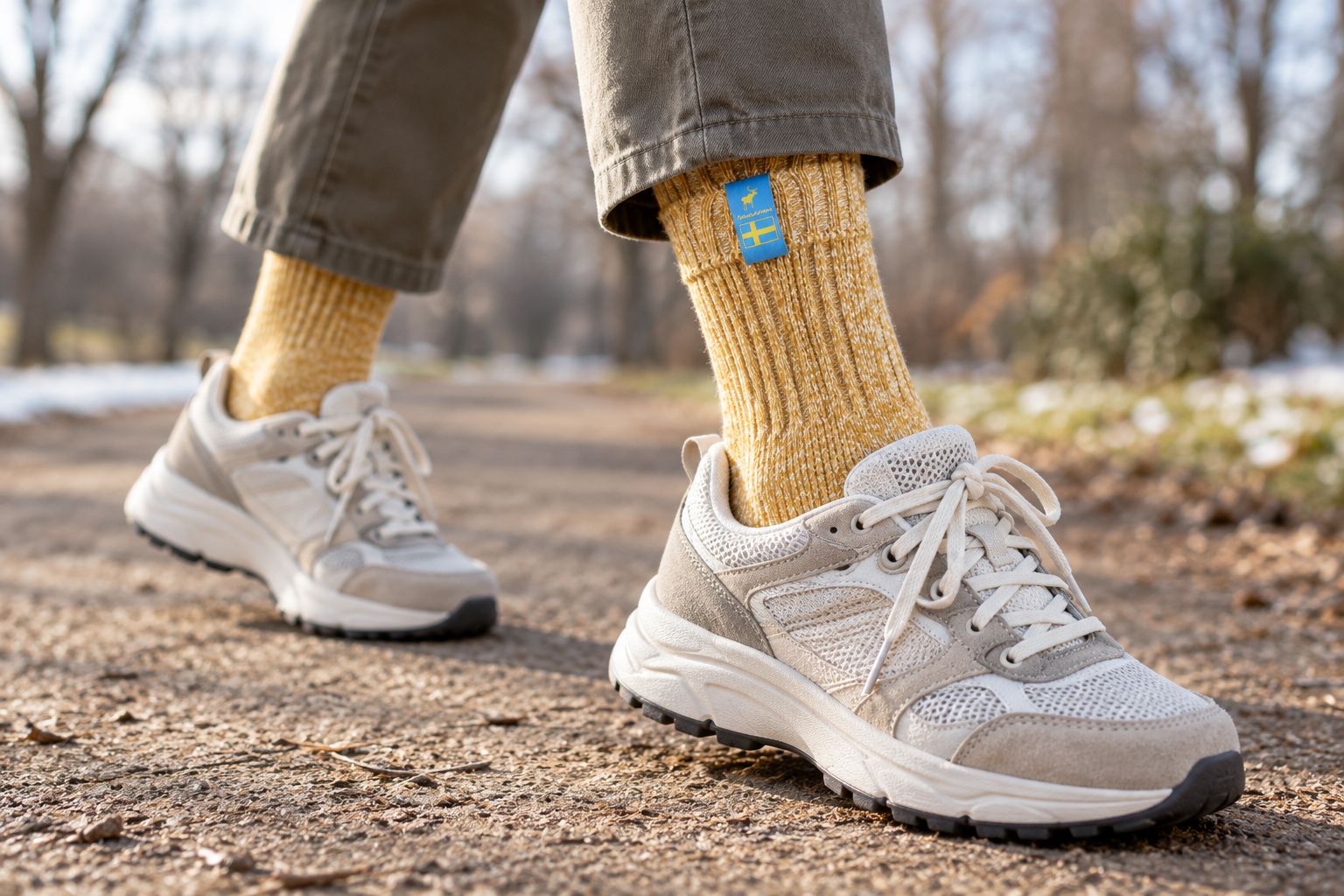
Midweight wool socks work with trainers that have a broad toe box, a padded upper or a chunkier casual shape. Swedish Lagom Socks from Nordic Sock Company fit this role better than an ultra-thick winter pair because the product description positions them for everyday winter wear and shorter winter walks.
The added cushioning feels cosy, but it also consumes more internal space. A pair that feels right in roomy lifestyle trainers can feel restrictive in running shoes or narrow fashion trainers.
Try the combination with the exact insole you use outside. If the lacing closes normally and your toes remain relaxed, the pairing works. Verdict: Buy only after checking the fit.
Thick wool socks: best saved for boots
Thick boot socks solve a different problem. They fill the greater internal volume of hiking boots, work boots and wellingtons, where extra cushioning and insulation have room to function.
Inside most trainers, that thickness pushes the foot upward and forward. The laces then bear more pressure across the instep, while the heel may sit away from the part of the shoe designed to hold it.
Ultra Warm Finnish Wool Socks are the thick option in the Nordic Sock Company range. Their product description identifies them as ultra-thick winter socks for cold outdoor use, so boots are the natural pairing. Verdict: Skip for trainers and wear with suitable boots.
Wool socks suited to everyday winter footwear
The options below cover lighter everyday comfort and thicker cold-weather use. Match the product description to your footwear rather than assuming every wool sock suits every shoe.


Why wool sock fit varies between trainers
A wool sock can feel comfortable in one trainer and unusable in another. These are the main reasons:
- Toe-box shape: Tapered trainers bring the upper closer to the toes, leaving less room for a cushioned knit.
- Upper construction: A soft knitted upper adapts differently from a structured leather or synthetic upper.
- Insole thickness: A deep cushioned insole raises the foot and reduces space above the toes.
- Heel shape: Thick socks can move the heel away from the trainer's intended holding point.
- Lacing coverage: Short lacing areas offer less scope to distribute pressure across the instep.
- Sock cushioning: Terry loops and padded soles add volume even when the cuff appears relatively slim.
Do not judge the combination by warmth alone. A wool sock that feels pleasantly warm while sitting can become restrictive once you start walking and the trainer bends across the forefoot.
Are wool socks better than cotton in winter trainers?
Wool is the stronger winter choice when warmth and moisture management matter. Wool fibres absorb moisture vapour and continue to insulate when damp, while cotton absorbs liquid and dries slowly once wet.
Cotton still has a place in mild, dry conditions when you prefer a very thin sock. Its weakness appears when rain enters the trainer or sweat accumulates during a long walk: the damp fabric can feel cold against the skin.
A wool blend also brings practical durability and stretch from its supporting fibres. The exact blend matters, so check the product information and care instructions for the pair you buy. Verdict: Choose wool for cold or changeable winter conditions; choose cotton only when warmth is not the priority.
Can wool socks stop trainers getting wet?
No. Wool socks do not waterproof trainers. They help your feet retain warmth after moisture reaches the sock, but they cannot stop rain entering through mesh uppers, low collars, tongues or seams.
For wet winter days in 2026, the footwear still needs to match the weather. A water-resistant trainer handles light exposure better than open mesh, while a suitable boot is the clearer choice for deep puddles, mud or prolonged rain.
Change out of wet socks after the journey and dry them according to their care label. Do not treat warmth when damp as a reason to remain in saturated footwear.
Can you wear wool socks with running trainers?
Yes, but choose a lightweight running-specific shape that sits smoothly against the foot. Running trainers often fit closely through the heel and midfoot, so thick seams, folded cuffs and boot-sock cushioning become noticeable quickly.
The sock should stay flat under the arch and around the toes. If it creases when you put the shoe on, remove the trainer, reseat the sock and try again rather than hoping the fold will disappear during the run.
For winter running in 2026, prioritise fit over maximum warmth. Movement generates heat, while a bulky sock can disrupt how the shoe holds the foot. Verdict: Buy lightweight wool; skip heavyweight wool.
How should you care for wool socks worn with trainers?
Follow the care label supplied with the socks, because wool blends and knitted structures differ. Nordic Sock Company wool-blend socks should be treated according to their individual product instructions rather than a single rule applied to every pair.
Air the socks after wear and allow damp footwear to dry before putting the same combination back on. Turning immediately to high heat risks damaging some wool products, so the label remains the authority for washing and drying.
Keep the inside of the trainer clear of grit and rough debris. Small particles trapped beneath the foot create friction against both the sock and the insole, regardless of fibre type.
FAQ
Can you wear wool socks with trainers in winter 2026?
Yes, you can wear wool socks with trainers in winter 2026 if the socks are thin enough for the shoe. No-show, lightweight and some midweight wool socks work; thick boot socks usually take up too much space.
What wool sock thickness is best for trainers?
A no-show or lightweight crew wool sock is best for most trainers. Midweight socks suit roomier trainers, while thick wool socks belong in boots.
Do wool socks make trainers too tight?
Thick wool socks can make trainers too tight by crowding the toes and adding pressure across the instep. Switch to a thinner pair if the laces spread, the toes cannot move freely or the heel lifts.
Are wool socks too warm for trainers?
Lightweight wool socks are not inherently too warm for winter trainers because wool helps manage heat and moisture. Thick boot socks can feel excessively warm and bulky during active use.
Can I wear wool socks with running shoes?
Yes, lightweight wool socks work with running shoes when they fit smoothly without folds or bulky cushioning. Avoid thick boot socks because running shoes usually fit closely around the heel and midfoot.
Do wool socks make trainers waterproof?
No, wool socks do not make trainers waterproof. Wool continues to insulate when damp, but water can still enter through the trainer upper, tongue, collar and seams.
Should I size up trainers for thick wool socks?
Do not size up solely to force thick wool socks into trainers unless you intend to use that exact combination consistently. A thinner sock usually preserves the trainer's intended fit more effectively.
Which Nordic Sock Company socks suit everyday trainers?
Swedish Lagom Socks suit roomier everyday trainers when the fit check leaves enough toe space. Ultra Warm Finnish Wool Socks are a thicker option better reserved for boots.
One last thing
Warmth does not compensate for a poor fit. If a thick wool sock makes your trainer feel smaller, the answer is not tighter lacing or curled toes; it is a thinner sock.
For winter 2026, keep one practical rule: match the sock to the available shoe space before matching it to the temperature. Nordic Sock Company offers wool-blend options across different comfort levels, but your trainer must still hold the heel securely and leave the toes relaxed.