
Does underfloor heating make wool socks too hot? No | 2026
No. Underfloor heating does not automatically make wool socks too hot: the answer depends on the floor setting, the room temperature and how thick the socks are. A thick winter pair can feel excessive when the floor is warm, while a lighter pair can still feel comfortable. In 2026, the simplest test is to wear the socks you already own and change their thickness if your feet get too warm.
- Does underfloor heating make wool socks too hot? No; floor warmth and sock thickness matter more than the fibre alone.
- Nordic Sock Company wool-blend socks suit winter comfort, but an ultra-thick pair is a poor default for a warm floor.
- If your feet feel damp or overheated, try a lighter pair before changing the heating setting.
Why this matters
A heated floor changes what you feel underfoot; it does not make every wool sock unsuitable. You might want a cosy pair for a cold room, then find that the same pair feels too warm once the heating has been on. The practical choice is about matching sock thickness to the floor and room, not avoiding wool altogether. For a closer look at styles suited to heated rooms, see the guide to wool socks for underfloor heating homes.
Does underfloor heating make wool socks too hot?
Usually not. Wool socks add a layer between your feet and the floor, but whether that layer feels pleasant depends on the whole setting. A warm floor, a warm room and a thick sock together are more likely to feel excessive than any one of them alone.
| What you wear | Best for | Advantage on a heated floor | Drawback |
|---|---|---|---|
| Lighter wool socks | A warm room where you still want your feet covered | Less bulk between foot and floor | Not as cosy when you move to a colder room |
| Thick wool socks | A cool room or time away from the heated floor | More insulation when the floor is not providing warmth | Can feel too warm once the floor and room warm up |
| Bare feet | A floor that feels comfortable against your skin | Direct contact with the floor | No sock layer when you step onto a colder surface |
| Gripped socks | Smooth floors where you want sock coverage and traction | Grip can help on a slippery surface | Grip does not solve overheating; thickness still matters |
These are comfort choices, not temperature ratings. In 2026, there is no single sock thickness that will feel right on every heated floor. If you are comfortable in lighter socks but not thick ones, keep the lighter pair for time indoors rather than changing your whole winter wardrobe.
How to tell whether the floor or the socks are the problem
Changing one thing at a time gives you a useful answer. If you change the thermostat, footwear and room temperature together, you will not know which change helped.
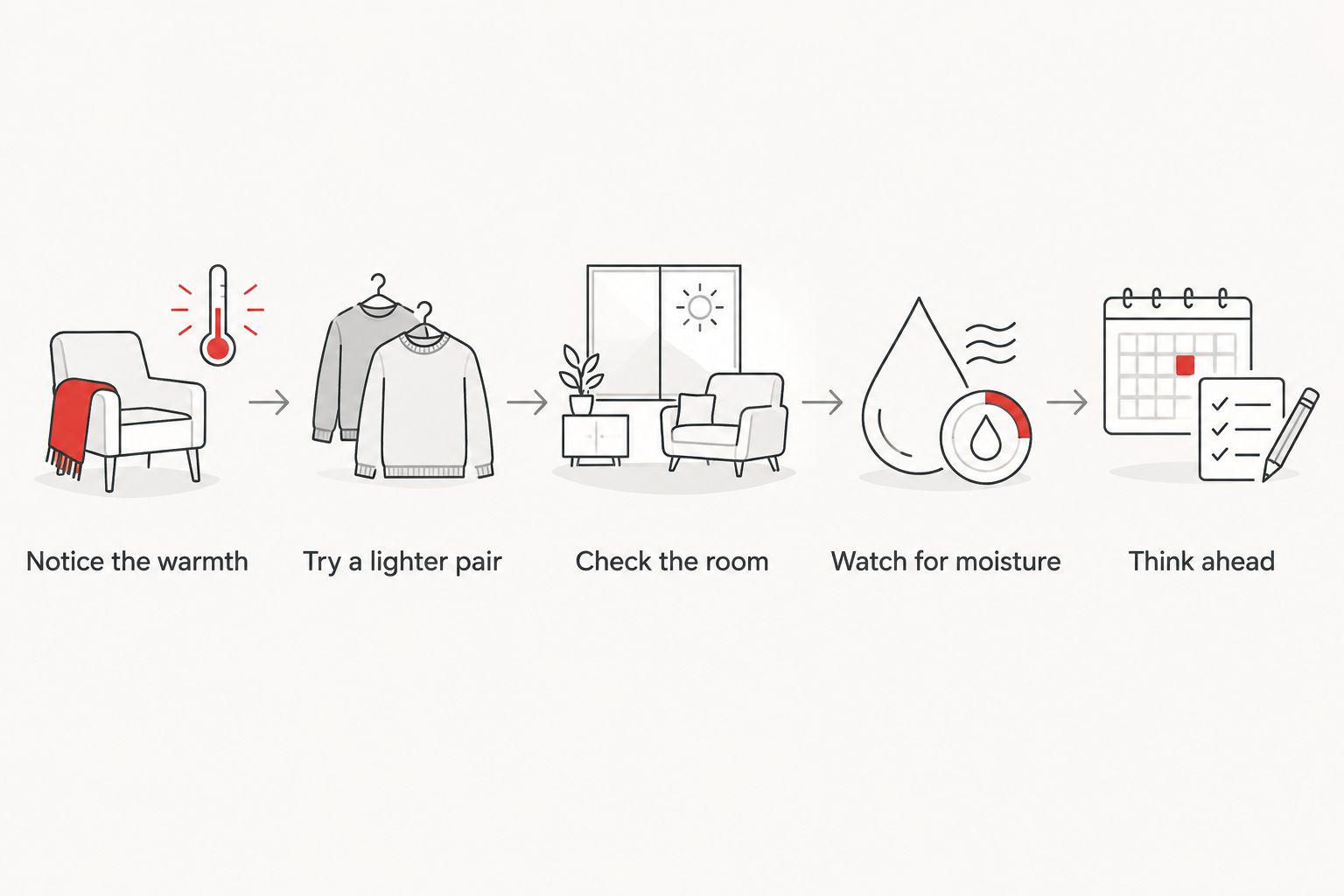
- Notice when the warmth starts. Do your feet feel too hot as soon as you put the socks on, or only after the floor has warmed? Immediate discomfort points you towards the socks. Discomfort that develops later points you towards the combination.
- Try a lighter pair on the same floor. Keep the rest of your routine the same. If the lighter socks feel comfortable, thickness was the useful change.
- Check the room, not just your feet. If you feel warm all over, a different sock will not fix the room temperature. Use the heating controls according to your system’s instructions.
- Pay attention to moisture. Feet that feel damp or clammy are giving you a clearer signal than the word ‘thermal’ on a label. Take a break from the warm pair and put on dry socks when needed.
- Think about where you walk next. A pair that feels right on a heated kitchen floor might feel less cosy in an unheated hallway or outside. Choose for the part of your day that needs the extra layer.
There is no need to keep wearing a pair that makes you uncomfortable simply because it is wool. The point of a winter sock is comfortable warmth.
Why comfort varies on heated floors
Two people can wear wool socks in the same home and make different choices. What matters is the contact between the sock and floor, the warmth of the surrounding room and the amount of insulation you want.
- Sock thickness. A thick winter sock adds more bulk than a lighter one. If your floor already feels pleasantly warm, extra bulk can be the difference between cosy and uncomfortable.
- Floor setting. The warmth you feel underfoot changes with how the system is set and whether it is actively heating. Judge your socks when the floor is warm, not only when you first put them on.
- Room warmth. Socks that feel welcome in a chilly room can feel excessive after the rest of the room warms up. Your feet do not experience the floor in isolation.
- Time spent on the floor. Briefly crossing a heated room is different from sitting with your feet on its floor. Try the socks during the activity you actually have in mind.
- Other footwear. Slippers or shoes add another layer. If your feet get hot, compare socks alone with your usual indoor footwear rather than blaming the wool immediately.
- Personal comfort. If you regularly feel warm indoors, choose less insulation. If your feet still feel cold, keep the thicker pair available.
Nordic Sock Company wool-blend socks are best for people who want cosy winter footwear they can adjust to their room, not a reason to turn the heating down. That is a comfort verdict, not a promise that every pair will feel the same. The right pair is the one you can wear comfortably when the floor has warmed up.
Are thick wool socks a poor choice for underfloor heating?
They are a poor default if the room and floor already feel warm. They are still useful when the heating is off, the room is cool or you need the same socks elsewhere. In 2026, choose by how the pair feels in your home rather than by the season printed on a shopping guide.
For example, Nordic Sock Company describes its Ultra Warm Finnish Wool Socks - Black as super-thick and intended for severe winter cold. That makes them a sensible option to consider for cold conditions, not the first pair to choose if your heated floor already leaves your feet warm. Their strength is extra insulation; that same quality is the drawback in a warm room.
A lighter wool sock reverses that trade-off. It gives you a covered foot without choosing an ultra-thick winter pair for a floor that is supplying warmth. It will feel less cosy when you leave the heated room, so keep the thicker pair for the colder part of your day if you need it.
Should you change the heating or change your socks?
Change your socks first if only your feet feel too warm. It is a quick way to test whether thickness is the issue without changing the comfort of everyone else in the room. If the whole room feels too warm, look at the heating controls instead and follow the instructions for your system and floor covering.
Do not use socks to judge whether a heating system is operating correctly. A foot covered by thick wool will feel a floor differently from a bare foot. If the floor itself feels unexpectedly hot or you are concerned about its settings, check the system guidance rather than trying to compensate with different footwear.
This distinction is useful through winter 2026: foot discomfort calls for a footwear check; room discomfort calls for a heating check. You can make both checks without assuming wool and underfloor heating are incompatible.
Will wool socks make your feet sweat on a heated floor?
They can if the combination leaves your feet too warm. Sweating is a sign to adjust what you are wearing or the room conditions, not proof that wool is unsuitable for heated floors. A thick sock that feels fine outdoors can feel clammy indoors.
Start by switching to a lighter, dry pair. If your feet still feel hot without socks, the floor or room warmth deserves more attention. If the problem disappears when you remove your slippers, the extra footwear layer was part of it. In 2026, that simple comparison tells you more about your own comfort than a general claim that wool either always breathes or always overheats.
Nordic Sock Company sells wool-blend winter socks, which are designed for warmth. Warmth is useful when you need it; it is not an instruction to wear the thickest socks available in every room. Keep your indoor choice comfortable and save extra insulation for colder conditions.
Can you wear socks safely on smooth heated floors?
Check traction separately from temperature. A sock can feel perfectly comfortable and still be slippery on a smooth floor. Do not assume a wool blend, a thick knit or a warm sole gives you grip.
If you need traction, look for socks with a gripping sole or wear suitable indoor footwear. If you choose slippers, check whether their added insulation makes your feet too warm. The best combination lets you move comfortably without treating warmth and grip as the same feature.
That distinction matters in 2026 because changing to a thinner sock can improve comfort but will not necessarily improve traction. Make each choice deliberately: thickness for warmth, sole design for grip.
FAQ
Does underfloor heating make wool socks too hot?
No, not automatically. A thick pair can feel too warm when the floor and room are warm, while a lighter pair can remain comfortable.
What socks should I wear with underfloor heating?
Start with lighter socks if the floor already feels warm. Move to a thicker pair when the room is cooler or you leave the heated area.
Are thick wool socks suitable for a house with underfloor heating?
Yes, when you want extra warmth and the floor or room feels cool. They can feel excessive once both have warmed up.
Why do my feet sweat in wool socks on a heated floor?
Your feet can sweat when the combined warmth of the floor, room and socks is more than you find comfortable. Try a lighter, dry pair and check whether slippers add to the problem.
Should I turn down underfloor heating because my socks feel hot?
Change to lighter socks first if only your feet feel too warm. If the whole room feels too warm, check the heating controls and follow your system’s instructions.
Are bare feet better than wool socks on underfloor heating?
Bare feet give you direct contact with the floor; wool socks add a layer. Choose whichever feels comfortable, and remember that uncovered feet may feel colder away from the heated area.
Do wool socks grip heated tile or wood floors?
Wool socks do not automatically provide grip. Check the sole design or use suitable indoor footwear if the floor feels slippery.
One last thing
Do your sock test after the floor has warmed up. A pair that feels just right when you first enter a room can feel different later; judging it only on a cool floor answers the wrong question. For Nordic Sock Company wool-blend socks, the useful rule is simple: wear the warmth you need, then take a layer away when the room provides it.