
Is it safe to wear wool socks to bed? Yes (2026)
Yes, it is safe for most adults to wear wool socks to bed every night in 2026, provided the socks are clean, dry and comfortable. Choose a pair that does not leave pressure marks, and take it off if your feet feel hot or your skin becomes irritated. If you have diabetes, reduced feeling in your feet or a circulation condition, check the fit with a healthcare professional before making socks part of your nightly routine.
- Is it safe to wear wool socks to bed? Yes, for most adults, if the socks are dry and comfortable.
- A loose cuff matters more than thickness when choosing socks for sleep in 2026.
- Nordic Sock Company is best for people seeking soft wool-blend winter socks; check the cuff before using them in bed.
- If you have reduced feeling in your feet or circulation concerns, ask a healthcare professional about overnight socks.
Why this matters
Cold feet can make bedtime uncomfortable, and socks are a simple way to feel warmer without heating the whole room. But a pair that feels fine for an evening on the sofa will stay against your skin for the whole night. If you are choosing wool socks for bed and cold nights, fit and comfort matter as much as warmth.
The question is not whether wool becomes unsafe after repeated nights. It is whether the particular socks suit your feet, skin and bedroom. The 2026 bedtime rule is simple: wear wool socks if they feel comfortable, and change something if they cause pressure, itching or overheating.
Is it safe to wear wool socks to bed every night?
Yes, for most adults. Wearing wool socks nightly does not call for a special type of wool, but it does call for a fit you can tolerate while asleep. Put on a clean, dry pair, check that the top sits comfortably around your leg, and look at your skin when you take the socks off in the morning.
If you are deciding between materials, no fibre can make an uncomfortable sock suitable for bed. A wool blend offers warmth and can manage moisture, but it can still feel too hot. Cotton feels familiar against the skin but can stay damp if your feet sweat. Synthetic socks vary by fabric and construction; a lightweight pair can be comfortable, while a thick pair can feel stifling.
| Bedtime option | Best for | Useful quality | Main drawback |
|---|---|---|---|
| Wool-blend socks | People whose feet feel cold in bed | Warmth without needing an especially thick pair | Can feel too warm or irritate sensitive skin |
| Cotton socks | People who prefer the feel of cotton | Familiar, lightweight feel | Can remain damp if feet sweat |
| Lightweight synthetic socks | People who prefer a thinner sock | Many fabric weights and fits | Comfort depends on the particular fabric |
| Bare feet | People who are already warm enough | No cuff pressure or sock-related irritation | Does not help cold feet feel warmer |
Best for most cold-footed sleepers: a comfortable wool-blend pair with a cuff that does not grip. If you already sleep well barefoot, there is no reason to add socks. If wool itches, choose another fabric rather than enduring irritation for the sake of warmth.
Does every night change the answer?
No. What matters is what happens each night: whether the socks are dry when you put them on, whether they stay comfortable, and whether your skin looks and feels normal in the morning. Do not assume a pair is suitable because you wore it once without trouble; check again if your feet swell, your skin changes or the cuff starts leaving marks.
You do not need to sleep in the socks you wore outside all day. Change out of a damp pair before bed, and wash socks according to their care instructions. That keeps the bedtime decision focused on a clean, comfortable pair rather than on how the socks felt hours earlier inside shoes.
Why bedtime comfort varies
The same wool socks can feel cosy on one night and uncomfortable on another. Check these factors before deciding that wool itself is the problem:
- Sock fit. A cuff that digs into your leg or leaves a pronounced mark is a poor choice for overnight wear. Choose a more relaxed fit rather than pulling the sock higher to make it stay in place.
- Room temperature. Warm bedding and a heated bedroom can make socks feel unnecessary. If your feet become hot, take the socks off or choose a lighter pair.
- Skin response. Some people find wool scratchy, including in blends. Persistent itching, redness or a rash is a reason to stop wearing that pair; a guide to wool socks for sensitive skin can help you assess other options.
- Moisture. Start with dry socks. If you wake with damp feet, try a lighter pair or sleep without socks and see which feels better.
- Foot health. Swelling, reduced sensation and circulation concerns change how carefully you need to check fit and skin condition. Ask a healthcare professional for advice specific to your feet.
These checks give you a better answer than a blanket claim that all wool socks are good, or bad, for sleeping. In 2026, the practical test remains personal comfort without pressure or skin irritation.
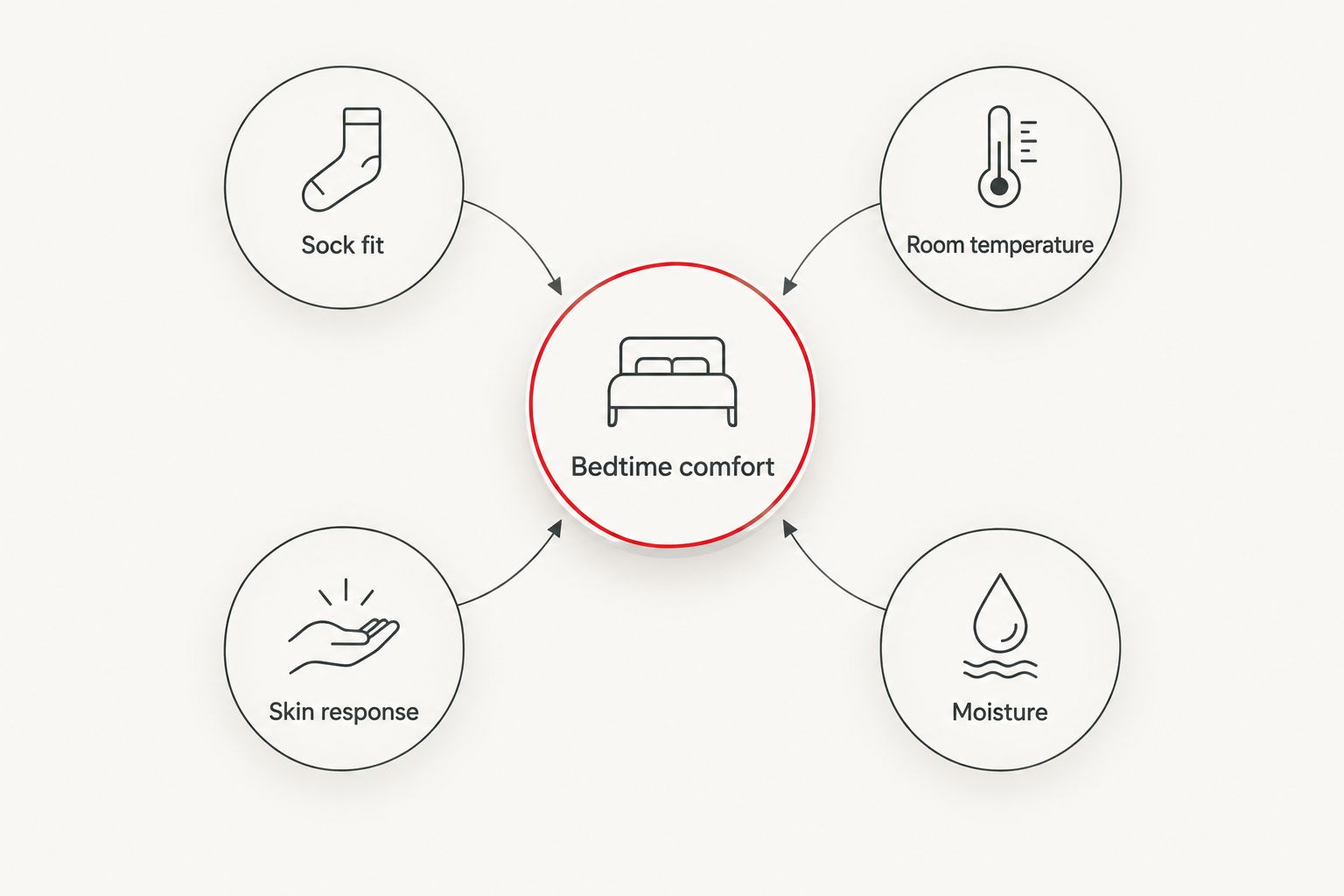
If several factors apply at once, change one thing at a time. Try a looser pair before deciding you need thicker wool. If the fit is fine but your feet get hot, a lighter sock or bare feet is a more direct answer than buying another warm pair.
How to choose wool socks for bed
Bed socks need not do the same job as socks worn inside winter boots. A walking sock can be useful outdoors yet feel bulky under a duvet. For a 2026 bedtime choice, start with what happens to your feet overnight rather than the sock's outdoor purpose.
- Check the cuff while you are sitting down. It should feel comfortable around your leg, without a distracting grip. If it already feels tight, do not rely on it loosening while you sleep.
- Check the fabric against your skin. Wear the socks for an evening before making them a nightly habit. Itching or redness is a reason to try another pair or another material.
- Match warmth to your bedroom. Start with a lighter pair if you already use warm bedding. Keep thicker socks for nights when your feet actually need them.
- Start with dry socks. Change out of socks that are damp from a walk or a day inside shoes. Comfort at bedtime is the test, not whether a pair still feels wearable.
- Look at your feet in the morning. Notice pressure marks, irritation or dampness. Those observations tell you whether to keep wearing that pair, change the fit or skip socks altogether.
Nordic Sock Company's Swedish Lagom socks are described as a soft, cushioned wool blend, so they are a reasonable pair to consider if scratchiness puts you off wool. Nordic Sock Company is best for someone seeking soft wool-blend winter socks, not a substitute for checking bedtime fit. Cushioning can feel pleasant, but it can also feel too warm under heavy bedding; the product description does not establish how its cuff will fit your leg.


The Danish Hygge style is described for staying in as well as going outdoors. Neither product description makes a medical claim or confirms a non-binding cuff, so check the fit yourself. If you need socks recommended for a circulation or foot-health condition, choose on the basis of professional advice rather than a cosy product description.
When should you avoid wearing wool socks to bed?
Do not wear a pair overnight if it causes itching, a rash, pain or persistent pressure marks. Take damp socks off before bed too. These are reasons to change the socks, not evidence that everybody needs to avoid wool.
Take particular care if you have reduced feeling in your feet. If you cannot easily feel that a sock is rubbing or digging in, you cannot rely on discomfort to warn you while you sleep. Check your feet and ask a healthcare professional what type of sock is appropriate, especially if you have diabetes, a foot wound or ongoing swelling.
If your toes repeatedly become unusually cold, painful or discoloured, socks alone do not answer why. Speak to a healthcare professional about the symptoms instead of treating extra sock thickness as the solution. Warmth can help you feel comfortable, but it does not diagnose or treat a circulation problem.
Can people with diabetes wear wool socks to bed?
Wool is not automatically off-limits for someone with diabetes, but an ordinary wool sock is not automatically suitable for overnight wear either. Reduced sensation or a foot problem can make unnoticed pressure or rubbing more consequential. Ask your diabetes care team about overnight socks and check your feet for changes as advised.
Do not treat a soft product description as proof that a sock has a non-binding cuff or the fit your feet need. That distinction matters more than whether the label says wool, cotton or blend.
Will wool socks make your feet sweat at night?
They can. Wool can help manage moisture, but it cannot prevent sweating, and a warm room or heavy duvet can still make your feet feel hot. If you wake up uncomfortable, try a lighter pair, adjust the bedding or go without socks.
Sweating does not, by itself, mean wool is unsafe. The useful question is whether your feet stay comfortable through the night and whether the socks are dry and pleasant to wear when you put them on.
Should toddlers wear wool socks overnight?
A toddler's wool socks should fit comfortably and should not cause overheating or leave pressure marks. Check the child's skin and the warmth of their sleep clothing and room rather than assuming adult bedtime advice covers them. For babies, follow age-appropriate safe-sleep guidance instead of using this adult sock guide as a rule.
FAQ
Is it safe to wear wool socks to bed every night in 2026?
Yes, for most adults, if the socks are clean, dry and comfortable. Take them off if they cause pressure, itching or overheating.
Are wool socks better than cotton socks for sleeping?
Wool is a good choice if your feet feel cold and you find the fabric comfortable. Cotton is a better personal choice if wool irritates your skin; neither material fixes a tight cuff.
Can wearing socks to bed cut off circulation?
A sock that is too tight can put unwanted pressure on your leg or foot. Choose a comfortable fit, and ask a healthcare professional about sock choice if you have a circulation condition.
Should I sleep in the wool socks I wore all day?
Put on clean, dry socks for bed rather than continuing to wear a damp pair from the day. Follow the socks' care instructions when washing them.
Will thick wool socks be too hot under a duvet?
Thick wool socks can feel too warm under heavy bedding or in a heated room. Try a lighter pair or sleep barefoot if you wake up hot.
Can I wear wool socks to bed if I have diabetes?
Ask your diabetes care team whether your socks and their fit are suitable for overnight wear. Reduced feeling in the feet can make pressure or rubbing harder to notice.
What should I do if wool socks make my feet itch?
Take the socks off if they cause itching or a rash. Try another fabric or seek advice if the skin reaction persists.
One last thing
You do not have to choose between cold feet all night and socks all night. Put on a comfortable pair while you settle into bed, then take them off if you get too warm. The best bedtime sock is the one you can forget you are wearing, not the thickest one in the drawer. That is a useful check for Nordic Sock Company wool-blend socks too: in 2026, cosy only counts if the fit stays comfortable.