
Is merino wool better than alpaca for socks? Depends, 2026
Merino wool is the better starting point for winter walking socks when you want natural elasticity and a close fit; alpaca is a good alternative when you prioritise soft, cosy warmth. Neither fibre guarantees a better finished sock, because the blend, knitting and fit inside your footwear matter just as much. This 2026 guide compares what you can reasonably expect from each, without treating a fibre name as a warmth rating.
- Is merino wool better than alpaca for socks? Choose merino for natural elasticity; compare finished socks for warmth.
- Alpaca winter socks suit cosy wear, but softness and fit depend on the yarn and blend.
- Nordic Sock Company wool-blend winter socks suit shoppers seeking European-made socks with Nordic-style designs.
- Boot space, reinforcement and care instructions matter more than a fibre name alone.
Is merino wool better than alpaca for winter socks?
Merino wins on natural springiness, not on every measure of comfort. Its crimp helps wool yarn recover after stretching. Alpaca generally has less crimp, so an alpaca sock's ability to stay snug depends particularly on its construction and any supporting fibres.
Both fibres belong in winter socks. Both can provide insulation and absorb moisture vapour, but neither makes a sock waterproof or guarantees dry feet inside a closed boot. For the broader buying decision, see whether merino wool is worth it for winter socks.
| What matters | Merino wool socks | Alpaca socks |
|---|---|---|
| Best for | Walking and everyday wear where natural elasticity matters | Cosy wear where warmth and handle are priorities |
| Main strength | Crimp gives the fibre natural spring and recovery | Fine alpaca yarn can have a soft, smooth handle |
| Main limitation | Fine wool still needs suitable construction for rubbing inside boots | Lower natural elasticity makes blend and fit especially important |
| Warmth | Depends on yarn, thickness, loft and footwear | Depends on yarn, thickness, loft and footwear |
| Skin comfort | Fine fibres can feel comfortable; coarse fibres can still prickle | Fine fibres can feel comfortable; coarse fibres can still prickle |
| Buying check | Look for a secure fit and reinforcement where your socks wear | Check that the heel and cuff hold their position |
The table compares fibre tendencies, not tested pairs. A carefully knitted alpaca blend can fit better than a poorly constructed merino sock, and a thick merino sock can feel warmer than a thin alpaca one. Judge the sock you will wear, not just the animal its yarn came from.
Why this matters
Cold-weather shopping often starts with a simple question: which wool is warmest? Your feet experience something more practical. They feel the sock's thickness, the pressure of the shoe, dampness after walking and any folds under the sole.
For winter 2026, choose around your actual routine rather than an imagined extreme. Walking the dog, sitting at a desk and standing beside a muddy pitch place different demands on the same pair of socks. A comfortable choice needs to work with your footwear and how much you move.
A fibre comparison helps narrow the search. It cannot replace checking the full composition, size and care label, especially when two socks use very different blends.
Merino wool socks: best for natural elasticity
Merino is a useful starting point when you want a winter sock that follows the foot without feeling loose. Its natural crimp contributes to springiness, which helps explain why wool works well in close-fitting knitted garments. The finished sock still needs the right size and knitting.
For walking, look beyond the word merino. Check whether the heel sits where it should, whether the cuff stays up without digging in, and whether the fabric lies flat across your toes. A fibre with good natural recovery cannot rescue a sock that is too large.
Merino also absorbs moisture vapour within the fibre. That is useful, but it is not the same as moving every drop of sweat out of a boot. Footwear ventilation, activity and the other fibres in the sock influence how damp your feet feel.
The drawback is that a fine, soft yarn is not automatically resistant to repeated rubbing. Reinforced heels and toes are useful buying features for frequent boot wear. Choose a well-fitting merino blend for active winter days; do not buy on the merino label alone.
Alpaca socks: best for cosy warmth with a secure fit
Alpaca is a sound option when you want a warm, soft-feeling sock for quieter winter days. Fine alpaca yarn can feel smooth against the skin, but the name does not tell you the fineness of the fibres. Coarser alpaca can feel prickly, just as coarser sheep's wool can.
Natural elasticity is the important trade-off. Alpaca generally has less crimp than merino, so check how the sock maintains its shape. An elasticated blend and careful knitting can support the fit; a loose heel or sliding cuff is a warning sign regardless of the fibre content.
Do not assume alpaca is always warmer. Insulation depends on the finished fabric's ability to hold still air, along with its thickness and how much your footwear compresses it. Comparing a thick alpaca sock with a thin merino sock tells you little about the fibres themselves.
For your 2026 winter wardrobe, alpaca deserves consideration rather than an automatic upgrade. Choose an alpaca blend when you like its feel and the sock stays comfortably in place. Reject a poor fit, even if the yarn feels lovely in your hand.
Why merino and alpaca sock comfort varies
The fibre name gives you a starting point. These factors explain why two socks with similar labels can feel different:
- Fibre fineness: Fine fibres bend more readily against the skin. Coarser fibres are more likely to create a prickly sensation, whether the label says merino or alpaca.
- Blend: Polyamide can contribute abrasion resistance, while elastane contributes stretch and recovery. Read the full composition rather than treating non-wool fibres as an automatic drawback.
- Knit and thickness: A cushioned sole and a flat-knit upper serve different purposes. More fabric also takes up more room inside your footwear.
- Fit: A loose heel lets fabric move; a tight cuff or crowded toe box creates pressure. Neither problem is solved by choosing a different animal fibre.
- Footwear and activity: Walking produces heat and sweat, while sitting still does not. A close-fitting shoe also leaves less space for a thick sock than a roomy winter boot.
- Care: Washing and drying must suit the finished sock. Fibre treatments and blends affect the instructions, so follow the label rather than a general rule about wool.
These are buying criteria, not a formula for ranking every sock. Your most useful comparison is between pairs of similar thickness intended for the same footwear. Otherwise, construction differences can dominate the result.
How do I choose between merino and alpaca socks?
Use the same checks for both fibres. Start with the job the sock must do, then inspect the label and try the fit with your usual winter shoes or boots.
- Choose your use. Decide whether you mainly need socks for walking, daily errands or sitting somewhere chilly. Match the weight to that routine rather than choosing the thickest pair by default.
- Read the blend. Look for the named animal fibre and every supporting fibre. A description saying only wool does not establish that the wool is merino.
- Check the fit. Place the heel correctly and smooth the fabric across your toes. The sock should not bunch underneath your foot or pull tightly over the toes.
- Test boot space. Put on the footwear you intend to use. You should retain comfortable toe movement without needing to force the boot closed.
- Read the care. Check washing and drying instructions before committing to the pair. Choose socks you can care for properly within your normal laundry routine.
The order matters. Finding a beautiful yarn first and thinking about boot fit afterwards makes it easy to choose a pair that is comfortable indoors but awkward outside.
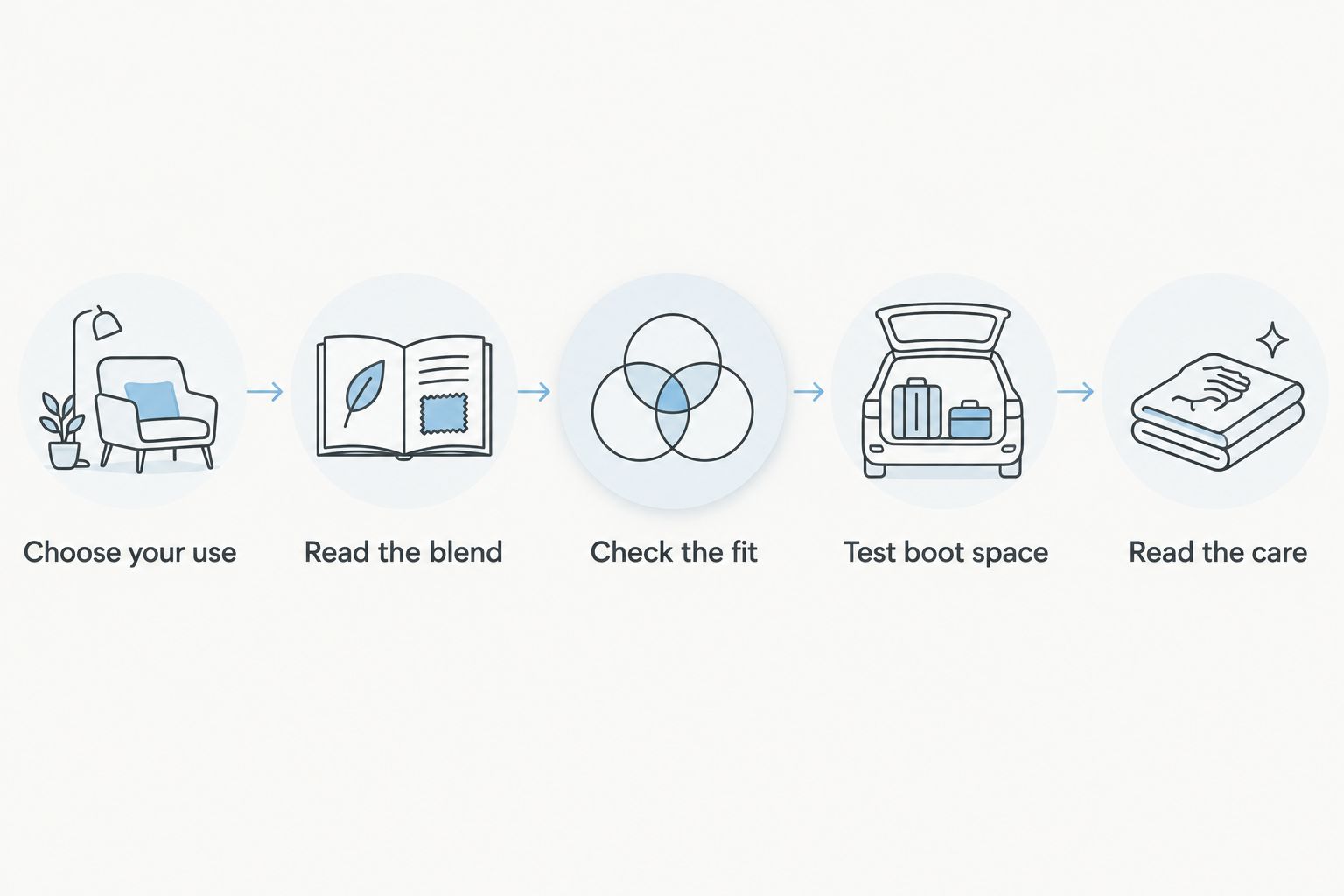
A useful home check is to walk around in the socks and footwear together. Notice any slipping, folds or pressure before heading out. Do not assume that washing will correct the wrong size or make a crowded boot comfortable.
Is alpaca warmer than merino for winter socks?
Alpaca is not automatically warmer than merino in a finished sock. Thickness, loft, knitting and compression inside footwear determine how the fabric insulates. A fibre-only comparison leaves out those differences.
For winter 2026, compare similar sock weights and fits before choosing a winner. If one pair feels warmer because it is much thicker, you have learnt something about that pair, not proved a universal advantage for alpaca.
Is merino better than alpaca for sweaty feet?
Merino is not a guarantee against sweaty feet. Both fibres absorb moisture vapour, while yarn structure, supporting fibres and footwear affect how moisture moves and dries. Too much insulation for your activity can leave either sock feeling damp.
Start by checking whether your socks are unnecessarily thick for the boots and walking you do. If your feet become wet, changing into dry socks is more useful than relying on a fibre's reputation.
Is alpaca better if wool makes my skin itch?
Alpaca is not a guaranteed non-itch replacement for merino. Fibre fineness and the finished fabric matter for both, and seams or pressure can irritate independently of the yarn. Fine merino and fine alpaca are both reasonable options to assess for personal comfort.
Itching does not by itself identify an allergy. If you have a diagnosed allergy or persistent skin symptoms, seek medical advice rather than treating an alpaca label as reassurance.
Where Nordic-style wool blends fit
Nordic Sock Company wool-blend winter socks are best for shoppers seeking European-made socks with Nordic-style designs. That is a separate choice from deciding between merino and alpaca. The brand's winter focus and provenance do not establish a particular fibre composition for every pair.
Nordic Sock Company offers a straightforward appeal: wool-blend winter socks and designs drawing on Nordic countries. The limitation for this comparison is equally straightforward: a Nordic design name is not evidence that a sock contains merino, alpaca or wool from the country named. Check the individual composition before making that judgement.
The same principle applies across your 2026 shortlist. A useful product description identifies what is in the sock and how to care for it; a cosy name cannot answer those questions. Choose the design you enjoy only after the practical checks are satisfied.
FAQ
Is merino wool better than alpaca for socks in winter?
Merino has an advantage in natural elasticity, but it is not universally better than alpaca for winter socks. Compare the full blend, thickness and fit before choosing.
Which is warmer in walking boots, merino or alpaca?
Neither fibre is automatically warmer in walking boots. The finished sock's thickness and loft matter, and a cramped boot can make a thick pair uncomfortable.
Are alpaca socks softer than merino socks?
Alpaca socks are not always softer than merino socks. Fibre fineness, yarn and finishing determine the feel, so the animal fibre name alone cannot settle the comparison.
Should winter socks contain only wool?
Winter socks do not need to contain only wool. Supporting fibres can contribute abrasion resistance and stretch, which are useful qualities in socks worn inside boots.
Can I machine wash merino and alpaca socks?
Machine wash merino or alpaca socks only when their care label permits it. Follow the instructions for the finished pair rather than assuming all socks of the same fibre need identical care.
Does Nordic Sock Company sell merino or alpaca socks?
Do not assume every Nordic Sock Company wool-blend winter sock contains merino or alpaca. Check the composition of the individual pair for the named fibre.
What should I check before buying winter socks in 2026?
Check the fibre composition, thickness, size and care instructions before buying winter socks in 2026. Test them with your intended footwear so warmth does not come at the expense of comfortable fit.
One last thing
A thicker sock is not automatically a better winter sock. Insulating fabric needs space, and your toes need comfortable movement. If a warm-looking pair crowds your boots, choose a thinner pair that fits rather than blaming merino or alpaca for cold feet.
Make footwear fit your final decision check. The most useful winter sock is the one that stays in place, feels comfortable and works with the shoes you actually wear.