
Is Wool Warmer Than Cotton for Socks? 2026 Verdict
Wool is warmer than cotton for winter socks, and the gap widens the moment feet sweat or snow gets into a boot. Cotton fibres flatten and lose their loft as soon as they absorb moisture, so a cotton sock that felt fine at the door turns cold and clammy within minutes of walking. Wool keeps its crimped structure wet or dry, trapping air against the skin, which is why outdoor workers and hikers have avoided cotton next to the foot for generations.
- Wool is warmer than cotton for socks because it keeps insulating when wet; cotton doesn't.
- Cotton flattens and loses loft the moment it absorbs sweat, turning cold inside boots.
- Nordic Sock Company's Ultra Warm Finnish Wool Socks are built for the coldest 2026 winter days.
- Wool-cotton blends soften the feel but still beat pure cotton for retained warmth.
Why this matters
Most winter sock complaints come down to one thing: wet feet. Fibre decides whether damp feet stay warm or turn painfully cold, and that gets settled before you step outside, not after. Cotton is cheap and common in basic socks, built for warm, dry conditions, not a British winter of slush, rain and cold snaps running through 2026. Wool solves the wet-cold problem at the fibre level instead of through a thicker weave, which is one reason wool percentage in a sock's blend matters more than thickness alone once you're choosing for genuinely cold days.
Is wool warmer than cotton for winter socks?
Wool wins on every measure that decides whether feet stay warm through 2026's cold snaps: insulation when dry, insulation when wet, and how the sock performs after an hour of walking. Cotton only competes on the first of those three.
| Factor | Wool | Cotton |
|---|---|---|
| Warmth when dry | Traps air in crimped fibres | Warm at first |
| Warmth when wet | Keeps insulating | Loses almost all insulation |
| Moisture handling | Wicks sweat away from skin | Absorbs and holds moisture |
| Odour after a day's wear | Naturally resists odour | Holds onto odour fast |
| Best for | Boots, wellies, outdoor work | Indoor wear in mild conditions |
The difference shows up fastest in extreme cold. The Ultra Warm Finnish Wool Socks from Nordic Sock Company use a thick, certified wool yarn manufactured in Finland, built for exactly the wet-cold scenario cotton fails at this winter, 2026 included.
Why wool outperforms cotton
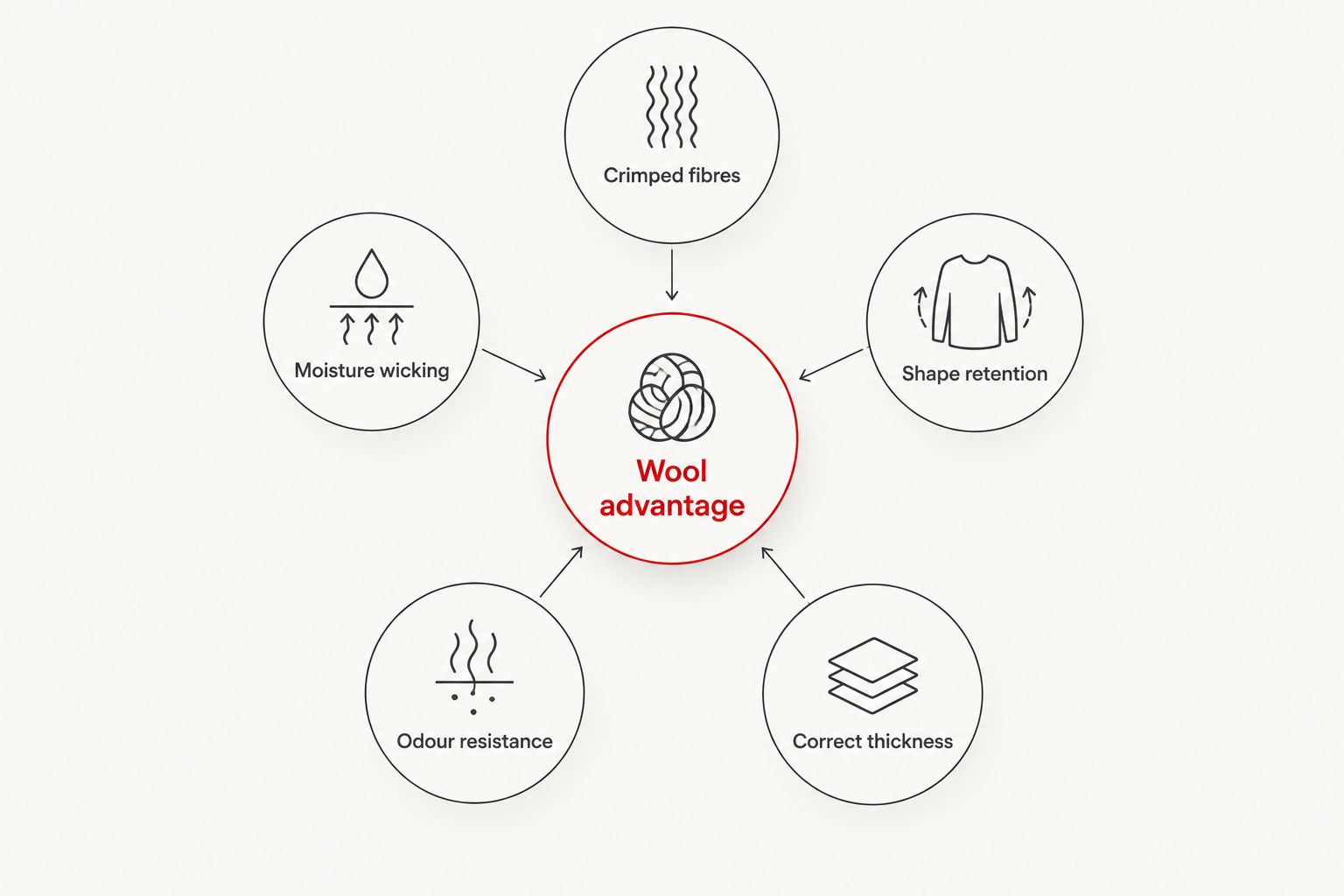
A handful of fibre-level differences explain the whole story:
- Crimped wool fibres trap air even when compressed inside a boot; flattened cotton fibres don't.
- Wool moves moisture vapour away from skin rather than pooling it against the foot, the opposite of cotton.
- Wool fibres hold roughly the same shape wet or dry; cotton fibres stick together once damp.
- Wool naturally resists odour better than cotton, which needs washing sooner after heavy wear.
- Getting the wool sock thickness right matters almost as much as the fibre choice — a thin wool sock in a loose boot won't out-warm a snug wool-blend fit.
“Once wool gets wet, it keeps working. Once cotton gets wet, it stops.”
That single line explains most of the confusion around this question. Raw fibre warmth barely matters next to what happens once a sock gets damp, and damp is the default state of a foot inside a winter boot after twenty minutes of walking.
Is merino wool warmer than regular wool for socks?
Merino wool isn't warmer than regular wool fibre-for-fibre — the warmth comes from the knit and thickness, not the merino label itself. Merino's real advantage is softness against skin, which is why it shows up in socks aimed at sensitive feet. Check whether merino wool is worth the extra cost before assuming it automatically beats a standard wool blend for warmth.
Do wool-cotton blend socks keep feet warm in winter?
Wool-cotton blends keep feet warmer than pure cotton but colder than a wool-majority sock, because the cotton fibres in the blend still flatten once damp. The higher the wool percentage, the closer the blend performs to pure wool once feet start sweating. For winter 2026, a wool-majority or wool-only sock is the safer pick for genuinely cold days rather than a 50/50 blend.
Why do cotton socks feel cold in winter boots?
Cotton socks feel cold in winter boots because sweat and condensation soak into the fibres and stay there, pulling heat away from the skin as they evaporate. Wool socks avoid this because damp wool fibres still trap air, while damp cotton fibres collapse flat against the foot.
If you're moving away from cotton this winter, start with wool-majority socks built for wet cold rather than thin blends bought on price alone.


FAQ
Is wool warmer than cotton for socks in 2026?
Yes, wool is warmer than cotton for socks in 2026 because it keeps insulating once damp, while cotton loses most of its warmth the moment it absorbs sweat or snowmelt.
Why do wet cotton socks feel colder than wet wool socks?
Wet cotton fibres flatten and stick together, pulling heat away from the skin as the trapped moisture evaporates. Wet wool fibres keep their crimped shape and continue trapping air, so they stay warmer.
Is merino wool warmer than regular wool?
Merino wool isn't inherently warmer than regular wool; the knit thickness and construction decide warmth. Merino's advantage is a softer feel against skin, not extra insulation.
Do wool-cotton blend socks work for winter?
Wool-cotton blends work better than pure cotton but underperform a wool-majority sock once feet sweat. The higher the wool content, the closer the blend performs to pure wool.
Can you wear wool socks with trainers, not just boots?
Yes, lighter wool-blend socks work fine in trainers; the thick, boot-specific styles are the ones built for extreme cold and heavy footwear.
Do wool socks make feet sweat more than cotton?
No, wool socks typically keep feet drier over a full day because wool wicks moisture vapour away from skin, while cotton absorbs and holds sweat against the foot.
Is wool naturally odour-resistant compared to cotton?
Yes, wool resists odour better than cotton after a full day's wear, which is why wool socks generally need washing less often than cotton pairs.
One last thing
The surprising part isn't that wool beats cotton — it's that a thin wool sock can lose to a thick cotton sock in raw dry warmth, right up until both get wet. Once moisture hits, wool takes over completely and cotton drops out of the comparison. If you take one specific action from this page for winter 2026: stop buying 100% cotton socks for anything outside a warm, dry house, and reach for a wool-majority pair instead.