
Is Lambswool as Warm as Merino Wool for Socks? 2026
Lambswool and merino wool are both genuinely warm, but they don't perform the same way once your feet start sweating or the temperature swings. Merino wool socks hold their warmth better over a full day because merino fibre wicks moisture away from skin while lambswool tends to trap it, and damp fibre loses insulating power fast. Lambswool is coarser and often knitted into a denser, heavier sock, so it can feel just as warm for short stretches — but it cools quicker once wet and can itch more against bare skin. In 2026, most premium winter sock ranges, including wool-blend styles from Nordic Sock Company, lean on merino or merino-blend yarns for exactly this reason.
- Merino wool beats lambswool for sustained warmth because it wicks moisture and keeps insulating when damp.
- Lambswool matches merino for short, dry wear but loses heat faster once feet sweat.
- Merino fibre runs roughly 17-24 microns versus lambswool's coarser 25-30 microns, which explains the softness gap.
- Ultra Warm Finnish Wool Socks and other merino-blend styles suit all-day 2026 winter wear better than pure lambswool.
Why this matters
Sock shoppers searching "is lambswool as warm as merino wool" are usually deciding between two wool-blend socks on a shelf, both labelled "warm winter wool." The label doesn't tell you which one still feels warm three hours into a cold, damp day.
Fibre diameter and moisture behaviour decide that, not the word "wool" on the packaging. Get this wrong and you end up with a sock that's warm in the shop and clammy by lunchtime.
Is lambswool as warm as merino wool for socks?
Both wools trap air between fibres, which is what makes wool warm in the first place. The difference shows up under real conditions — moisture, activity, and how long the sock stays on your foot.
| Feature | Lambswool | Merino wool |
|---|---|---|
| Fibre diameter | Roughly 25-30 microns | Roughly 17-24 microns |
| Warmth when dry | High — dense fibre traps air well | High — crimped fibre traps more air per gram |
| Warmth when wet | Drops quickly, holds moisture | Stays warmer wet, wicks moisture outward |
| Feel against skin | Coarser, can itch on sensitive skin | Softer, generally itch-free |
| Moisture management | Average — sits close to skin | Strong — pulls sweat away from the foot |
| Best for | Short wear, everyday cosy socks | All-day wear, activity, temperature swings |
Verdict: lambswool is warm but merino wool socks are warmer for longer, because merino keeps working once your feet sweat and lambswool doesn't. For a lazy Sunday indoors, lambswool holds up fine. For a full day of winter walking, standing, or commuting, merino or a merino-heavy blend is the safer call.
Lambswool comes from a sheep's first shearing, and the fibre is naturally thicker and less crimped than merino. That crimp in merino fibre is what creates tiny air pockets — more pockets per gram means more insulation without extra bulk. It's also why merino socks can run thinner than lambswool socks and still feel just as warm.
Why warmth varies between wool socks
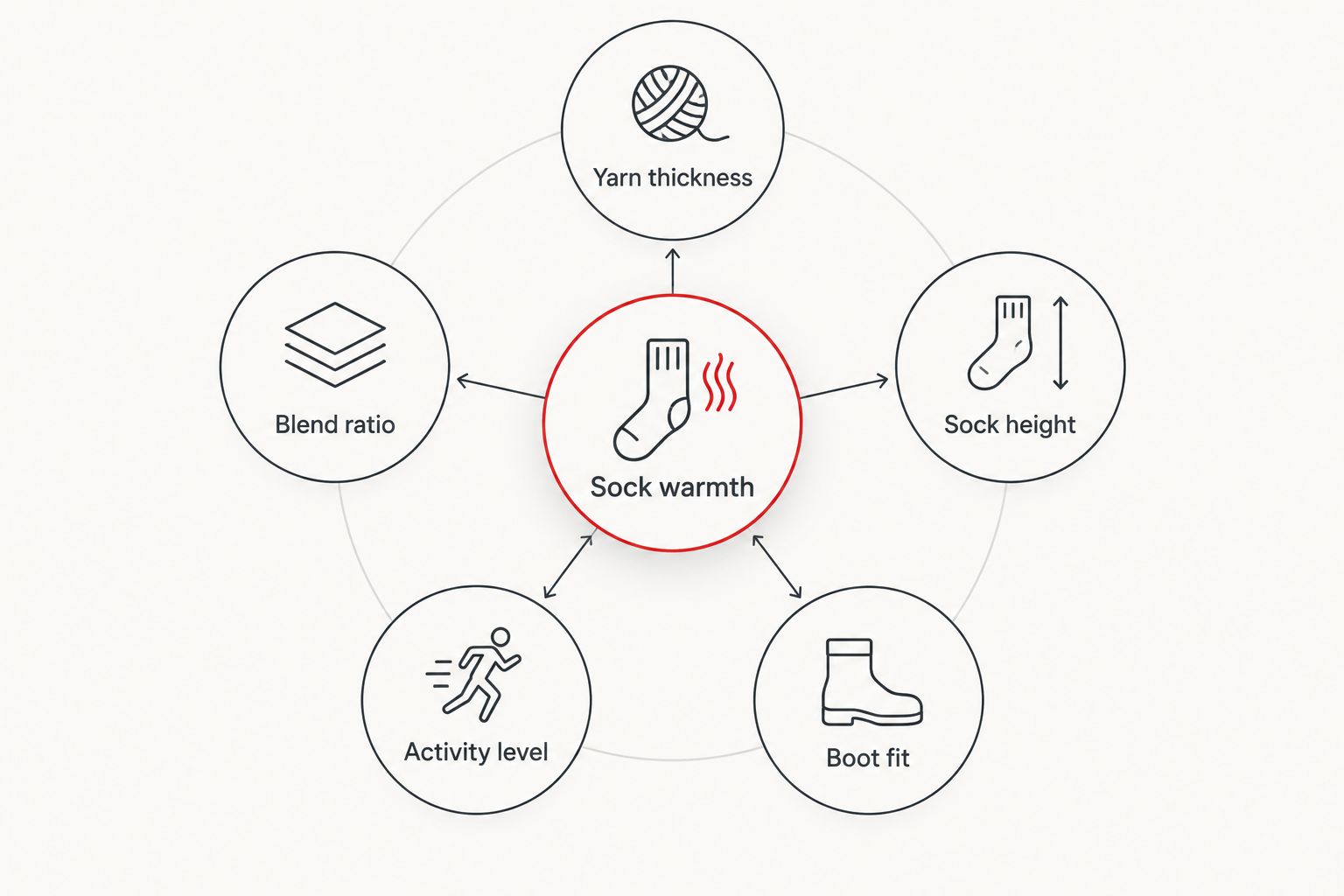
The wool type on the label is only one factor. These also decide how warm a given pair actually feels in 2026's cold snaps:
- Yarn thickness and knit density — a tightly knitted, thicker sock traps more air regardless of fibre type.
- Blend ratio — many socks mix wool with nylon or acrylic for durability, which dilutes the wool's insulating effect.
- Sock height — a knee-high sock covers more skin than an ankle sock and holds heat around the calf.
- Activity level — sweat from walking or standing changes how fast either fibre loses warmth.
- Boot or shoe fit — a sock squashed inside a tight boot loses loft and insulates less, no matter the wool.
- How the sock is washed and stored — matted, over-washed wool loses the loft that creates warmth.
Most winter sock ranges built for genuine cold — including Nordic-style designs — lean on merino or a merino-heavy blend rather than pure lambswool for this reason. The Ultra Warm Finnish Wool Socks use a thicker knit specifically to push warmth further without the itch that comes with coarser fibre.


Is lambswool warmer than cotton socks?
Lambswool is warmer than cotton for winter socks, because wool fibre insulates even when it picks up moisture while cotton flattens and loses warmth almost immediately once damp. Cotton also dries slowly against skin, which pulls heat away from the foot faster than either wool type. For anyone comparing wool against cotton rather than wool against wool, wool beats cotton on every practical measure that matters for a 2026 winter.
Does merino wool itch less than lambswool?
Merino wool itches less than lambswool for most wearers, because merino's finer fibre diameter bends more easily against skin instead of pricking it. Lambswool's coarser fibre is more likely to cause irritation, particularly for anyone with sensitive skin or eczema-prone feet. This is the main reason merino dominates premium sock ranges despite lambswool being cheaper to produce.
Can lambswool and merino wool be blended in the same sock?
Yes, lambswool and merino wool can be blended in the same sock, and some manufacturers do this to balance softness against cost. A blend typically softens the coarser lambswool fibre while keeping some of merino's moisture-wicking benefit, though it won't match a pure merino sock for all-day performance. Checking the wool percentage on the label matters more than the blend name alone.
FAQ
Is lambswool as warm as merino wool for socks?
Lambswool matches merino wool for warmth in short, dry conditions but loses out over a full day because merino wicks moisture and keeps insulating once feet sweat. Lambswool's coarser fibre also cools faster when wet.
What is the difference between lambswool and merino wool?
Lambswool comes from a sheep's first shearing and has a coarser fibre, typically around 25-30 microns, while merino wool comes from merino sheep and runs finer, around 17-24 microns. The finer merino fibre feels softer and manages moisture better.
Which is better for winter socks, lambswool or merino?
Merino wool is better for winter socks worn all day because it stays warm when damp and feels softer against skin. Lambswool works fine for shorter, drier wear like slippers or indoor socks.
Does lambswool shrink more than merino wool?
Both lambswool and merino wool can shrink if washed on a hot cycle or tumble dried, since felting happens to any untreated wool fibre. Following the care label and washing on a cool, wool-specific cycle protects both equally.
Is merino wool worth the extra cost over lambswool?
Merino wool is generally worth the extra cost for anyone wearing socks outdoors for hours, since the moisture-wicking and softness reduce blisters and cold feet. For occasional indoor wear, lambswool is a reasonable, less costly alternative.
Can you wear lambswool socks in wet weather?
Lambswool socks can be worn in wet weather but they hold moisture longer than merino, so feet stay damp and cool faster once the sock is wet through. A merino or merino-blend sock is the better pick for genuinely wet or snowy conditions.
Do lambswool socks itch?
Lambswool socks can itch more than merino because the fibre is coarser and doesn't bend as easily against skin. Anyone with sensitive skin is generally more comfortable in a merino or merino-blend sock.
One last thing
The fibre diameter gap between lambswool (roughly 25-30 microns) and merino (roughly 17-24 microns) is a bigger predictor of comfort than any warmth claim on a label — a coarser fibre will always feel scratchier no matter how thick the sock is knitted. If a wool sock feels itchy within the first ten minutes on your foot in 2026, it's almost certainly lambswool or a low-percentage wool blend, not merino.